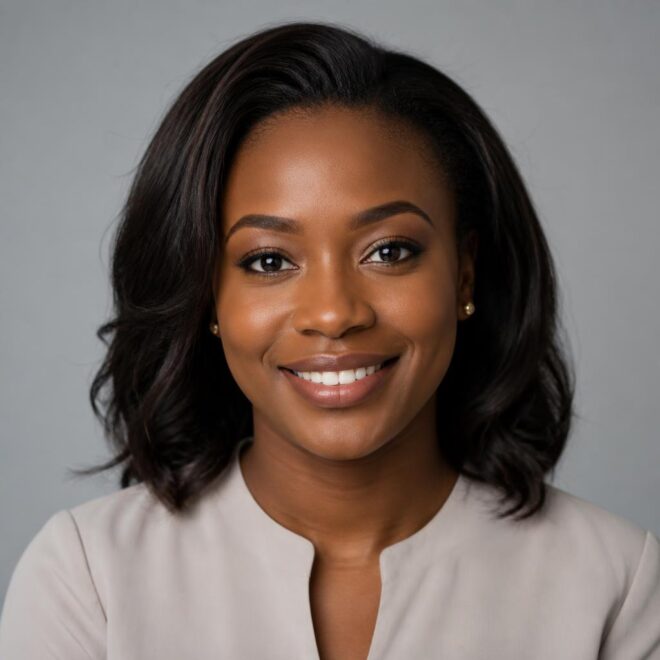


Short hair often gets a bad rap for being “limited,” but anyone who has actually worked with a bob or a pixie cut knows that is nonsense. You have enough length to experiment, and adding texture via braiding is the fastest way to turn a standard morning routine into something that looks like it took an hour of effort. Whether you are dealing with a classic chin-length bob or a textured long pixie, these styles offer a way to keep hair off your face while adding a layer of visual interest that loose hair simply cannot touch.
The trick to braiding short hair is all about tension and product. Unlike long, heavy hair that stays put with a simple elastic, shorter strands have a mind of their own and a tendency to pop out of the weave. You need to rely on a solid foundation of texturizing spray or dry shampoo to give the hair the grip it needs. If you are starting with freshly washed, slippery hair, you are setting yourself up for failure. Prep is everything, and once you master these twenty styles, you will stop looking at your length as a constraint and start seeing it as a design challenge.
1. The Classic French Side Braid
This is the workhorse of the short-hair world. By starting at the part and braiding along the hairline toward the ear, you effectively secure all the shorter, wispy layers that usually fall into your eyes. It works on everything from a blunt bob to a slightly grown-out shag.
The secret here is to keep the braid relatively loose as you work, then gently pull on the edges of each loop once you have secured the end with a small, clear elastic. This creates the illusion of more volume, which is vital when you do not have inches of hair to spare.
How to Make It Stick
- Use a texturizing paste on your fingers before you start to prevent stray hairs from sliding out of the weave.
- Angle the braid backward if you want a cleaner look, or hug the hairline if you want to frame the face.
- Tuck the end behind your ear and pin it with a flat bobby pin that matches your hair color.
2. Double Dutch Braids on a Bob
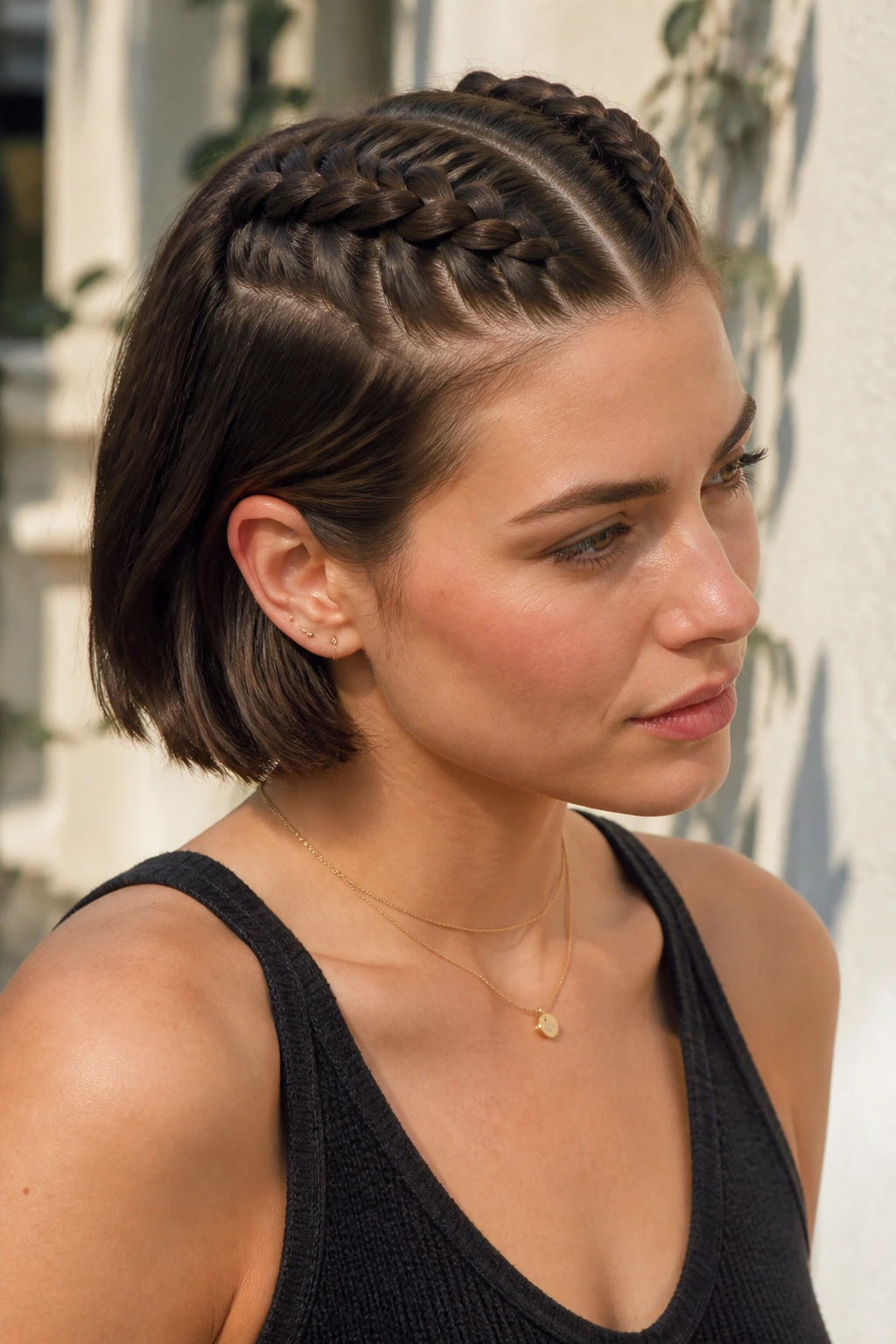
Dutch braids are inverted, meaning you cross the hair under rather than over. On shorter hair, this creates a raised, 3D effect that looks much more impressive than a standard plait. Splitting your hair into two sections and braiding back from the forehead is a great way to mimic the popular “boxer braid” look without needing tons of length.
Why This Style Works
It acts as a headband, keeping the hair completely controlled. Even if you have layers that are too short to reach the nape of your neck, you can gather them into the braid as you go. Secure the ends tightly, and do not worry if the back bits are a bit messy—that is just part of the charm of a shorter cut.
3. The Crown Braid Halo
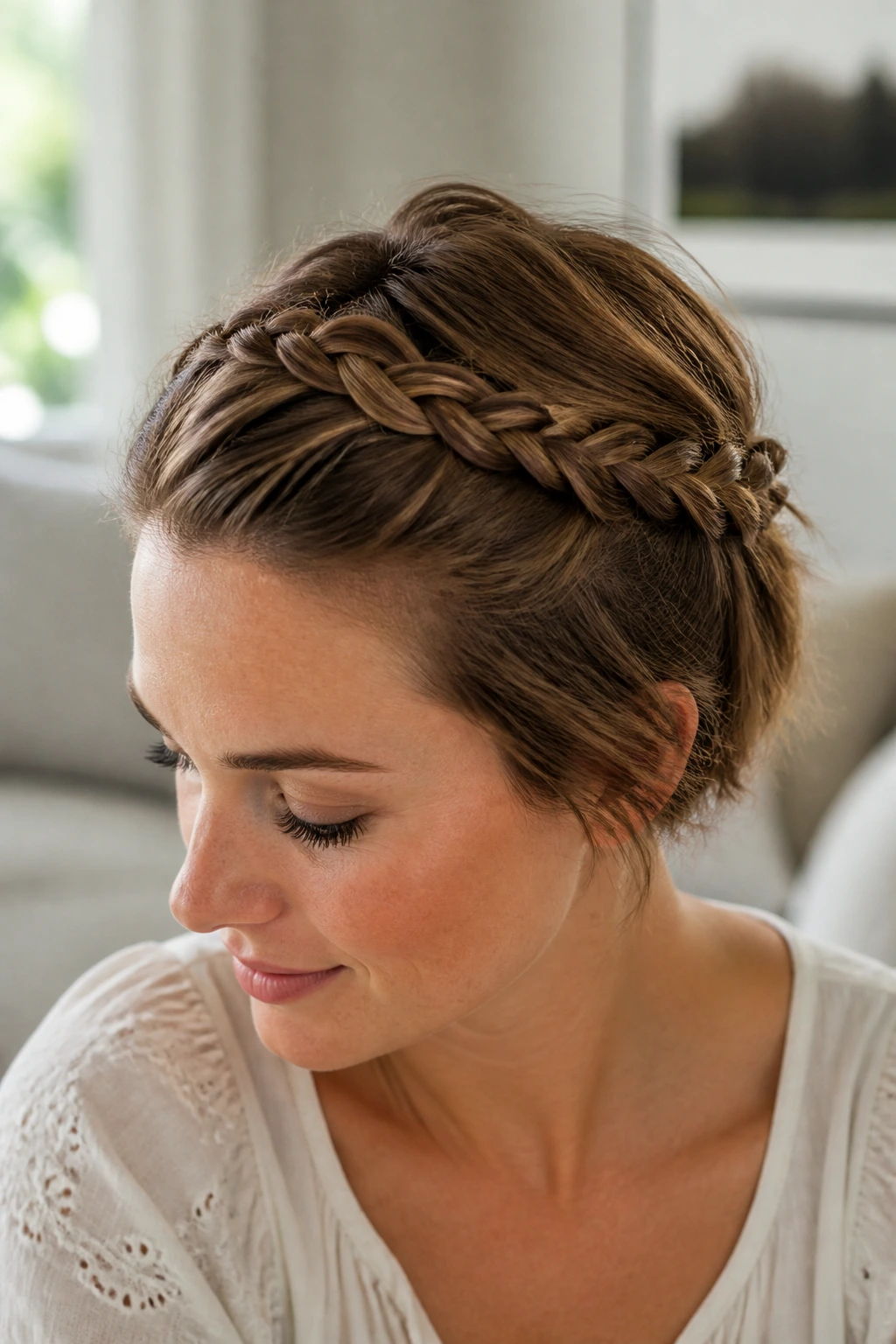
You might assume your hair is too short for a crown braid, but it is entirely possible if you use enough pins. Instead of one long, continuous braid, create two separate braids that start at the temples and meet at the back of the head.
Pin them into place so they overlap slightly, covering the ends. The result is a soft, romantic look that mimics a headband. It is arguably one of the most sophisticated styles you can manage on a chin-length cut.
4. The Half-Up Waterfall Braid
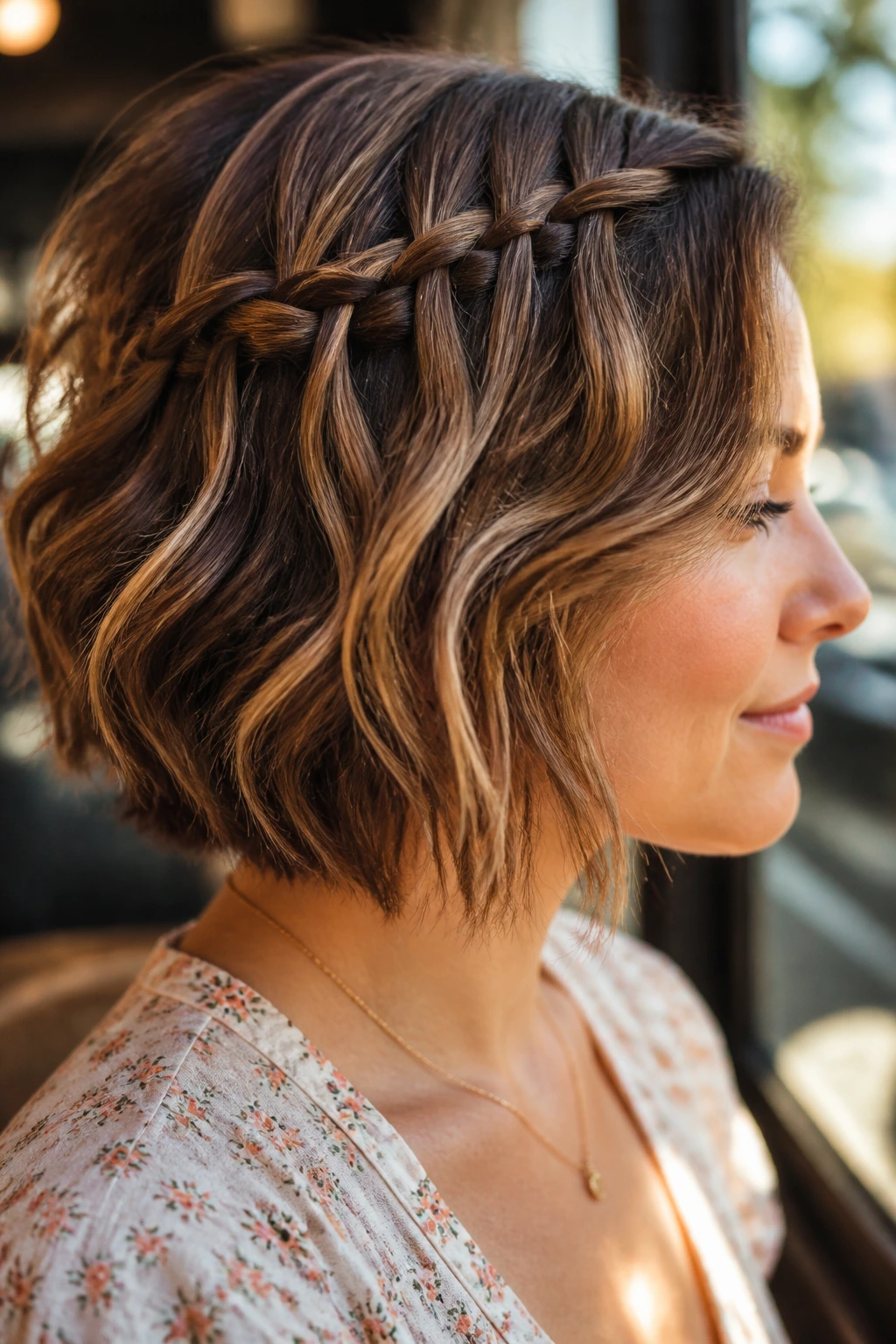
If you love the look of loose waves but hate having hair in your face, the waterfall braid is your best friend. Instead of pulling all the hair into a braid, you let one strand fall through each time you cross over.
It creates a cascading effect that looks intricate but is actually quite simple once you get the motion down. Since the rest of your hair stays loose, it adds movement and style to a standard wavy bob.
5. Braided Bangs Sweep
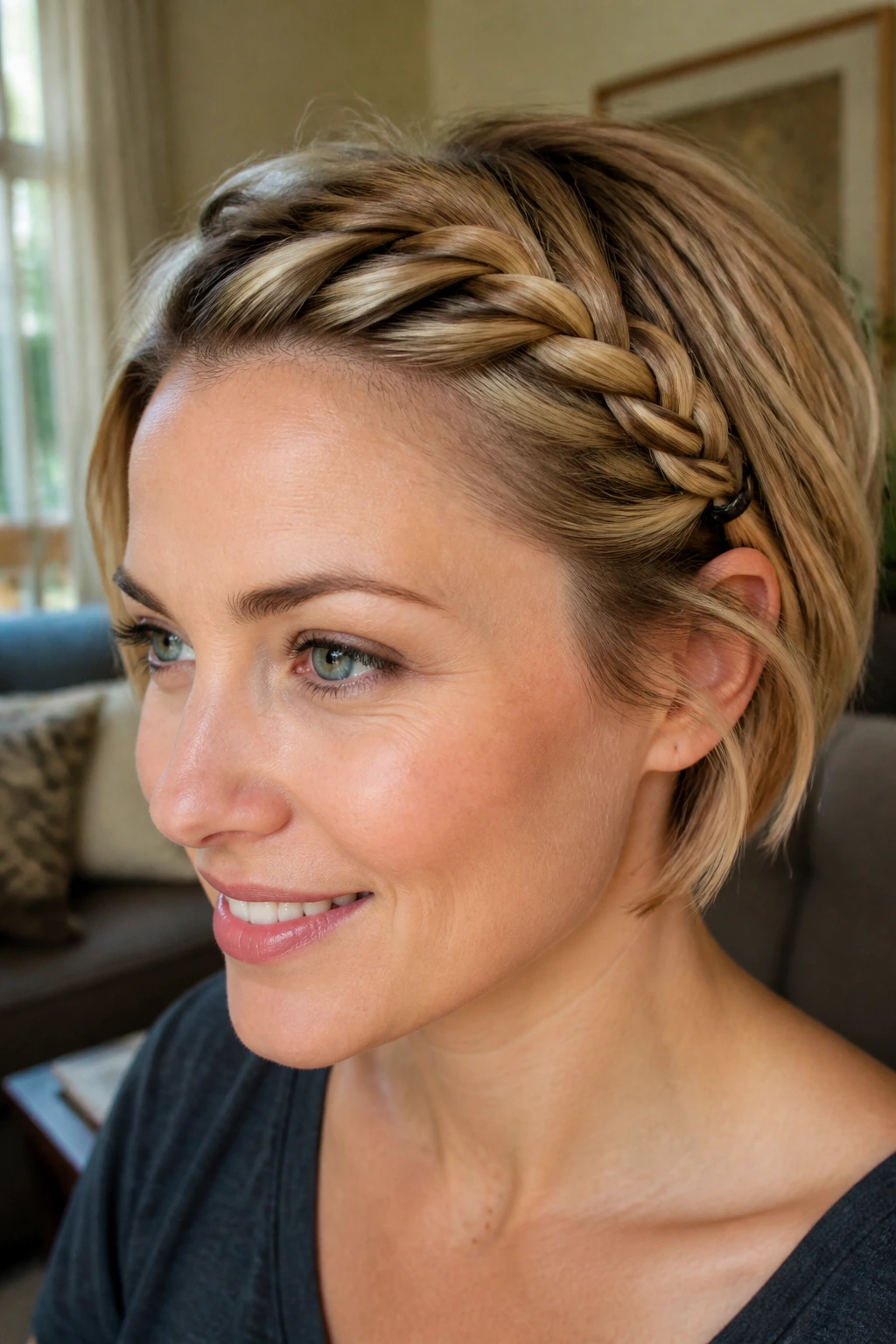
For those moments when your bangs are in that awkward “in-between” stage, a small French braid along the forehead is the ultimate savior. Start the braid at your part and weave in just the front section, working your way toward the temple.
Secure it behind your ear with a decorative clip to hide the elastic. This is a five-minute fix that looks like you spent time styling, even if you are just heading to the grocery store.
6. Messy Boho Side Plait
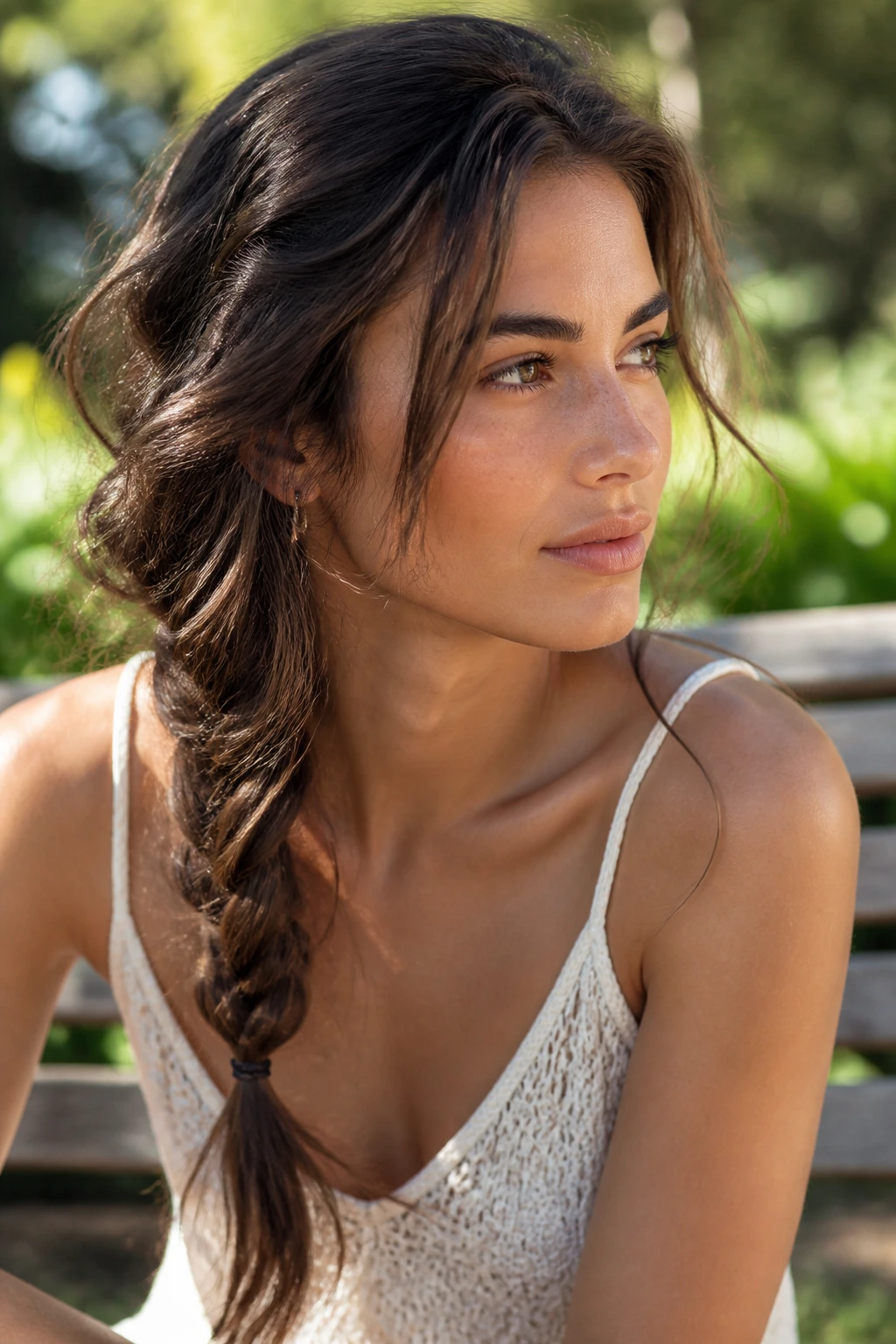
If your hair has a bit of wave or texture to it, lean into the messiness. A loose, slightly undone side plait doesn’t need to be perfect—in fact, it looks better if you leave a few face-framing strands out.
Use your fingers to pull the braid apart once you have finished. The goal here is a soft, lived-in aesthetic that feels effortless. It is a fantastic choice for a casual day or a lunch date.
7. The Sleek Cornrow-Inspired Part
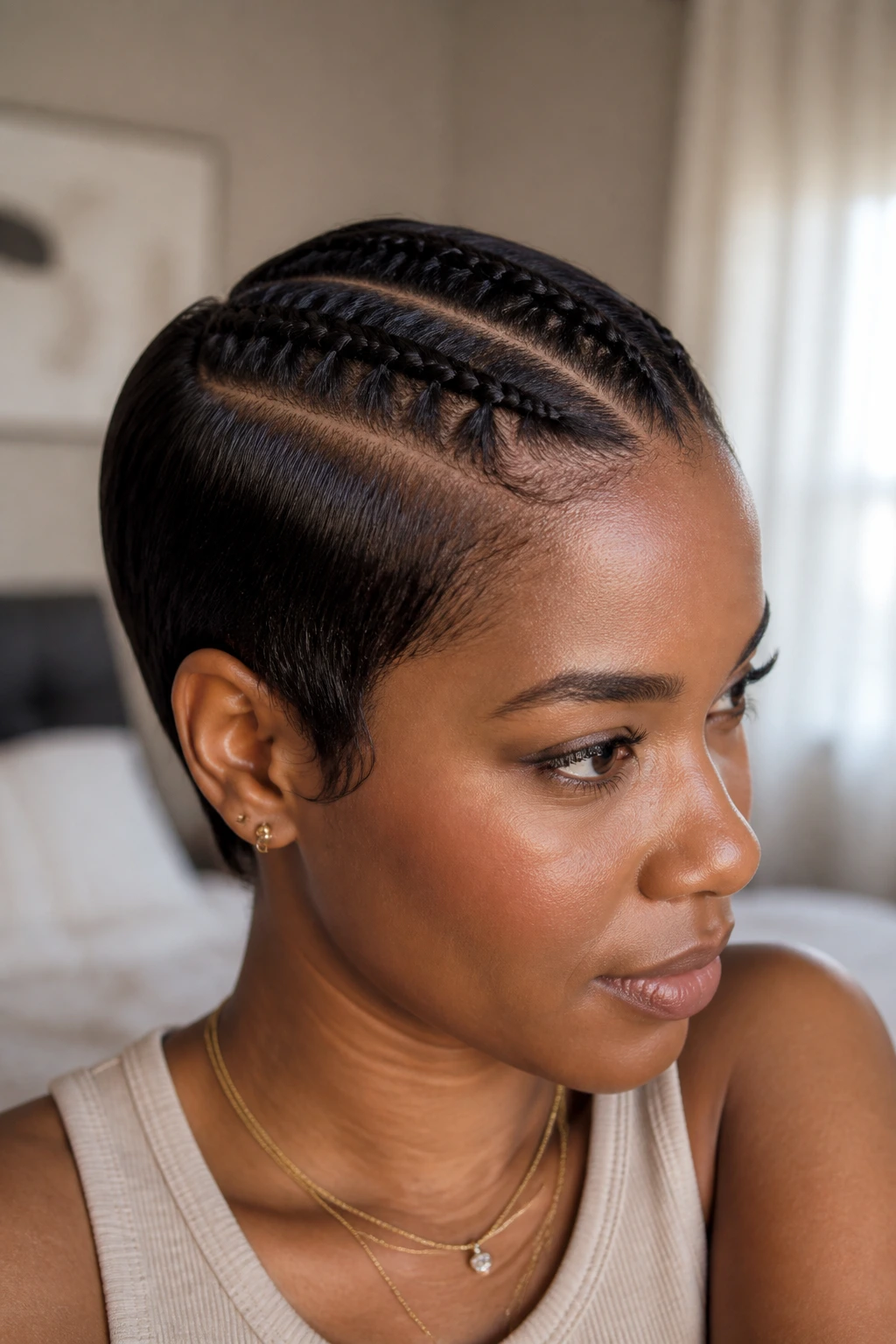
If your hair is short enough that traditional braids feel impossible, try braiding two or three tight, small rows right at the part. This keeps the hair pulled back sharply and adds a bit of edge to a classic bob.
You will need a fine-tooth comb to get a razor-sharp part. Spray a little bit of hairspray on your brush to smooth down any flyaways before you begin braiding.
8. Fishtail Accent Braid
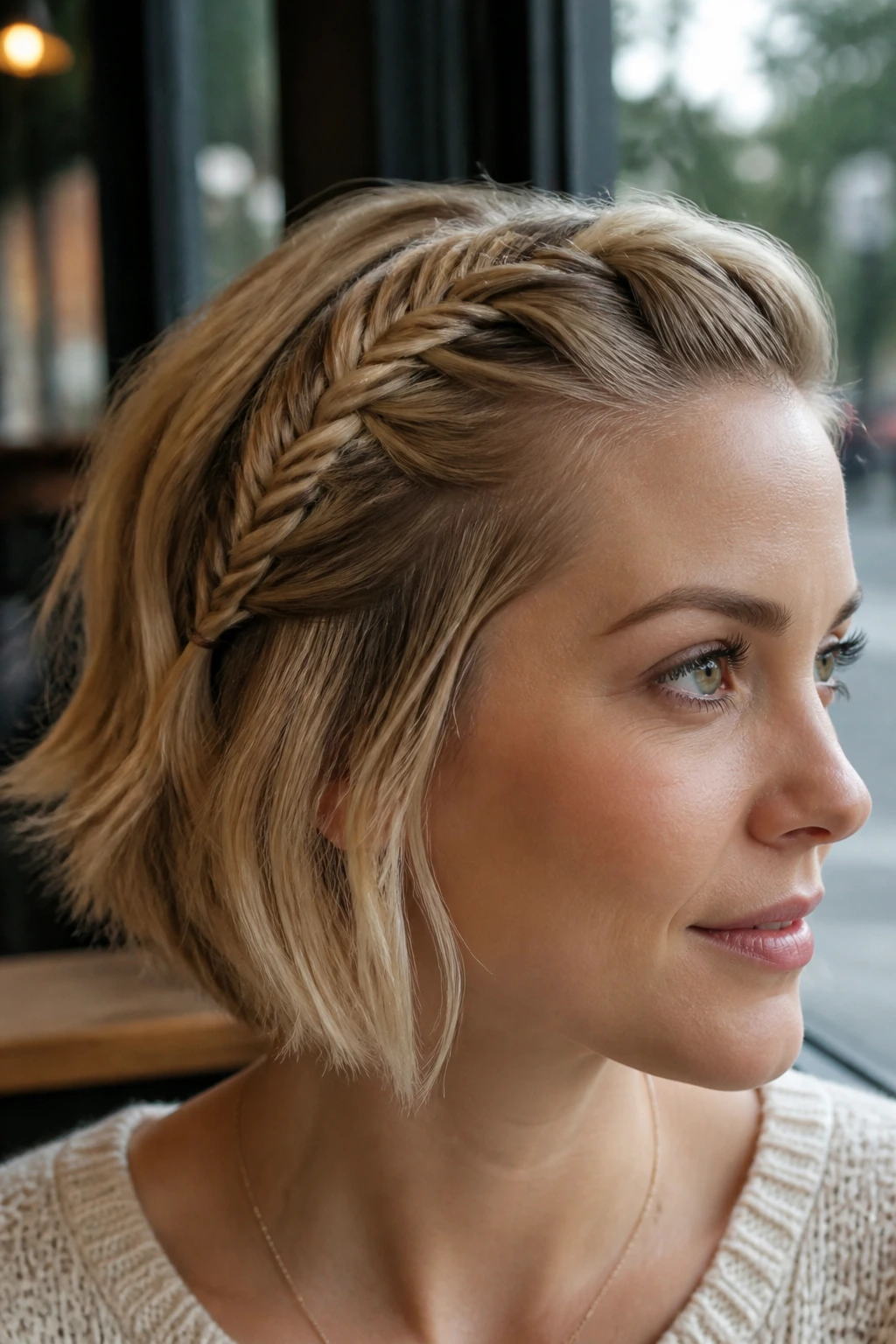
The fishtail braid looks much more complex than a standard three-strand braid, making it the perfect choice for an accent piece. Take a small section of hair near the temple and weave a tight fishtail back toward the crown.
Tips for Success
- Keep tension high because short layers will try to escape.
- Use a tiny clear elastic to keep the end from unraveling.
- Pull at the edges to give it that “lived-in” look without sacrificing stability.
9. The Knotted Pull-Through Braid
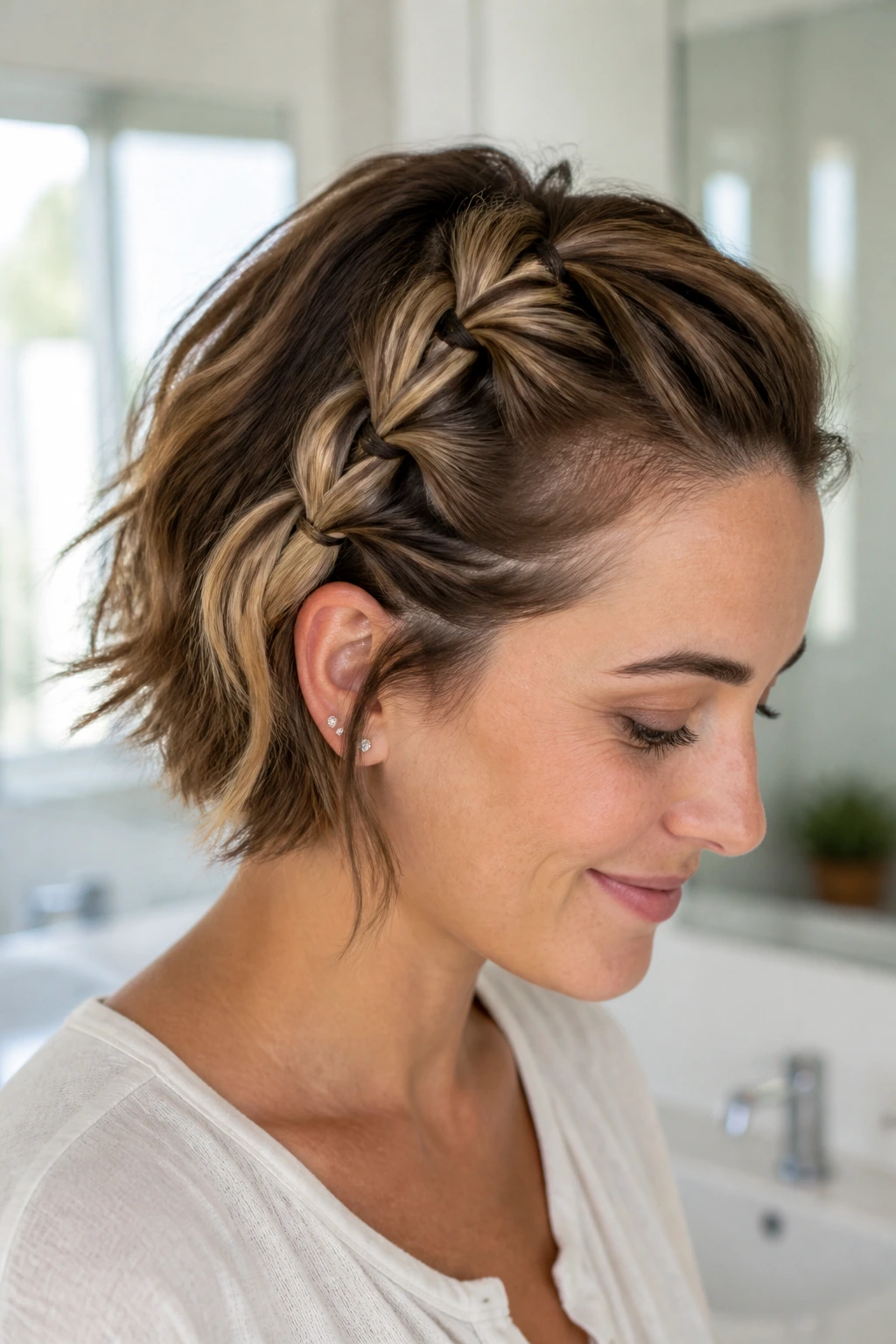
Technically, this is not a braid at all—it is a series of ponytails looped through one another. This is a game-changer for short hair because it requires no actual braiding skill. You just need a bunch of tiny elastics.
Start with a small ponytail, split it in two, and loop another section through it. Repeat this down the length of your hair. It creates the look of a thick, voluminous braid without needing any length at all.
10. Mohawk Braided Faux-Hawk
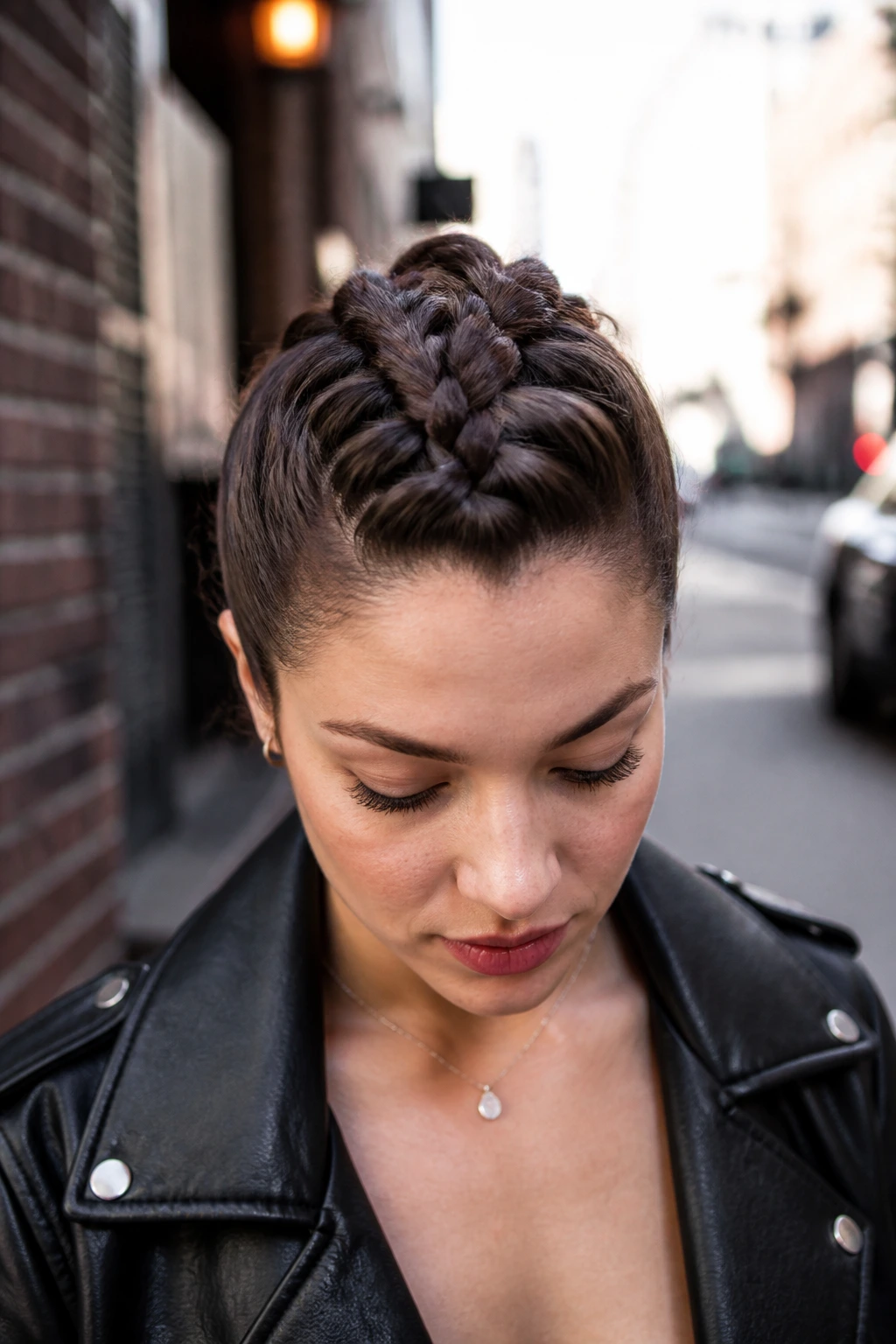
Want to channel a bit of punk-rock energy without shaving the sides of your head? Create a tight, vertical Dutch braid down the center of your head, from the forehead to the crown.
Tuck the remaining ends into the back of the braid. This style keeps the sides sleek and puts all the focus on the volume at the top. It is bold, fun, and surprisingly easy to execute once you have the hang of the center braid.
11. Twisted Side Rope Braid
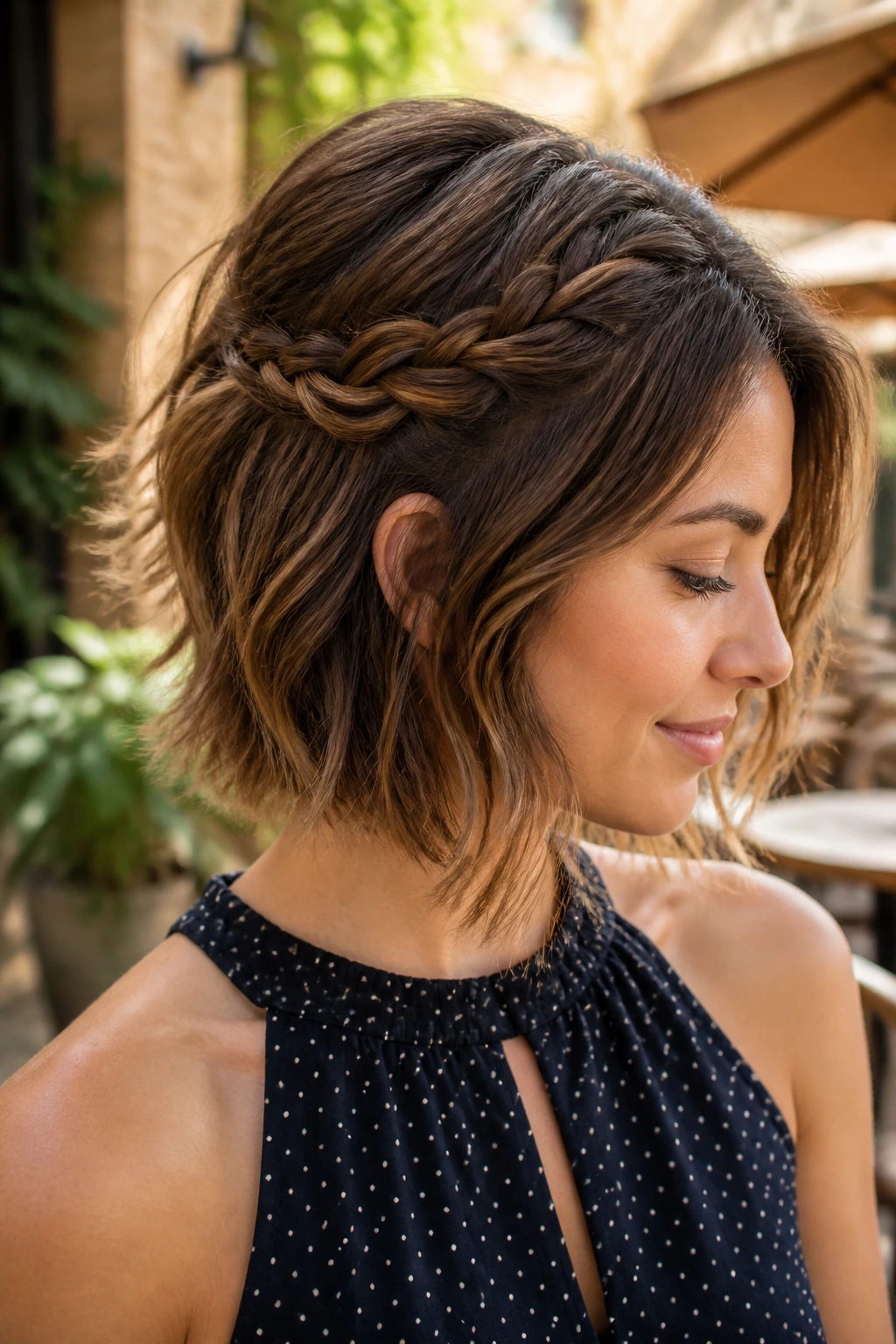
If you are tired of standard plaits, try the rope braid. Instead of three strands, you take two sections and twist them individually in one direction, then cross them over each other in the opposite direction.
It looks like a thick, elegant rope and holds surprisingly well on shorter, layered hair. It is a cleaner, more modern alternative to the traditional braid.
12. The Triple-Threat Micro Braids
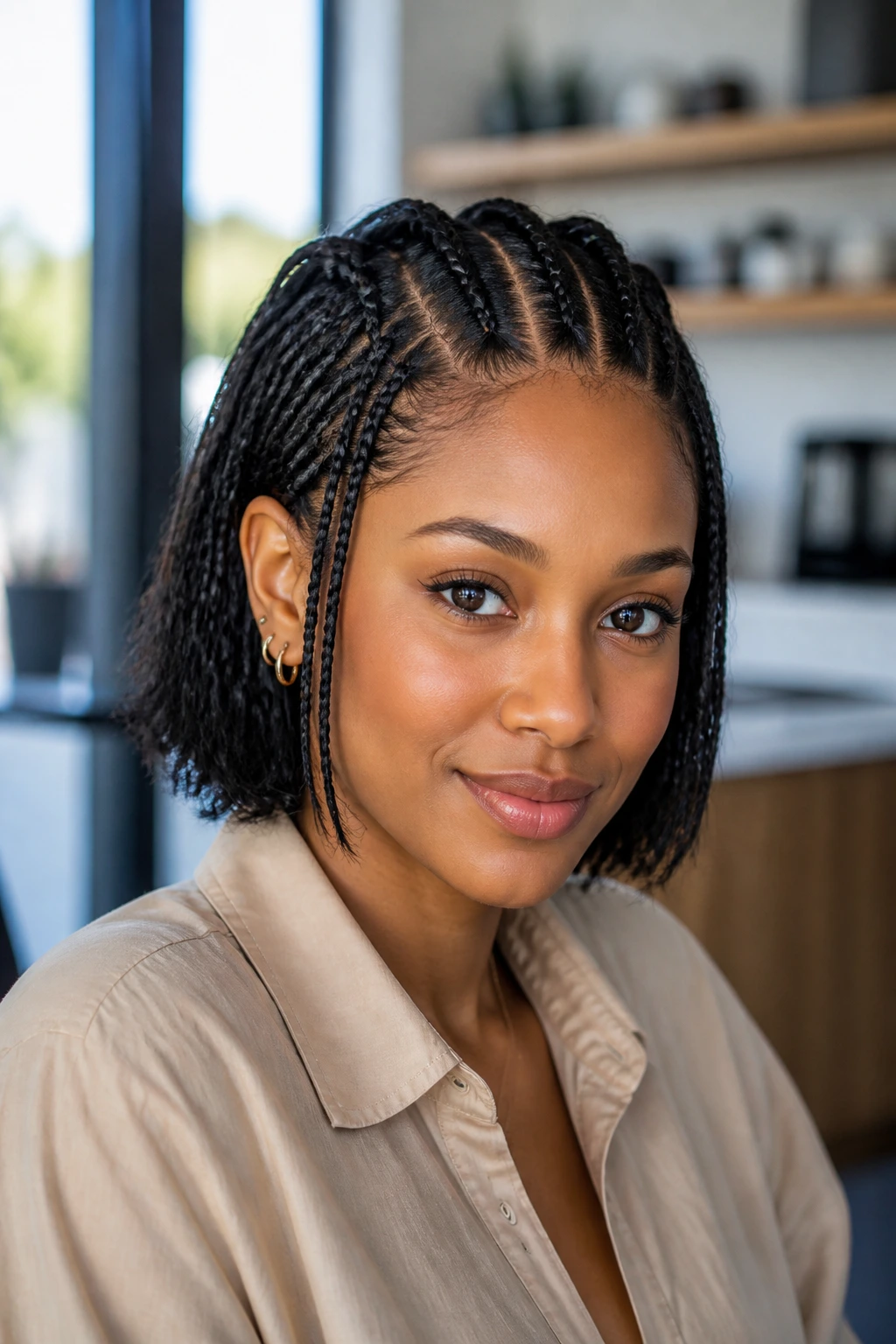
Take three small sections at the front of your hairline and braid them all the way back. You can either leave them loose at the back or gather them into a tiny ponytail.
This adds a structured, intentional vibe to your haircut. It is excellent for work environments where you need your hair out of your face but still want to look polished.
13. Braided Headband with Tucked Ends
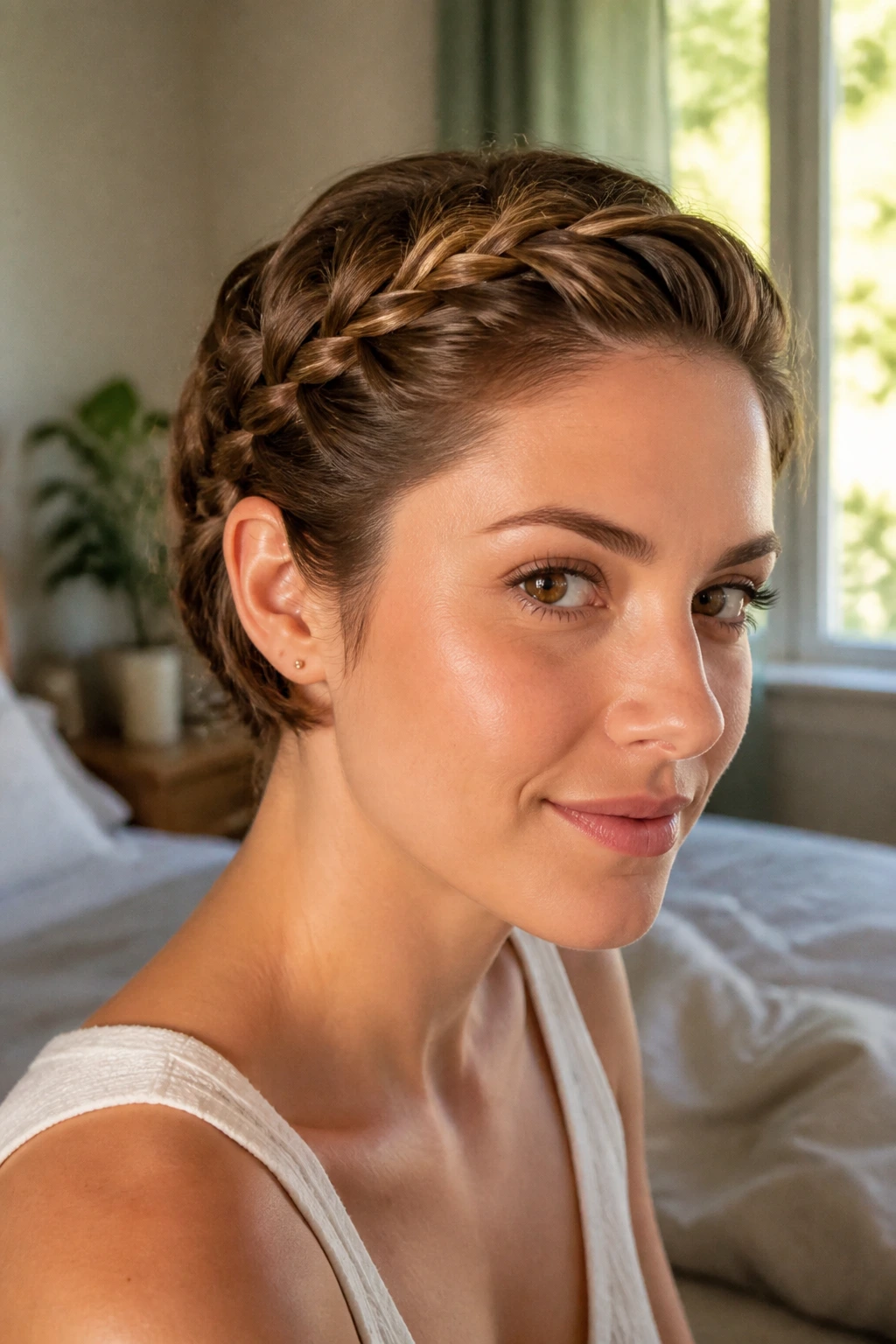
If you have a bob that is just a few inches past your jaw, you can create a full halo braid by working from the nape of your neck up and over the front.
It takes practice to get the tension right around the ears, but once you anchor the braid with enough bobby pins, it stays put all day. Use a bit of dry shampoo for grip before you start, and you will be surprised by how secure it feels.
14. The “Half-Up” Top Knot Braid
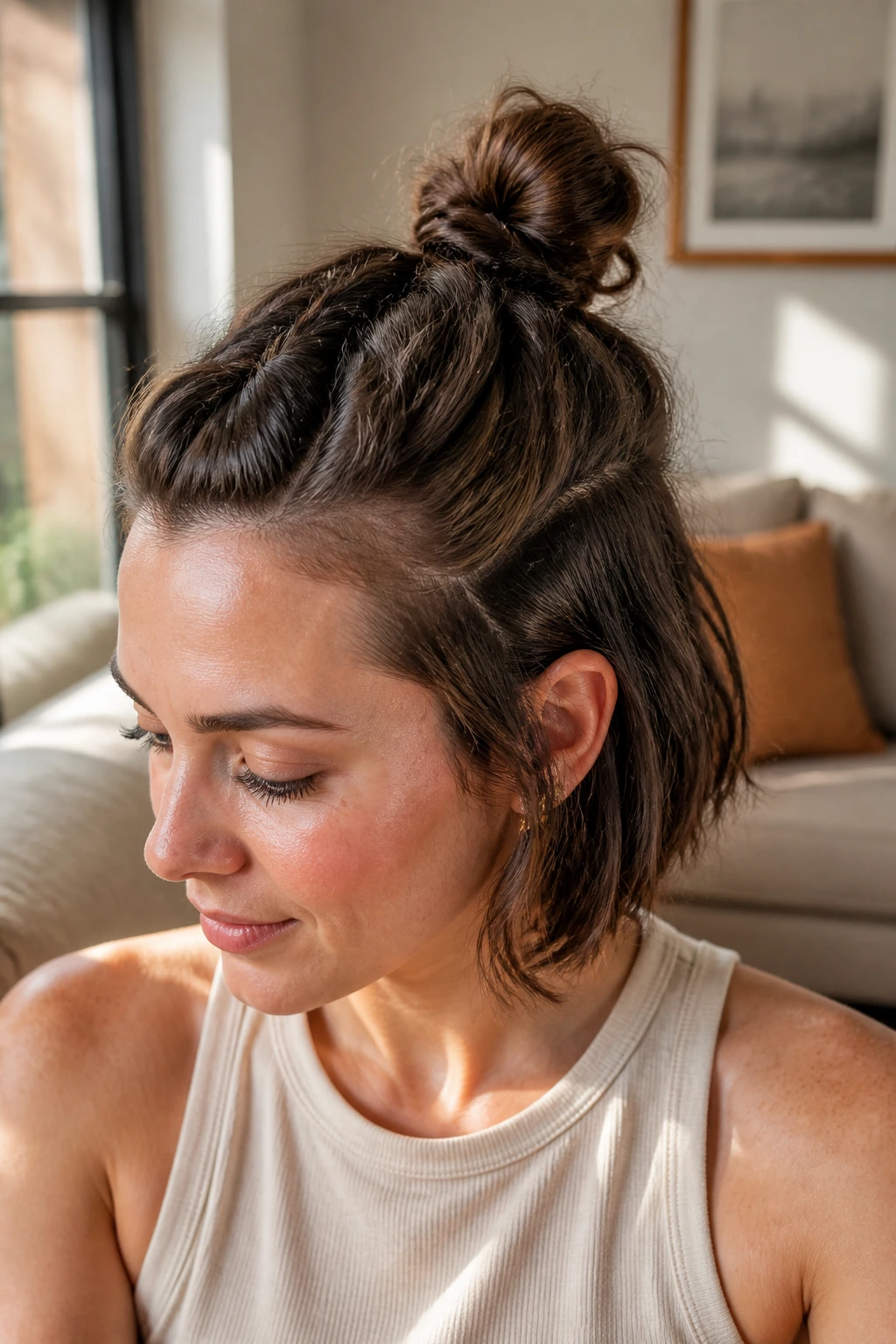
Combine two styles: a small braid leading from the hairline to the top of your head, which then gets twisted into a small bun. It is the perfect blend of practical and trendy.
This style helps you manage shorter layers near the hairline while keeping the bulk of your hair off your neck. It works best with a bit of texture, so do not be afraid to tease the crown slightly before pulling it into the knot.
15. The Hidden Scarf Braid
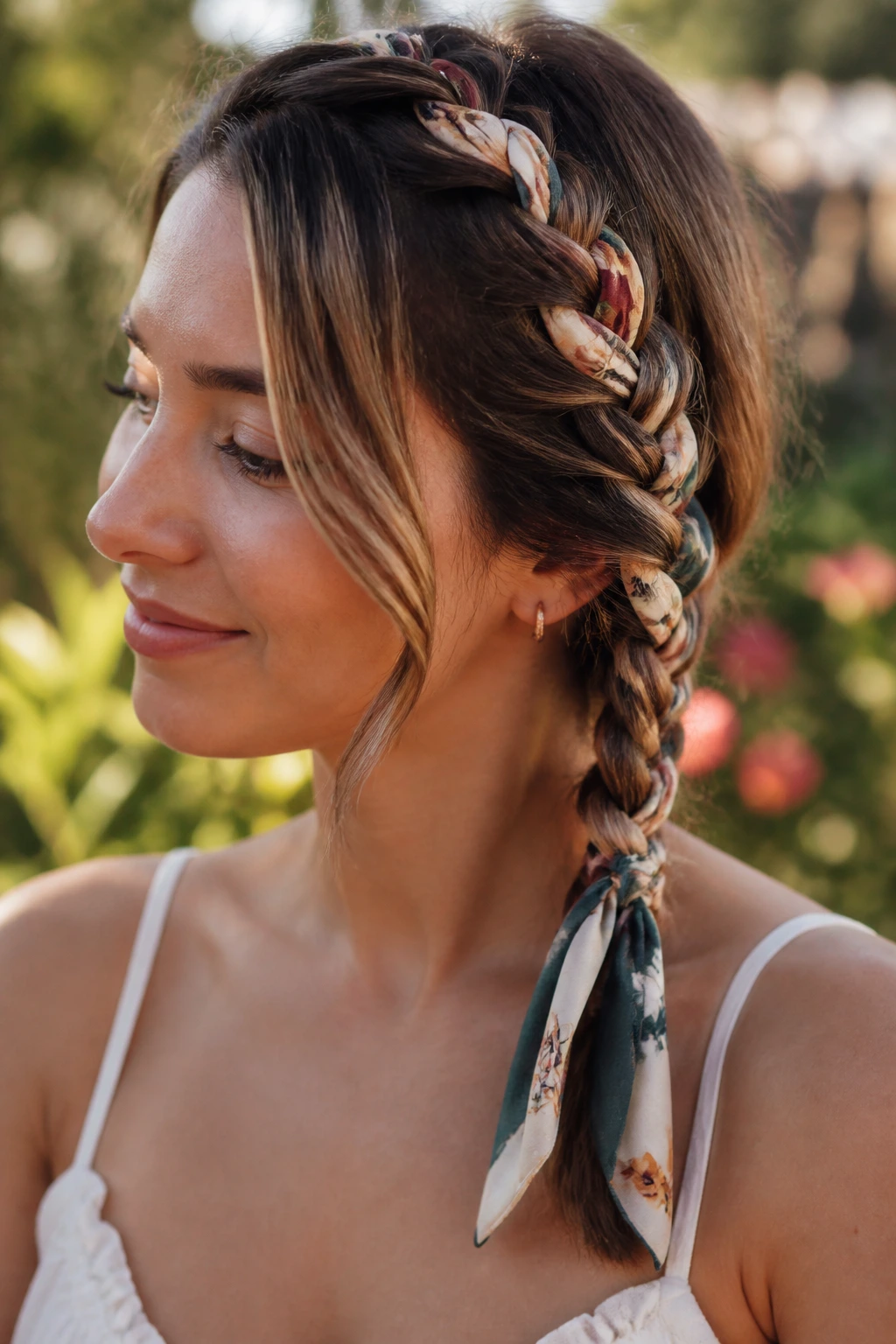
If you are struggling with flyaways, weave a silk scarf into your braid. The fabric adds thickness to the plait, making it look fuller, and it acts as an anchor for the shorter hairs that refuse to stay in the braid on their own.
You can find thin, hair-specific scarves that are designed for exactly this purpose. Just fold the scarf in half and treat the two ends as two of your three “strands” while braiding.
16. Asymmetrical Braided Side
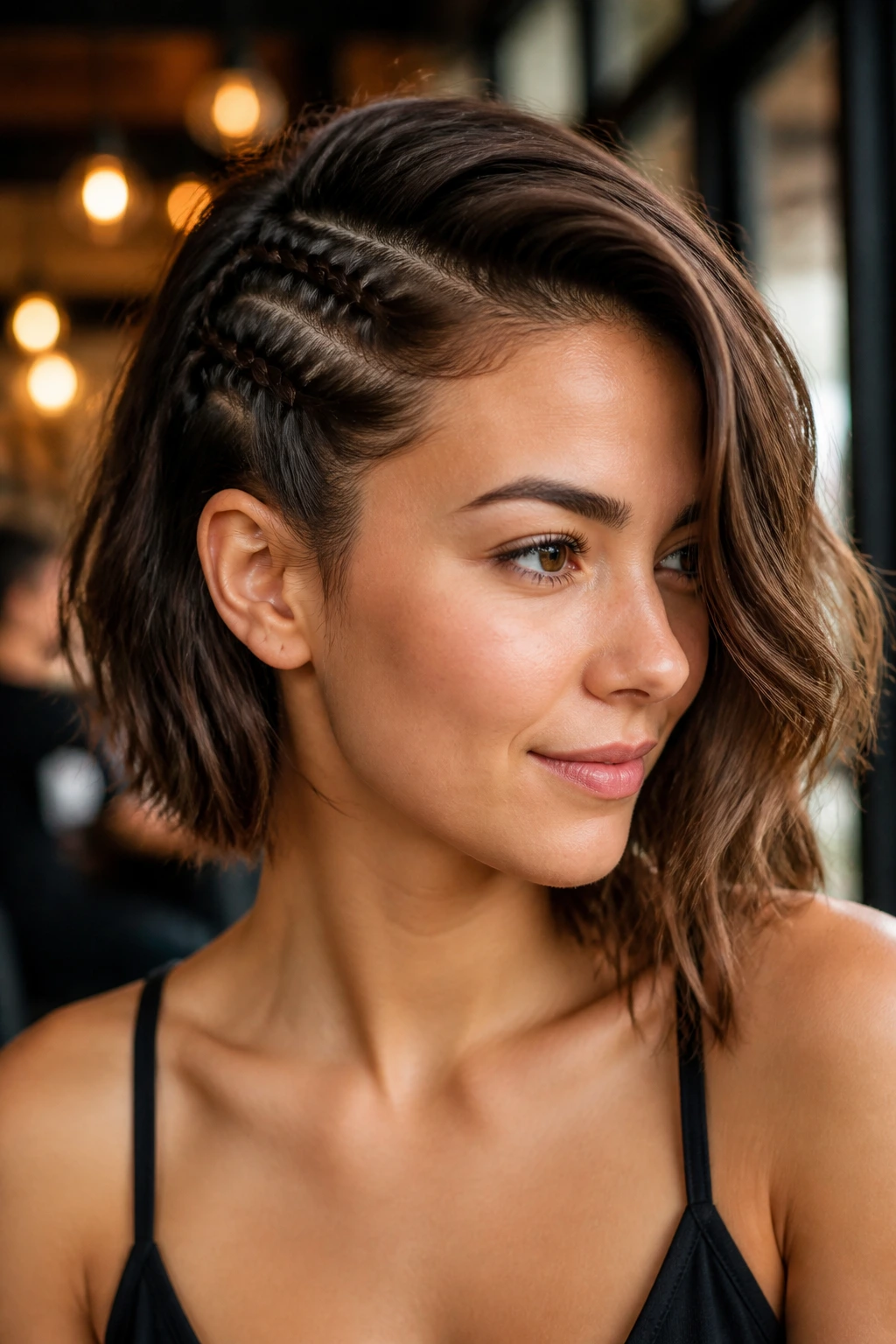
Braiding only one side of your head creates a deliberate, edgy look. It’s a great way to highlight an undercut or a deep side part.
Tuck the braided side behind your ear and let the rest of your hair flow naturally. It is a low-effort style that makes a statement without requiring you to manage all of your hair at once.
17. The Textured Front Twist
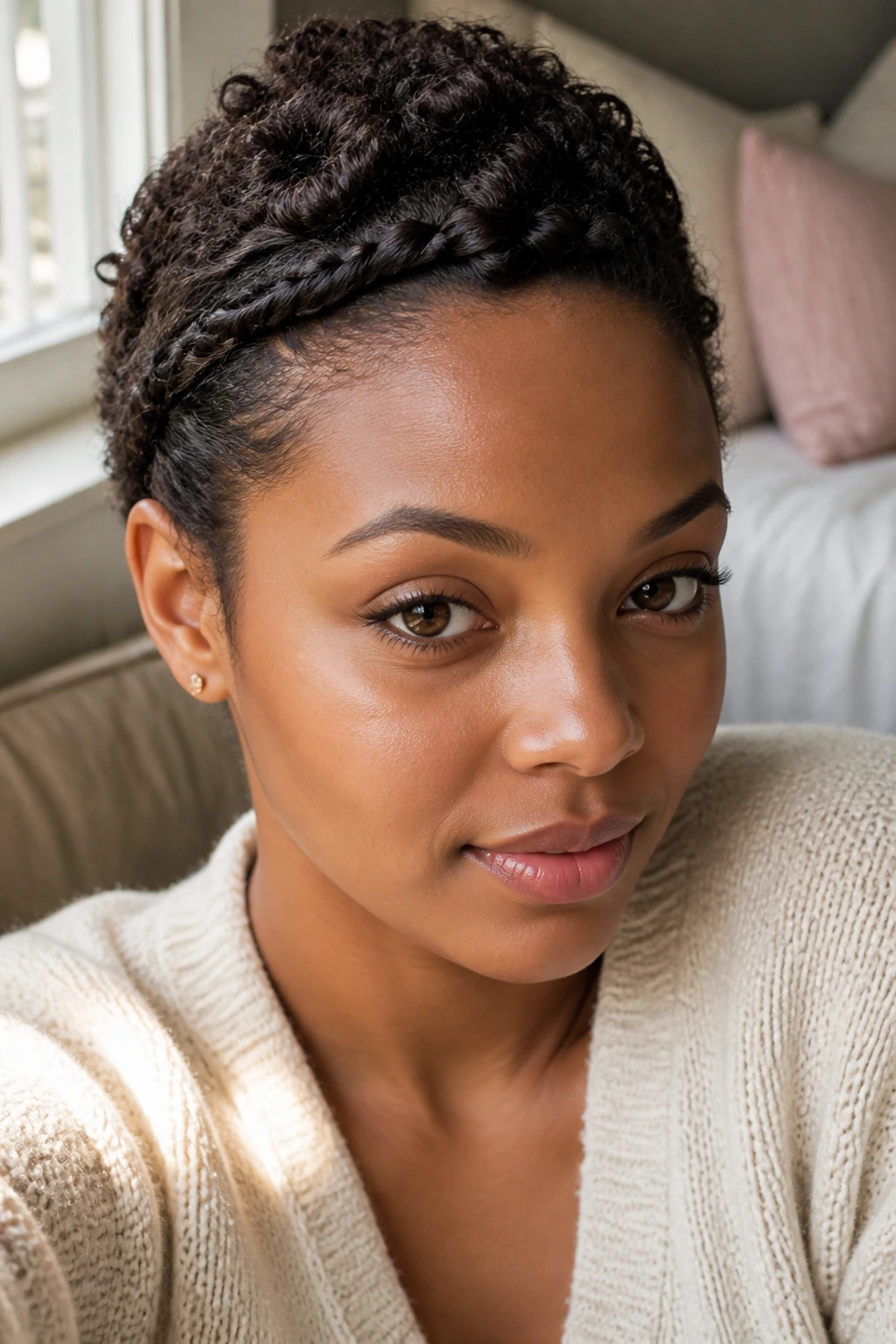
Sometimes a braid is too much. A simple two-strand twist—where you keep adding hair as you move back—can achieve the same aesthetic with half the struggle.
This is much easier to do on short hair because you don’t have to worry about weaving three separate strands. It keeps the hair neatly tucked away while maintaining a soft, feminine vibe.
18. Braided Chignon for Short Hair
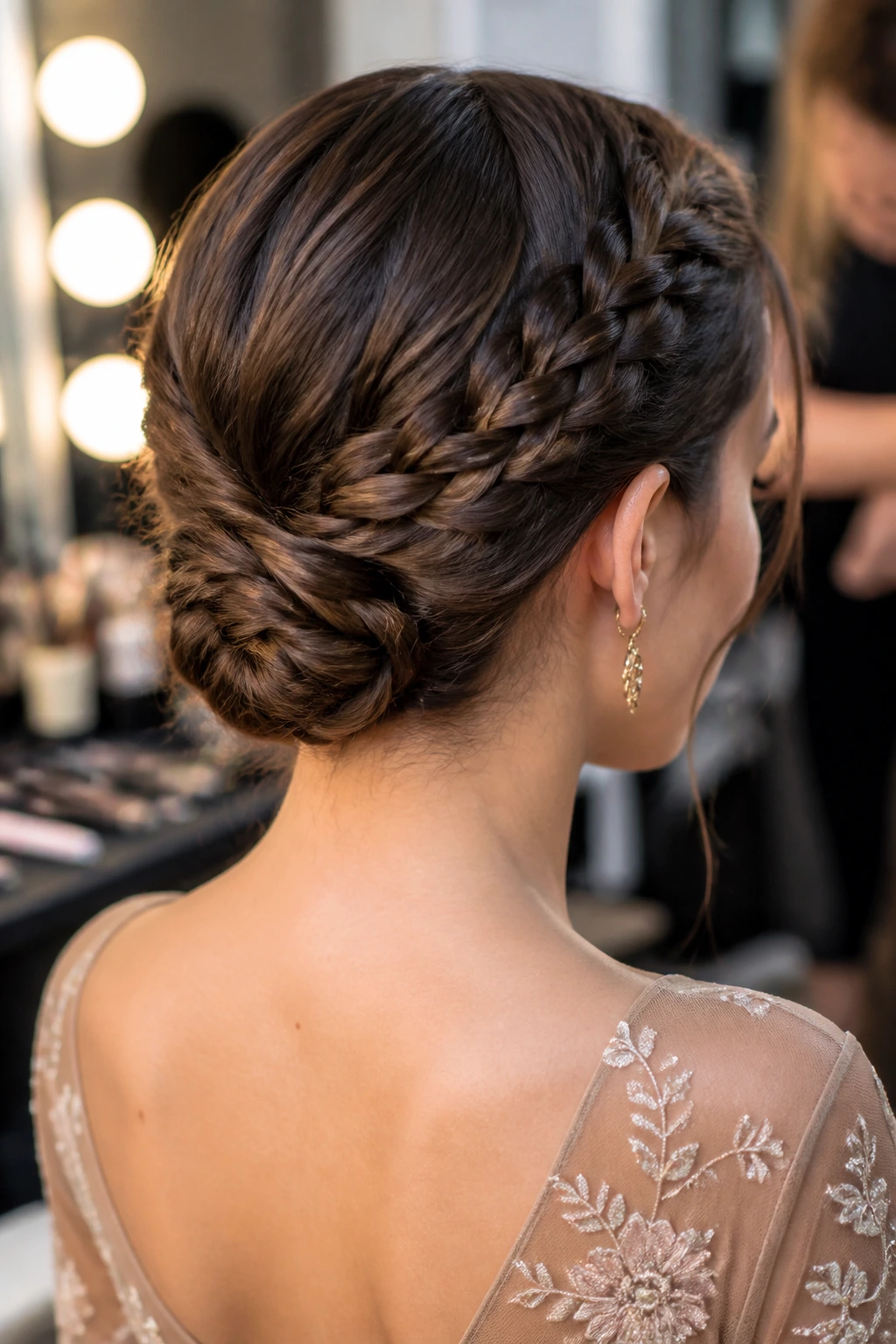
You can definitely pull off an updo if you have a short bob. Create two braids on either side of your head and pull the remaining loose hair into a tiny, low chignon at the nape of your neck.
Use plenty of hairspray and bobby pins to keep the back section together. It is an elegant, sophisticated look that is perfect for formal events where you want your neck to be visible.
19. The “Inside-Out” French Braid
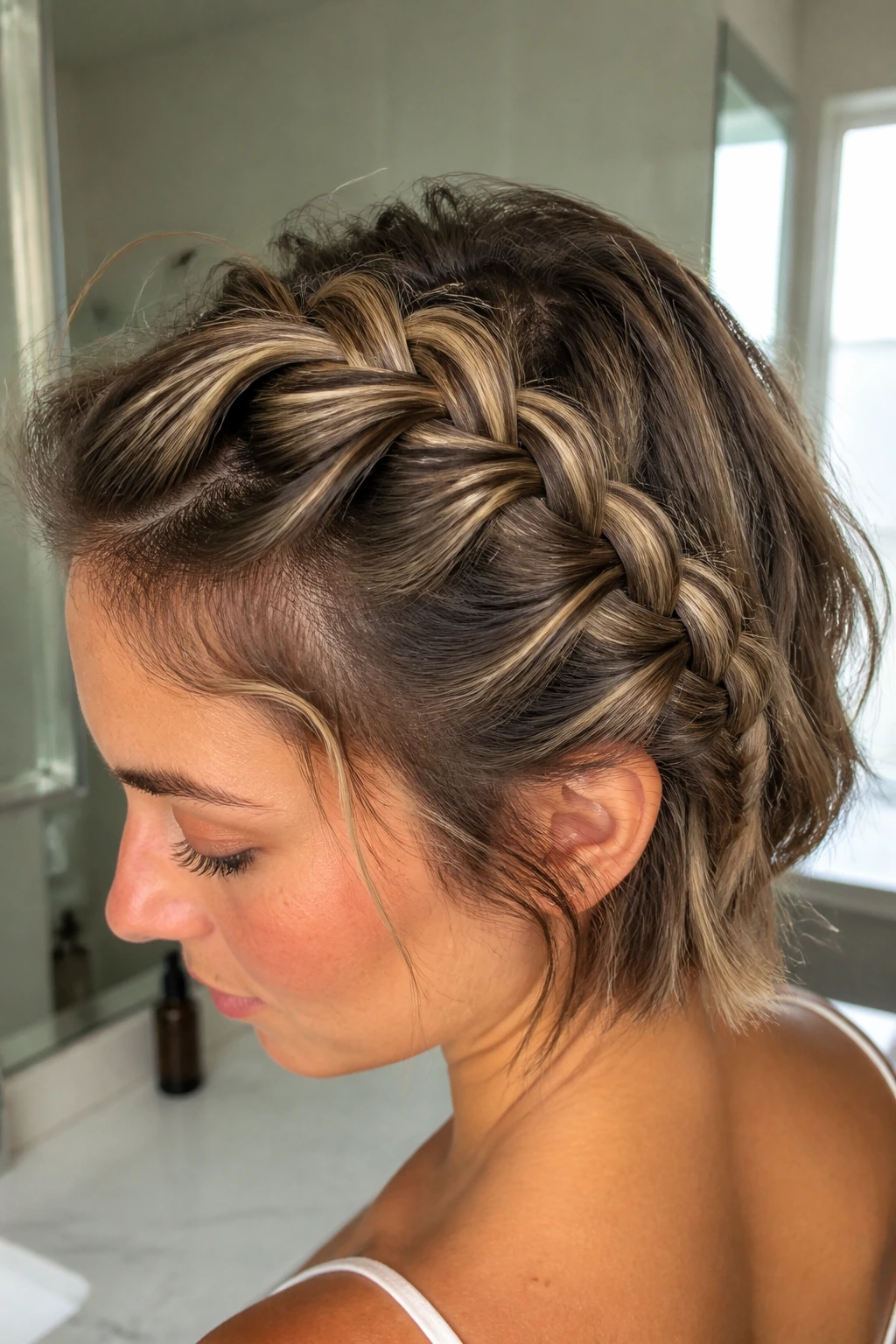
Instead of a normal French braid, try pulling the sections under. This makes the braid pop, which is crucial if you have dark hair or want the detail to be more visible.
It is a small technical change that makes a big difference in how the finished style looks. It also feels a bit tighter, which is beneficial for keeping shorter layers in place.
20. Double-Tiered Braided Pigtails
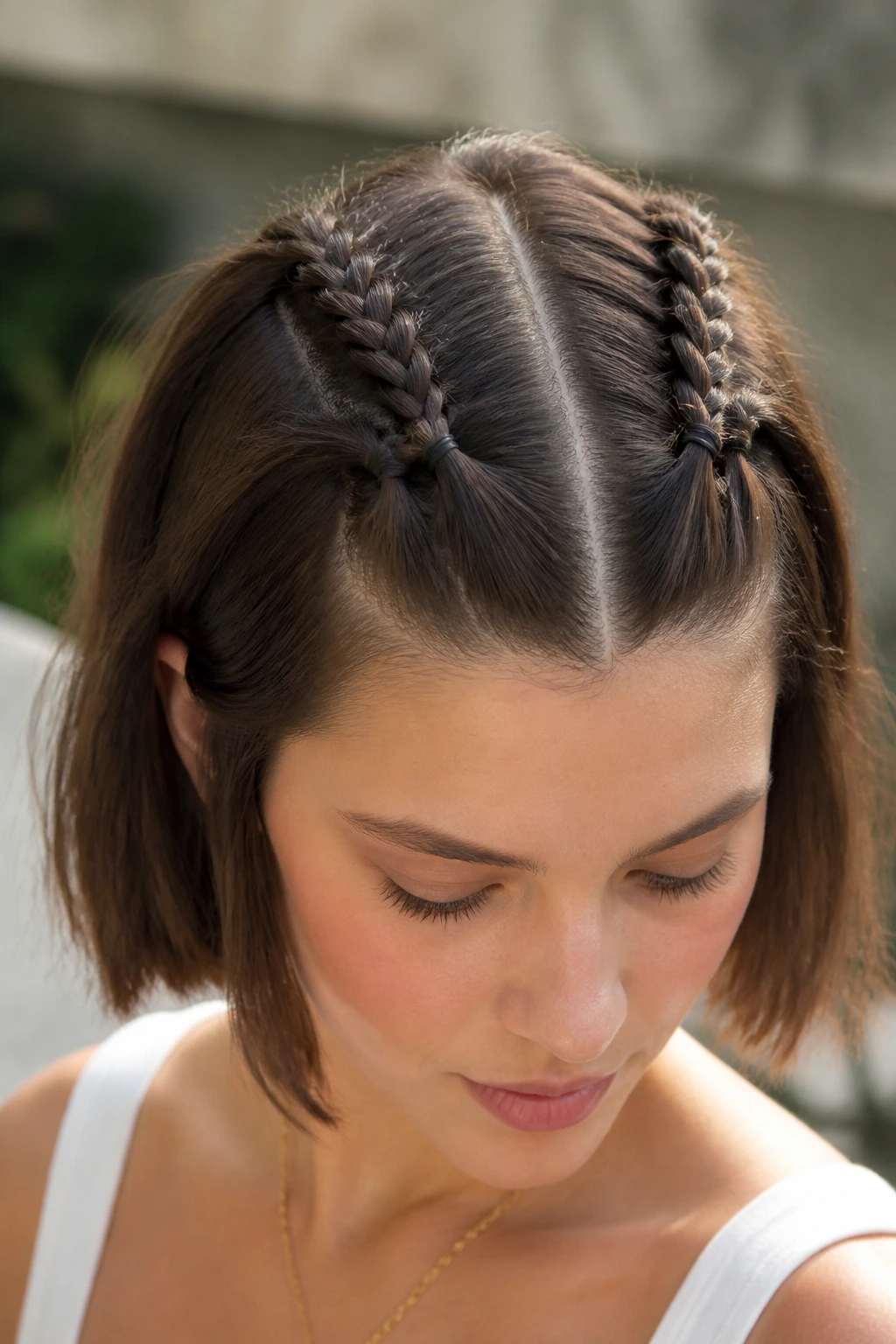
Split your hair down the center and create two braids that start at the top of your head and work their way down to your ears. This is a playful, youthful look that works exceptionally well on blunt bobs.
Secure the ends with fun, colorful elastics if you want to lean into the aesthetic, or keep them clear for a more understated, daily-wear appearance.
The Role of Product and Prep
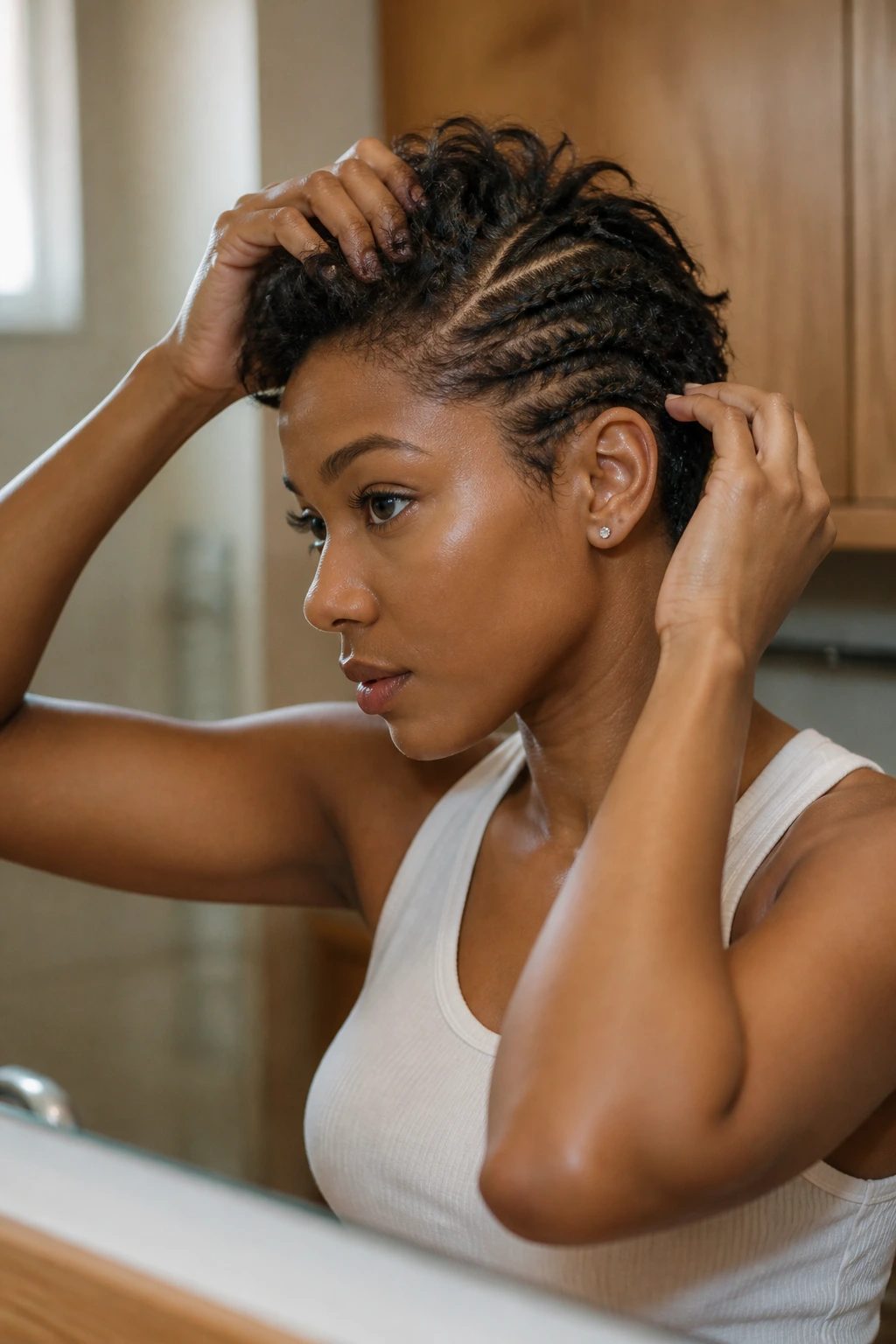
You can have the best braiding technique in the world, but if your hair is too soft or “slippery,” the braid will unravel in minutes. Most stylists will tell you that second-day hair is the holy grail for braiding, but if you have to start fresh, you need to manufacture that grit.
Dry shampoo is your first line of defense. Even if your hair is clean, a light dusting of dry shampoo at the roots and through the mid-lengths provides the friction necessary to hold those short, stubborn ends in place. Alternatively, a texturizing sea salt spray can give you the same effect, adding a bit of wave and volume that makes the hair easier to manage.
When it comes to holding everything together, avoid heavy pomades that might make your hair look greasy. Instead, look for a “dry” styling paste—it gives you a medium hold and a matte finish, keeping the braid tight without turning your hair into a helmet. Always keep a handful of bobby pins handy, specifically ones that match your root color, so you can anchor the end of the braid discreetly.
Mastering Tension and Symmetry
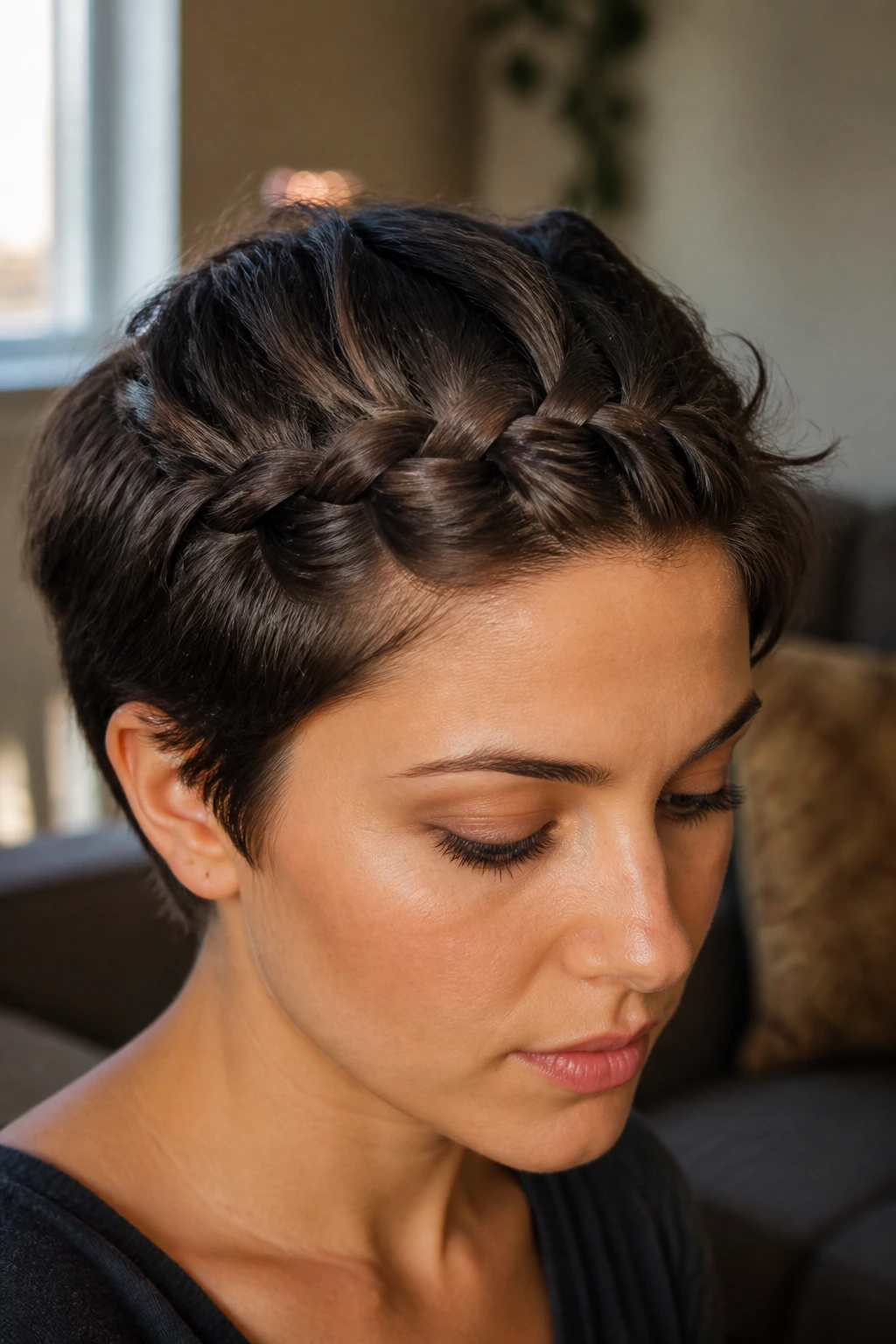
Short hair is unforgiving when it comes to symmetry. Because you don’t have length to hide behind, mistakes in your braiding pattern are more obvious. Take your time with the initial sections; if the first few stitches of the braid are uneven, the whole thing will look lopsided.
If you find that the braid is getting too loose as you work, stop and tighten it. It is easier to adjust as you go than it is to redo the entire section once you have reached the back. If you are struggling to reach the back of your head, use a handheld mirror to check your progress. It might feel awkward at first, but with a little repetition, you will build the muscle memory required to braid without even looking.
Final Thoughts
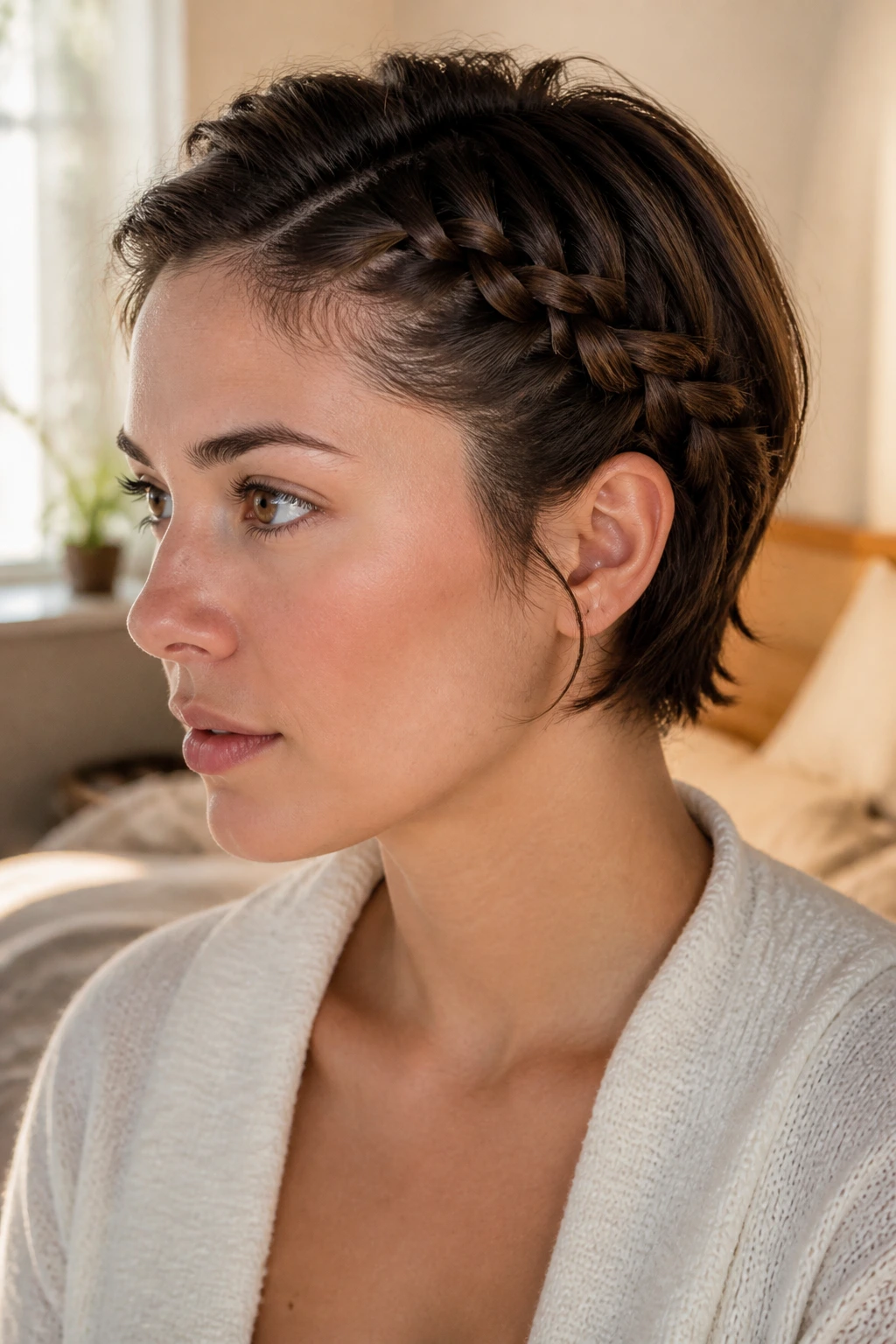
Braiding short hair is less about length and more about strategy. It requires a bit more focus on prep work and pin placement, but the result is a versatile way to keep your hair looking fresh and styled. Once you accept that some flyaways are just part of the deal, you can start to enjoy the process of turning your bob or pixie into a canvas for texture.
Do not be afraid to fail a few times. The beauty of these styles is that they are meant to be lived in. If a strand pops out, pin it back or let it frame your face. The most polished-looking styles are often the ones that have been allowed to soften slightly throughout the day. Pick one, grab your texturizing spray, and stop thinking that a shorter cut means you have to sacrifice the fun of a good braid.