


When you are mid-stride on a long run or deep into a set of heavy deadlifts, the last thing you want is a screen of damp, flyaway hair clinging to your face. Finding that perfect balance between style and utility is the eternal struggle of the active person. You need a hairstyle that keeps your vision clear, protects your strands from the friction of repetitive movement, and survives the intense humidity of a high-intensity session without losing its structural integrity.
Many people settle for a quick, messy top-knot, but the tension of a singular hair tie often leads to breakage and tension headaches. Braiding distributes the weight of your hair more evenly, securing it firmly against your scalp while keeping it tucked away. Whether you are hitting the gym, the yoga mat, or the pavement, these styles provide the security you need to move without distraction.
Choosing the right braid comes down to your hair texture, the duration of your workout, and how much time you have for preparation. Some styles require a bit of practice, but once you master the foundational technique, you can replicate them in minutes. Here are twenty reliable, secure, and stylish back braids that will keep your hair in place regardless of how hard you sweat.
1. Classic French Braid
The standard French braid remains the gold standard for workout hair because it keeps your hair tight against the scalp from the hairline all the way to the nape of the neck. By anchoring the braid at the very top of your head, you prevent the weight of your hair from pulling on your roots, which is exactly why it is so effective for high-impact activities.
Why It Works for High Intensity
When you incorporate small sections of hair into the braid as you move down the back of your head, you create a seamless unit that resists shifting. Unlike a ponytail that whips back and forth, a French braid stays flush against your spine.
Quick Tips for Better Hold
- Use a lightweight texturizing spray before you start to give your strands more grip.
- Secure the end with a small, snag-free elastic that matches your hair color.
- If you have layers, use a tiny amount of pomade on the ends to tuck them neatly into the weave.
Pro tip: If you find the braid slipping, tighten the tension as you cross the side strands over the center strand.
2. Double Dutch Braids
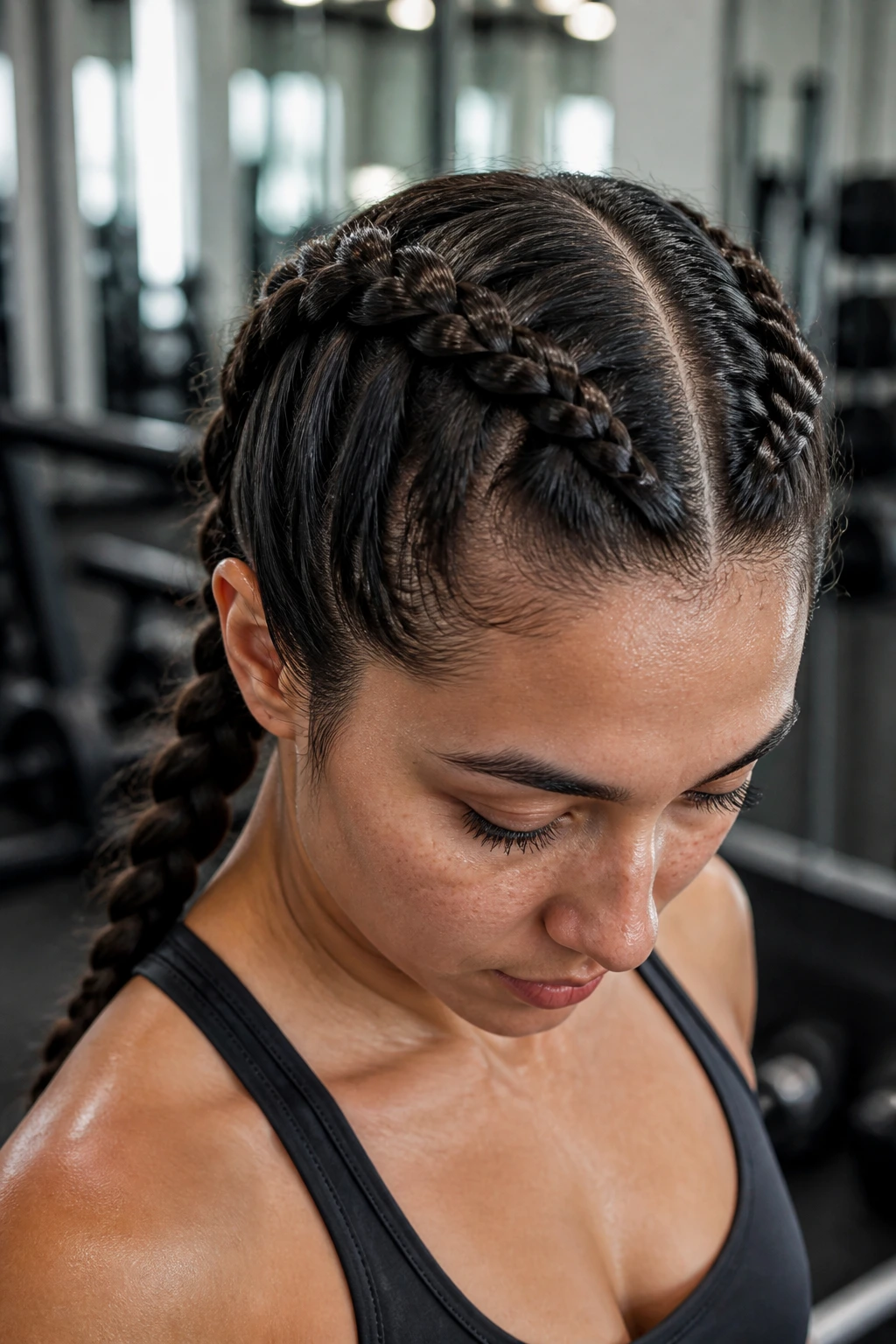
Dutch braids, often called “inside-out” braids, sit on top of the head rather than sinking into it. This creates a bold, defined look that is exceptionally secure. Because the outer strands are crossed under the center strand, the braid creates a sturdy base that stands up well to sweat and movement.
The Mechanics of the Dutch Braid
You are essentially doing the same motion as a French braid but reversing the direction of the strand placement. This inversion causes the braid to pop out from the surface of your scalp. It is a fantastic option for those who want a style that looks just as good at the finish line as it did at the starting whistle.
When to Choose This Style
This is the ideal choice for activities involving lying on your back, like Pilates or floor-based strength training, because the braid is tucked snugly to the sides of the head. Since the braids aren’t centered down your spine, they do not dig into your neck or cause discomfort while doing floor work.
3. The Fishtail Braid
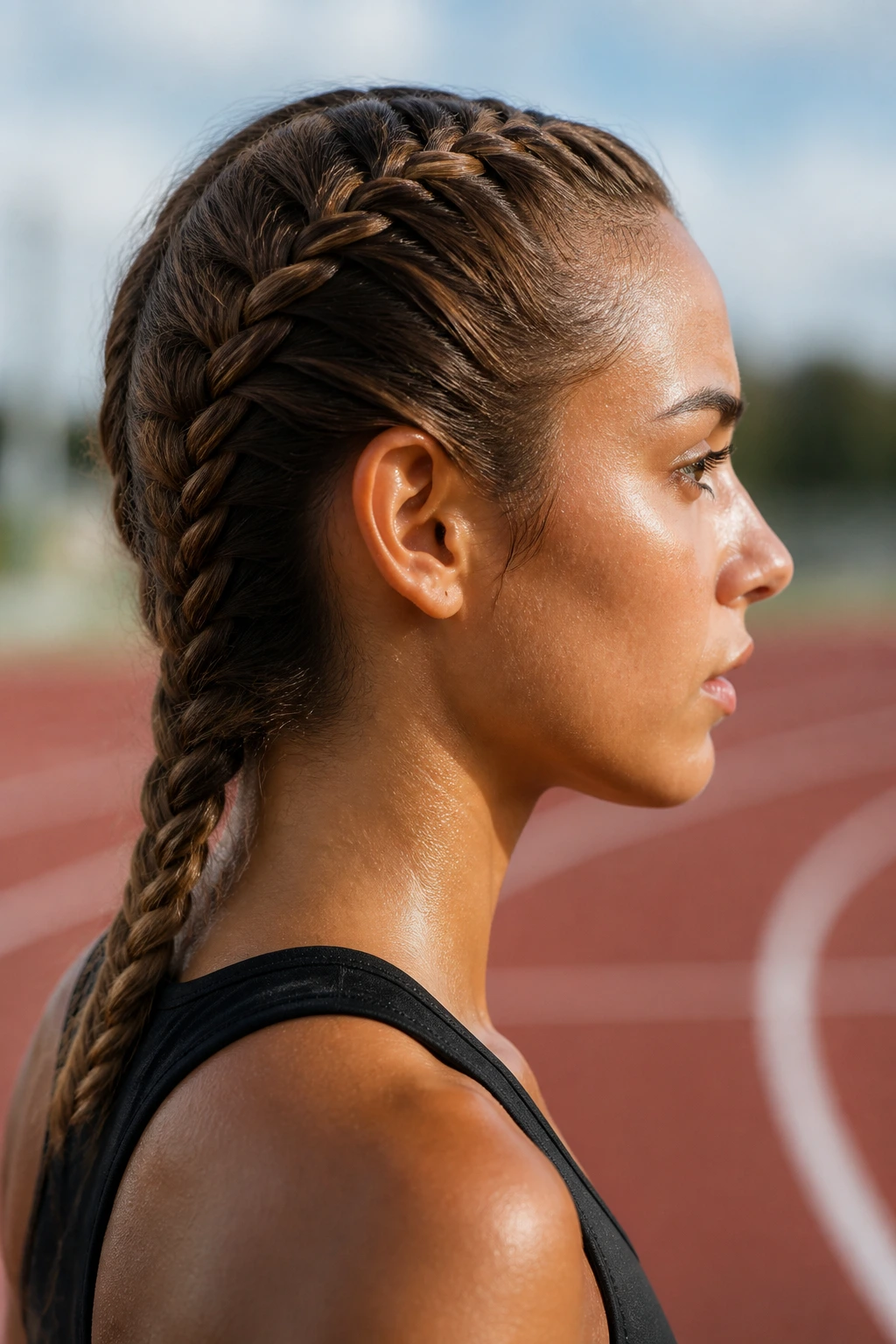
Fishtail braids provide a level of tightness that is nearly impossible to match with standard three-strand techniques. While they take a little longer to weave, the result is a slim, compact braid that does not budge. The intricacy of the weave acts like a web, catching every single strand and holding it firmly in place.
Why It Is Great for Long Sessions
The primary benefit of a fishtail is its durability. It holds together perfectly for hours, making it an excellent choice for long-distance cycling or endurance training. You can start this braid from a low ponytail base to keep it simple, or weave it all the way from the nape of your neck.
How to Execute the Technique
- Divide your hair into two even sections.
- Take a tiny strand from the outer edge of the left section and cross it over into the right section.
- Repeat the same action with the right side, crossing it over to the left.
- Continue this pattern all the way down. Important: Use smaller, tighter sections if you want a more secure hold for heavy movement.
4. Half-Up French Crown
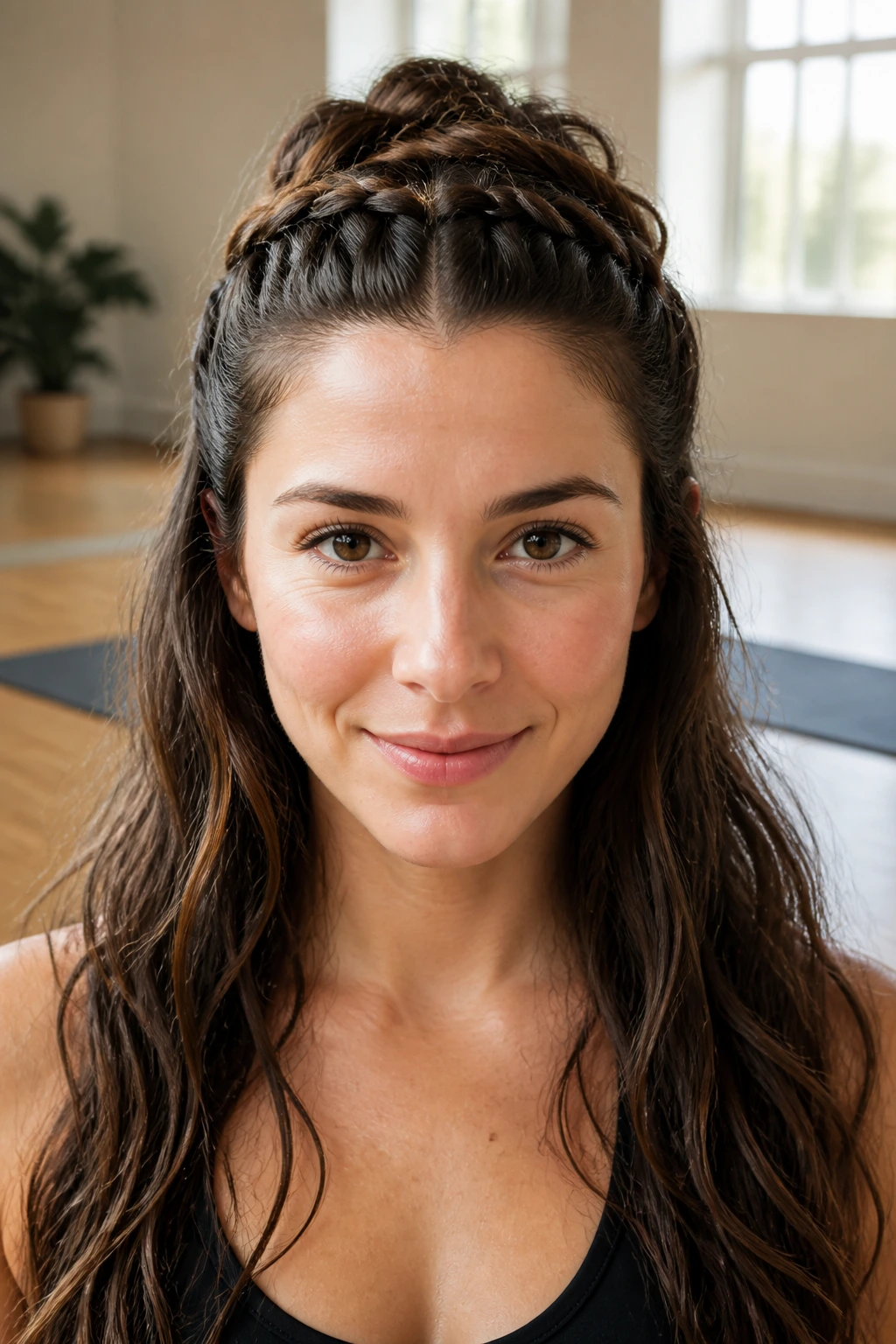
Not everyone likes to have their hair completely pulled back. The half-up crown braid offers a middle ground, keeping the front sections of your hair pulled back from your eyes while allowing the rest of your hair to hang loose. It is a stylish, functional compromise that works well for low-intensity activities like yoga or barre.
Strategic Placement
The key here is to braid along the hairline, starting from the temples and pulling hair back to meet at the crown of your head. This keeps the hair off your forehead while providing a decorative, secure anchor.
Why It Excels for Yoga
Since you aren’t fighting a full head of hair, you avoid the “bunching” sensation behind your head during inversions or rolling exercises. It is breathable and prevents hair from falling into your face while you focus on your breath.
5. The Pull-Through Braid
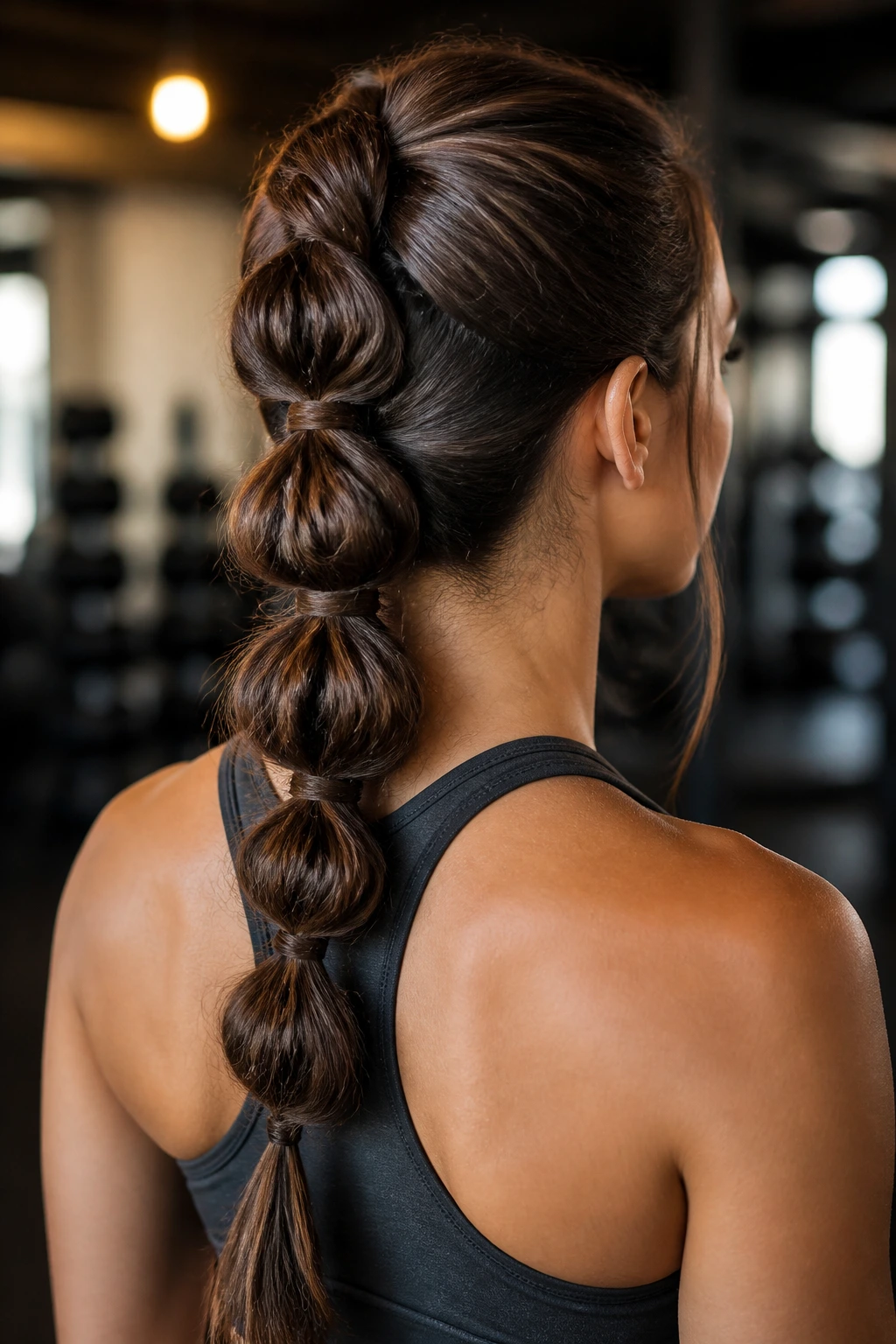
If you struggle with the dexterity required for traditional braiding, the pull-through “braid” is your solution. It uses a series of small, stacked ponytails that you pull through each other to create the illusion of a complex fishtail. It is remarkably secure and offers a voluminous look that stays put.
Why It Stays Put
Because every section is anchored by an individual elastic band, the style has a built-in locking mechanism. It is almost impossible for this style to unravel mid-workout, even if you are doing burpees or box jumps.
How to Style It
Start with a high ponytail at the crown of your head. Secure it with a band. Create another ponytail a few inches below it. Split the top ponytail in half, wrap it around the bottom ponytail, and pull the bottom one up through the center. Add more hair to the bottom ponytail and secure it with another elastic. Repeat until you reach your ends.
6. The Rope Twist
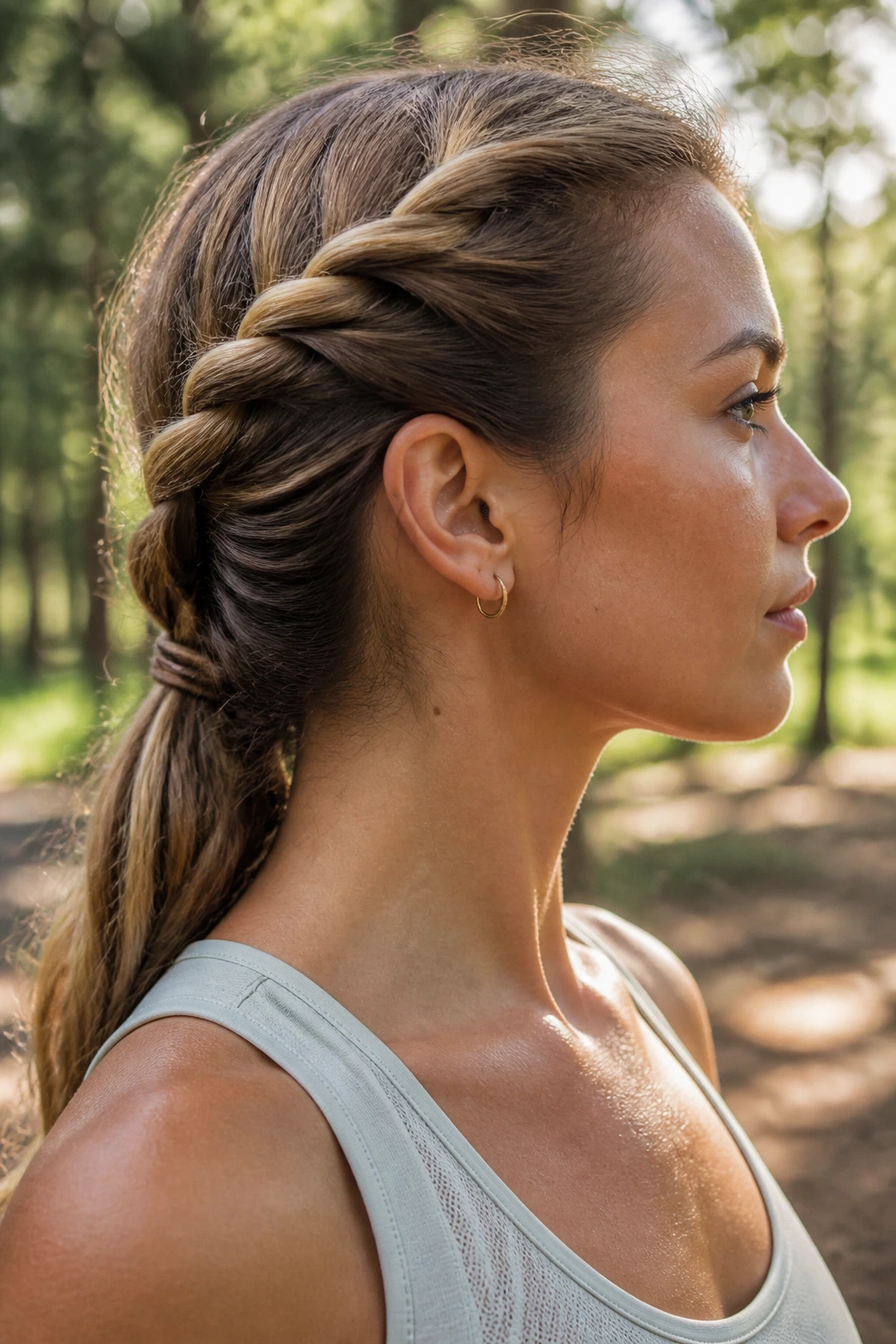
Rope twists are a deceptively simple alternative to braiding. Instead of three strands, you use two, twisting them tightly around each other. It is incredibly quick to style, taking perhaps thirty seconds once you have the tension right.
The Twist Mechanics
To get a rope twist that actually lasts, you must twist each individual strand in the opposite direction of the direction you are wrapping them together. This “counter-twist” locks the style so it doesn’t instantly unravel the second you start moving.
Best Uses
This is a sleek, minimalist style that works perfectly for swimming or high-sweat cardio sessions where you need to keep hair tightly controlled without the bulk of a wide braid. It is also very easy to wash out afterwards, making it a great daily go-to.
7. Triple-Braid Low Pony
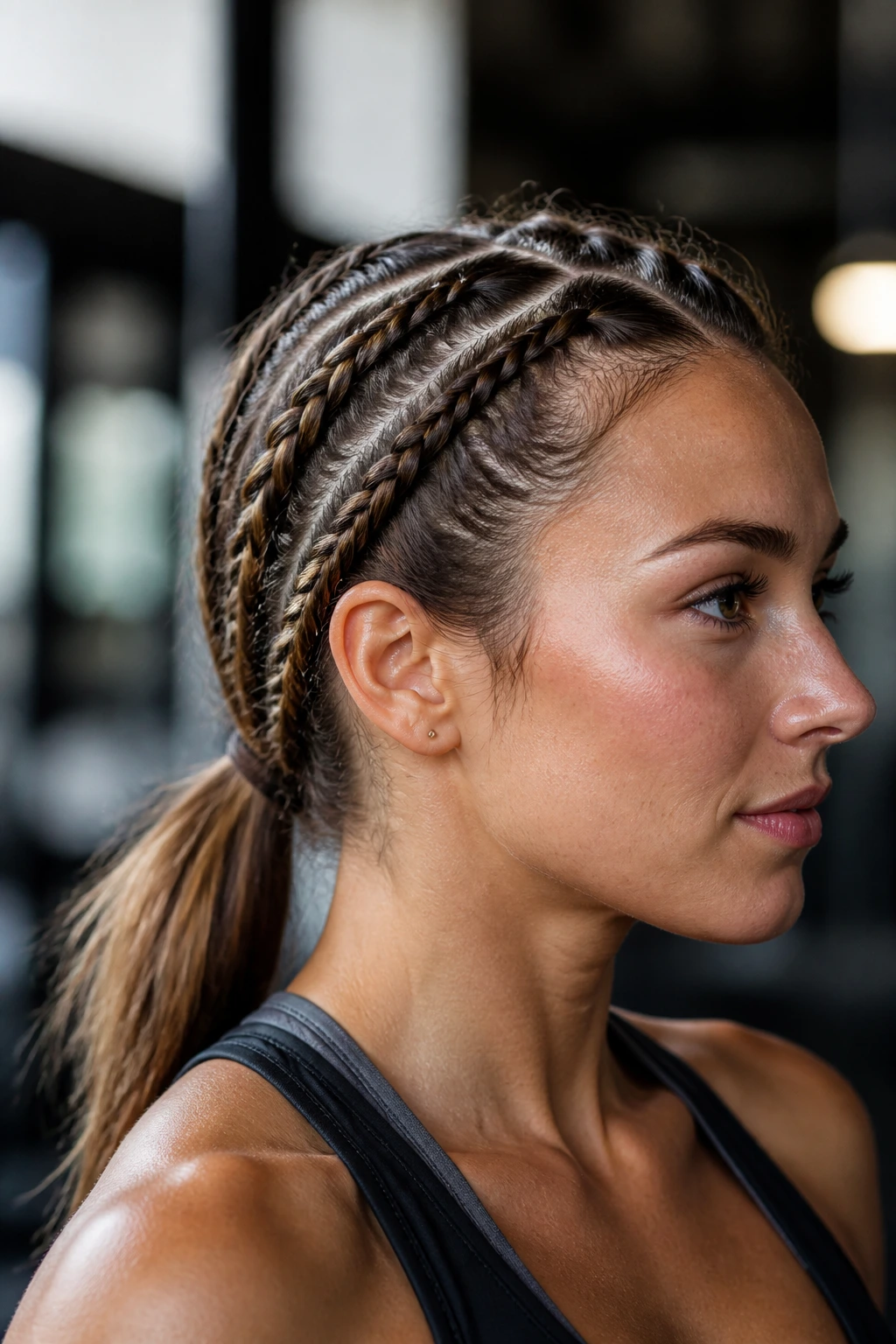
Combine the security of a braid with the simplicity of a ponytail by creating three separate thin French braids that converge at the nape of the neck. The resulting pony is secure, stylish, and keeps shorter layers along the hairline from escaping.
Why It Is a Winner
The triple-braid technique is perfect for people who have lots of shorter layers or bangs that usually fall out of a standard ponytail. By sectioning the front of your hair into three distinct paths, you gain control over those pesky flyaways that usually ruin a workout look.
Finishing the Look
Once you have braided the three sections down to the base of your skull, gather the remaining hair into a ponytail. You can leave the rest of the hair loose, or braid the entire tail into a single thick braid for even more control.
8. Side-Swept Dutch Braid
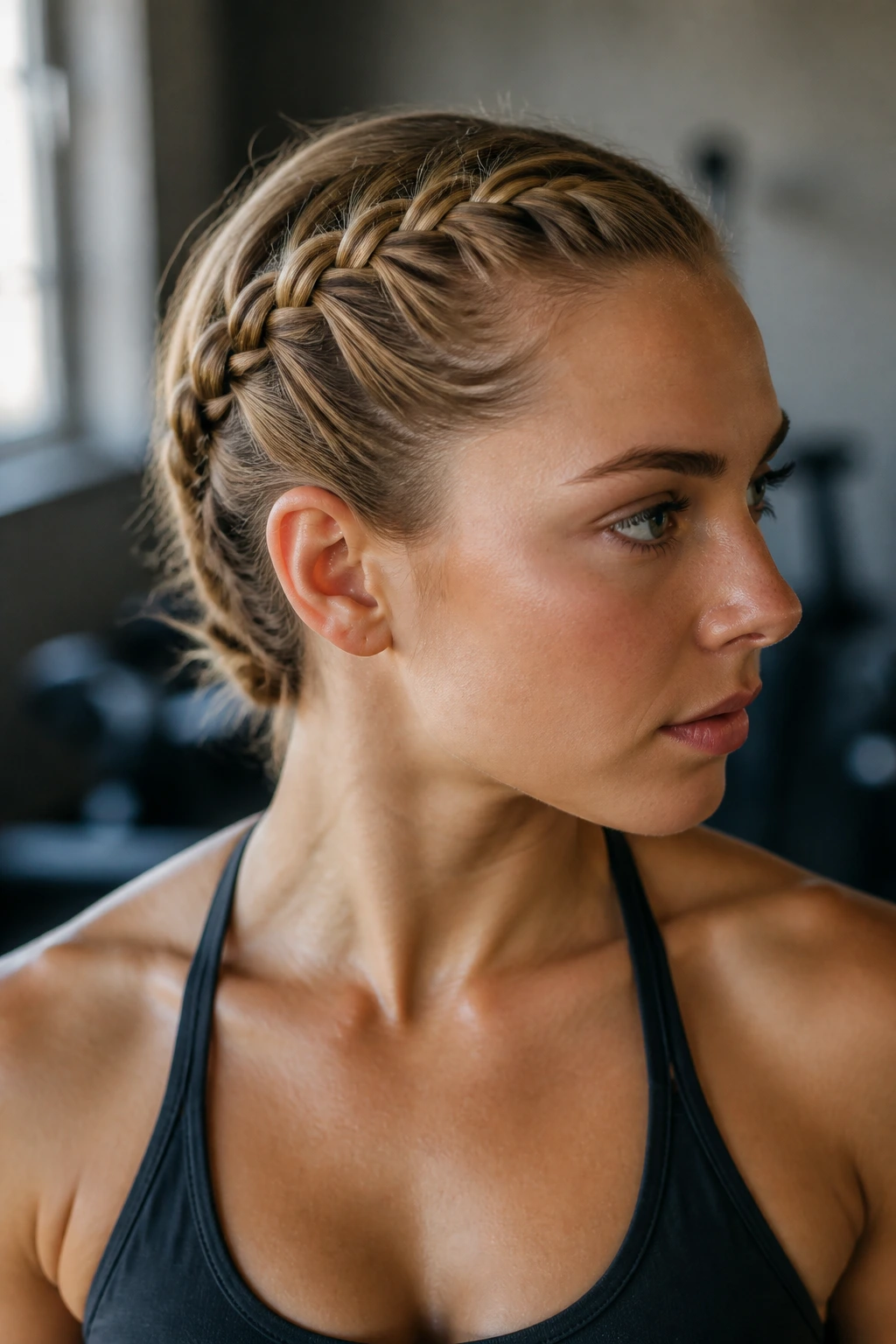
A single Dutch braid swept to one side of the head is a classic, functional look. By pulling the braid to the side, you prevent the weight from dragging on your neck, and the braid becomes a visible feature rather than just a functional necessity.
The Utility Factor
Starting the braid at the temple and curving it across the back of the head ensures that the hair is pulled tight against the scalp. This arc shape is very effective at keeping hair from flopping forward when you lean over for rowing or deadlifting.
Styling Tip
Because the braid is positioned on one side, it is much easier to see what you are doing in the mirror while you style it. This is a great “beginner” style for someone still getting comfortable with the under-braiding motion of a Dutch braid.
9. Waterfall Braid Into a Pony
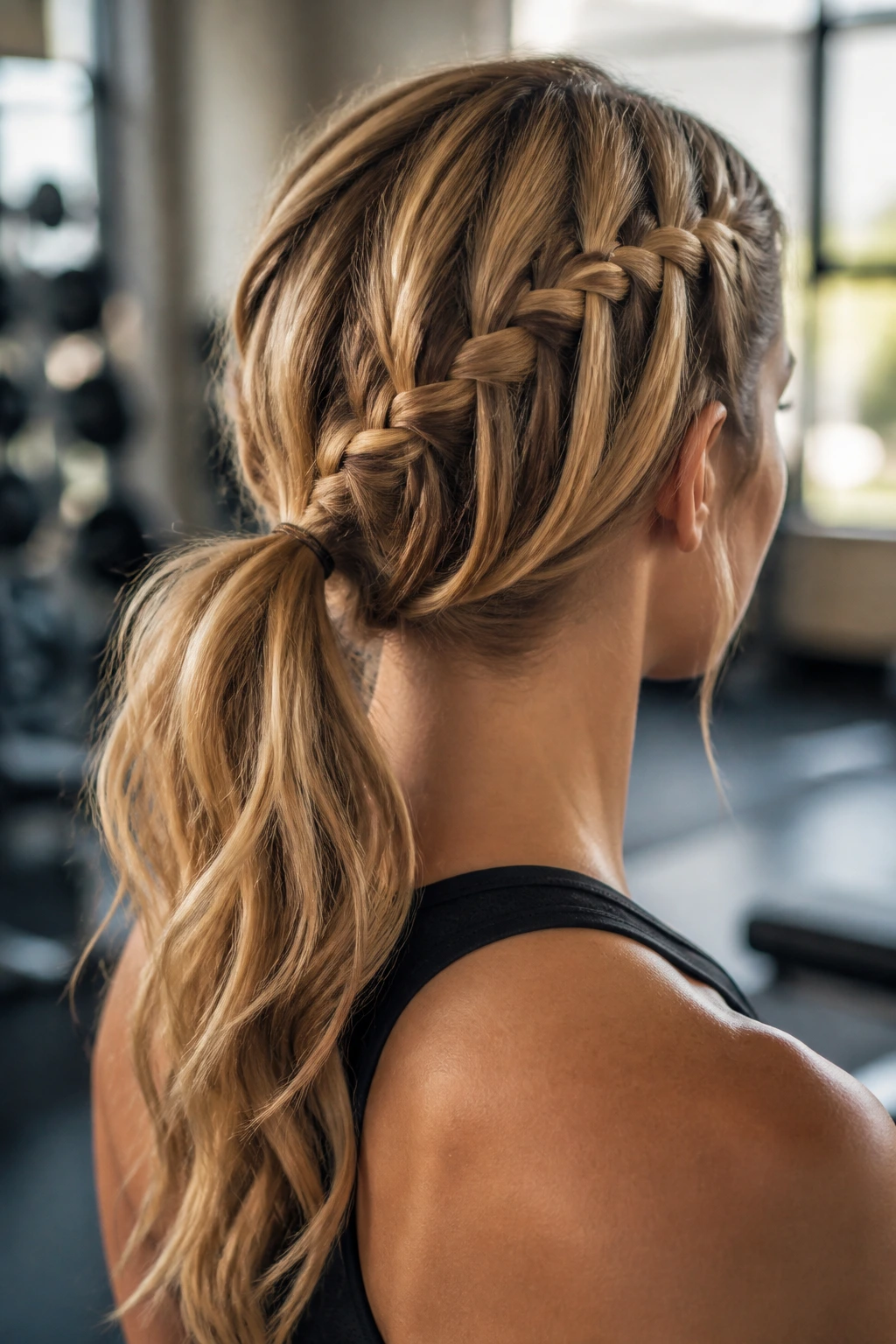
If you want something that looks sophisticated but functions like a workhorse, the waterfall braid is worth learning. It involves dropping sections of hair as you move across the back of the head, creating a cascading effect. To make it workout-friendly, you must anchor the dropped sections into a ponytail.
Why It’s Unique
Most braids pull all your hair into the structure. The waterfall braid leaves some hair out, which creates a lighter feel on your head. By gathering the remaining hair into a ponytail after you finish the braid, you get the best of both worlds—style and function.
Best Activity Match
This is best suited for gym sessions where you aren’t doing excessive floor work, as the ponytail tail can move around. It is a fantastic look for a lifting session where you want to feel put-together.
10. The Mohawk Braid
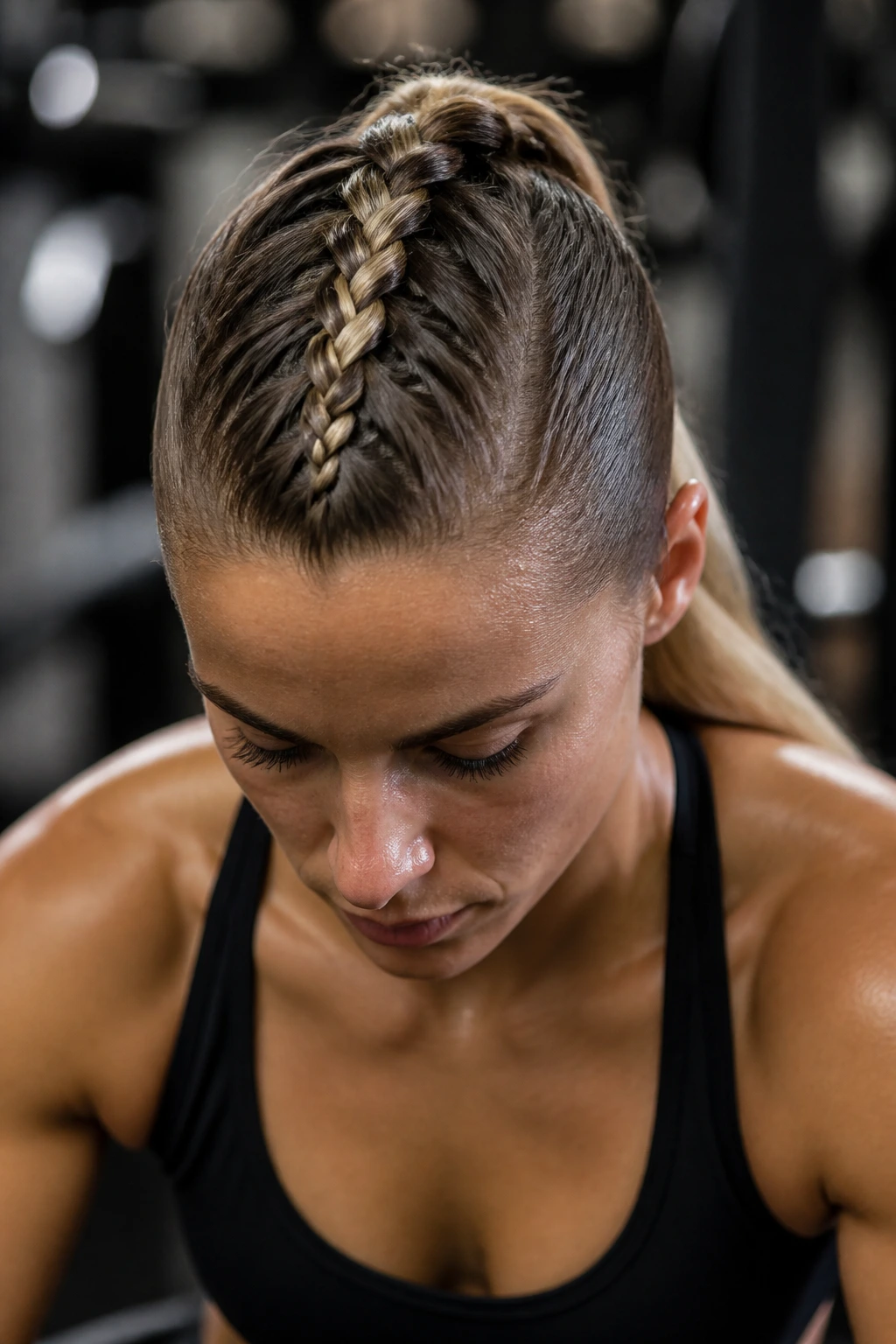
For those who want a statement style that screams focus and power, the mohawk braid is the answer. By Dutch braiding the center strip of your hair from the hairline to the crown, you isolate the bulk of your hair and lock it into a vertical structure that cannot fall into your eyes.
How to Build the Mohawk
You will need to section off a two-inch-wide strip of hair right down the middle of your scalp. Braid this tightly, pulling in small amounts of hair from the sides as you progress. Once you hit the crown, secure it with a band and let the rest of your hair fall into a sleek ponytail.
Why It Works for Cardio
The center-anchor keeps the weight of your hair perfectly balanced. It is extremely popular for high-intensity interval training (HIIT) because it prevents the “head whip” feeling when moving quickly between different positions.
11. Braid-Into-Bun
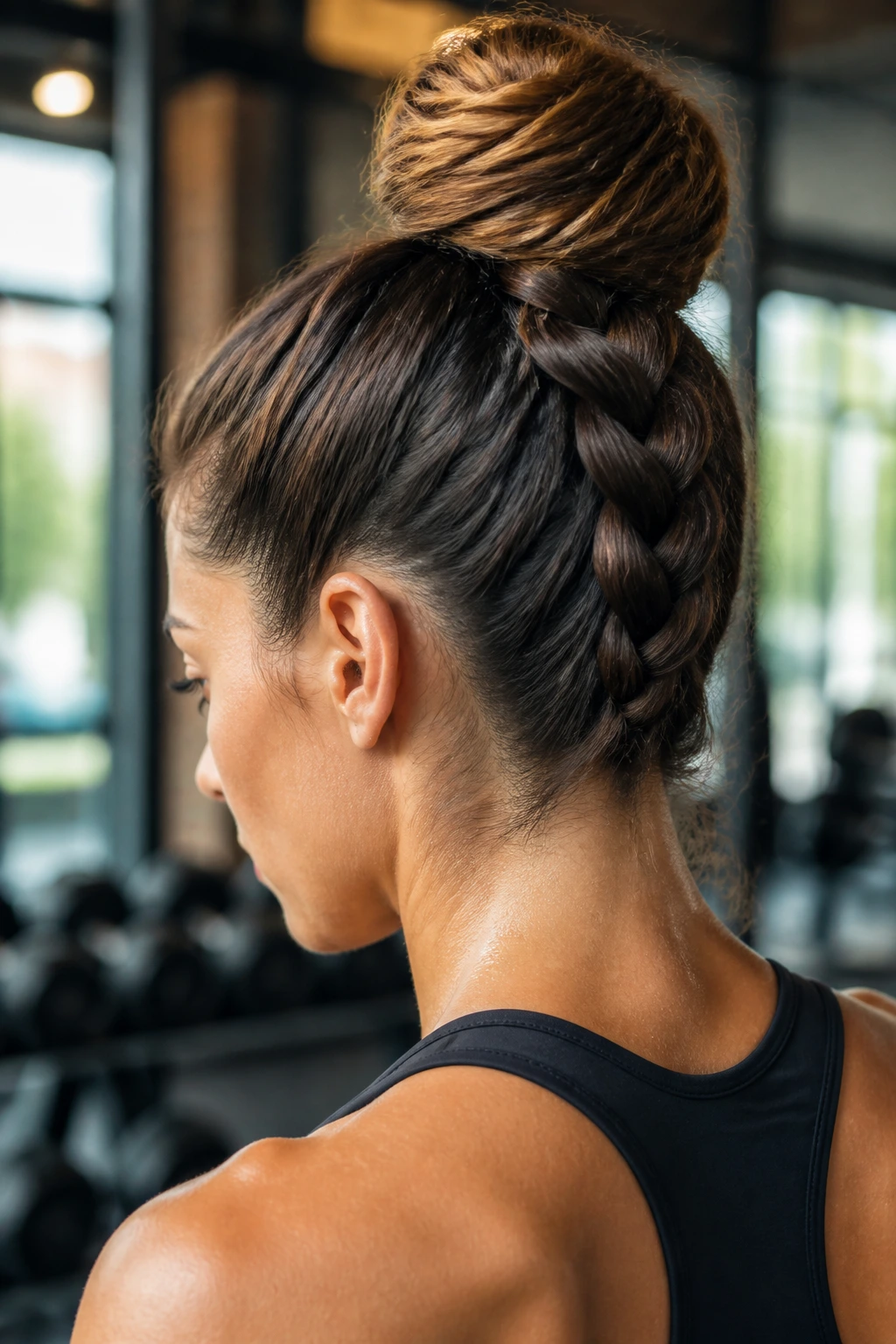
Nothing beats the Braid-into-Bun for total containment. You start with a Dutch or French braid that travels from the nape of the neck upward, and finish by twisting the remaining length into a secure high bun.
The Double-Security Advantage
By braiding the hair up the back of your neck, you eliminate the risk of hair falling out when you lean forward. The bun at the top then captures the rest of your hair, keeping it away from your neck and upper back. It is arguably the most secure hairstyle on this list for long, intense workouts.
Pro Technique
To ensure the bun stays tight, use a heavy-duty spiral hair tie. These distribute pressure evenly and do not create the painful “ponytail dent” that regular rubber bands often cause.
12. Fishtail Crown
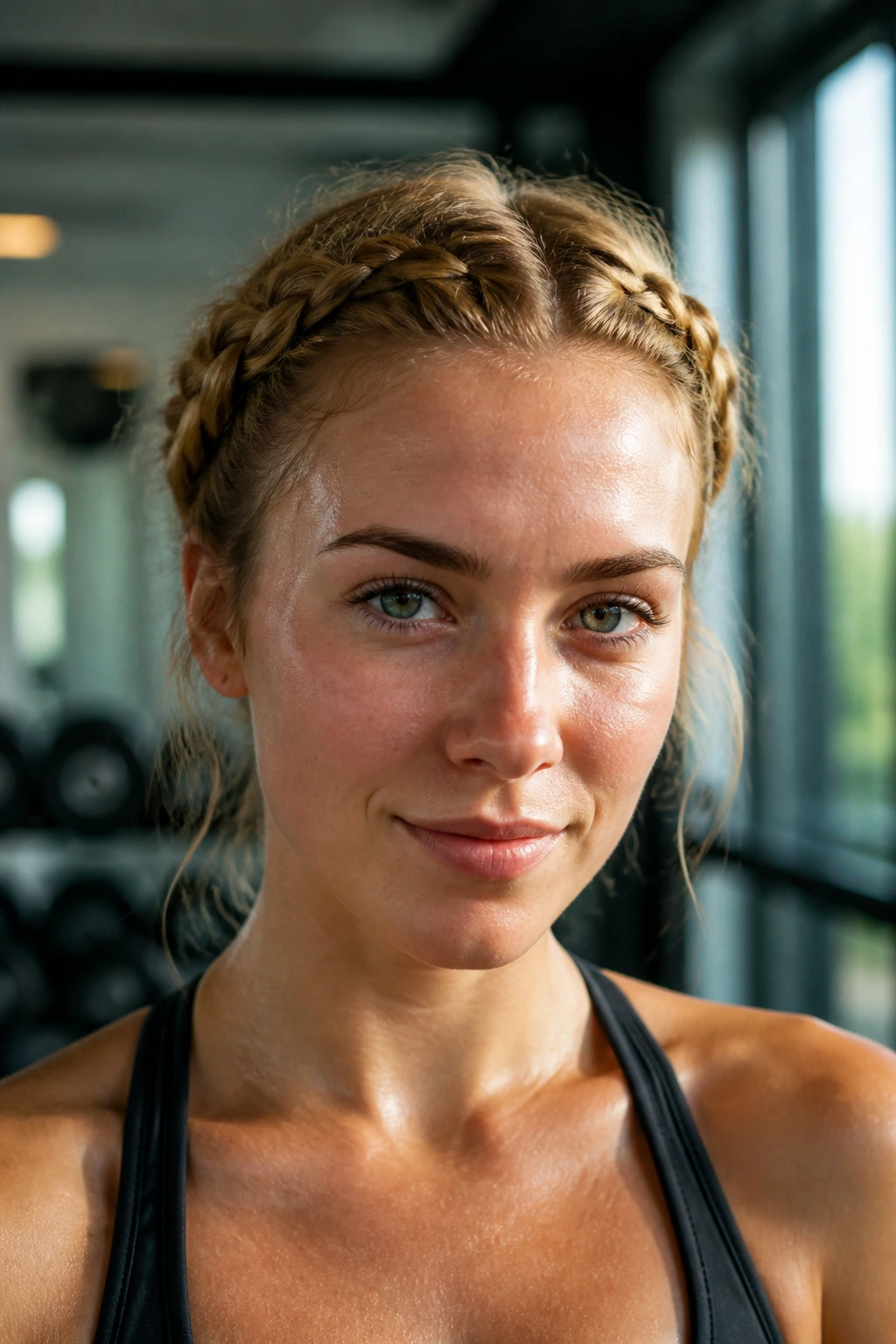
Similar to the half-up crown, the fishtail crown uses two fishtail braids woven along the hairline. It is elegant, secure, and keeps the front of your hair entirely out of your face.
Why it Succeeds
Fishtail braids are naturally flatter than standard French braids. If you are worried about your hairstyle looking too “bumpy” or getting in the way of a hat or a pair of sweat-wicking headphones, the fishtail crown is your best option.
Styling Advice
Be sure to pull your braids slightly away from your face as you weave them. This creates a slightly softer look that doesn’t feel like a tight headband, which is often a source of headaches during long sessions.
13. Double-Braid Top Knot
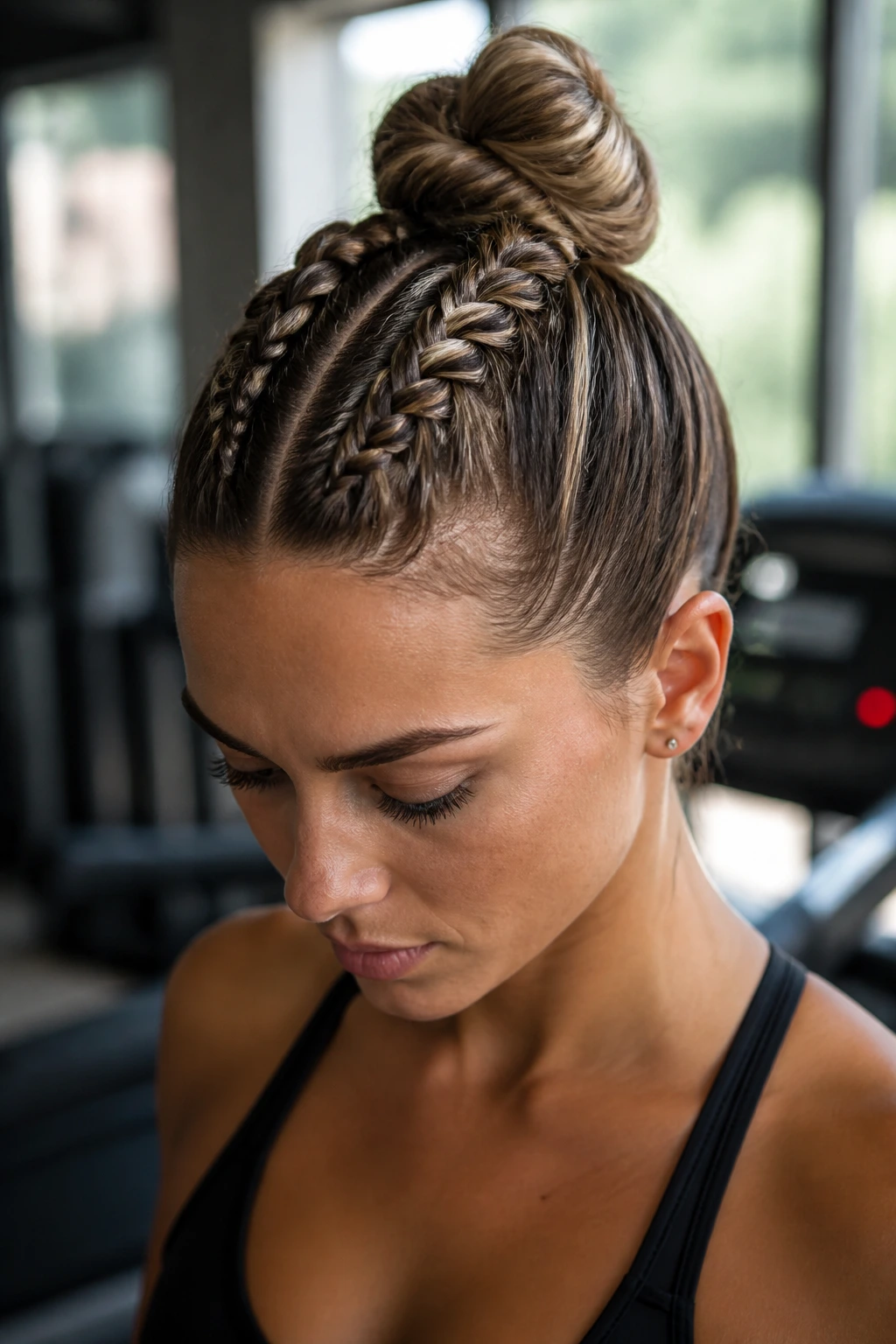
This is a more aggressive version of the braid-into-bun. By creating two French braids that start at the forehead and feed into a high bun, you effectively lock down every single strand from your hairline to your crown.
Controlling the Flyaways
The tight braiding of the front sections ensures that no hair can possibly escape into your eyes. Because there are two braids, you have more control over the hair near your ears and temples, which are usually the first areas to get messy.
Best Occasion
This style is built for the treadmill or any high-speed cardio. It is tight, precise, and completely out of the way, allowing you to focus entirely on your heart rate and form.
14. Crisscross Dutch Braids
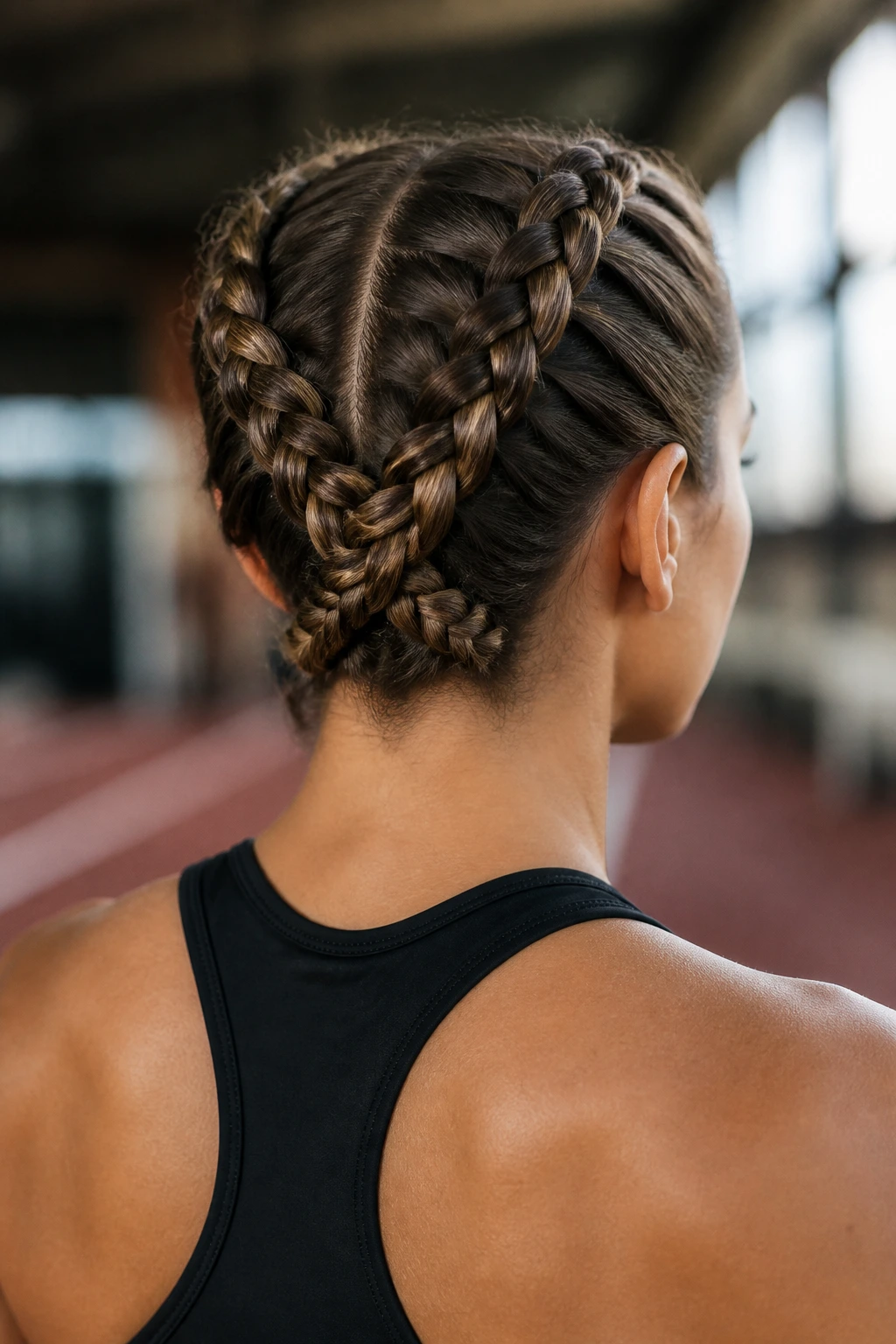
If you want to add a bit of visual flair to your routine, start two Dutch braids at your temples and cross them over each other in the back. This creates a geometric, woven pattern that is surprisingly robust.
The Structural Benefit
When braids cross over one another, they effectively “lock” each other into place. This makes the style resistant to sagging. It is a slightly more advanced style, but once you set the cross-over point, the rest of the braid is standard.
Keeping it Secure
Secure the intersection with a few bobby pins that match your hair color. This prevents the braids from pulling apart while you are jumping or running.
15. The “Infinity” Braid
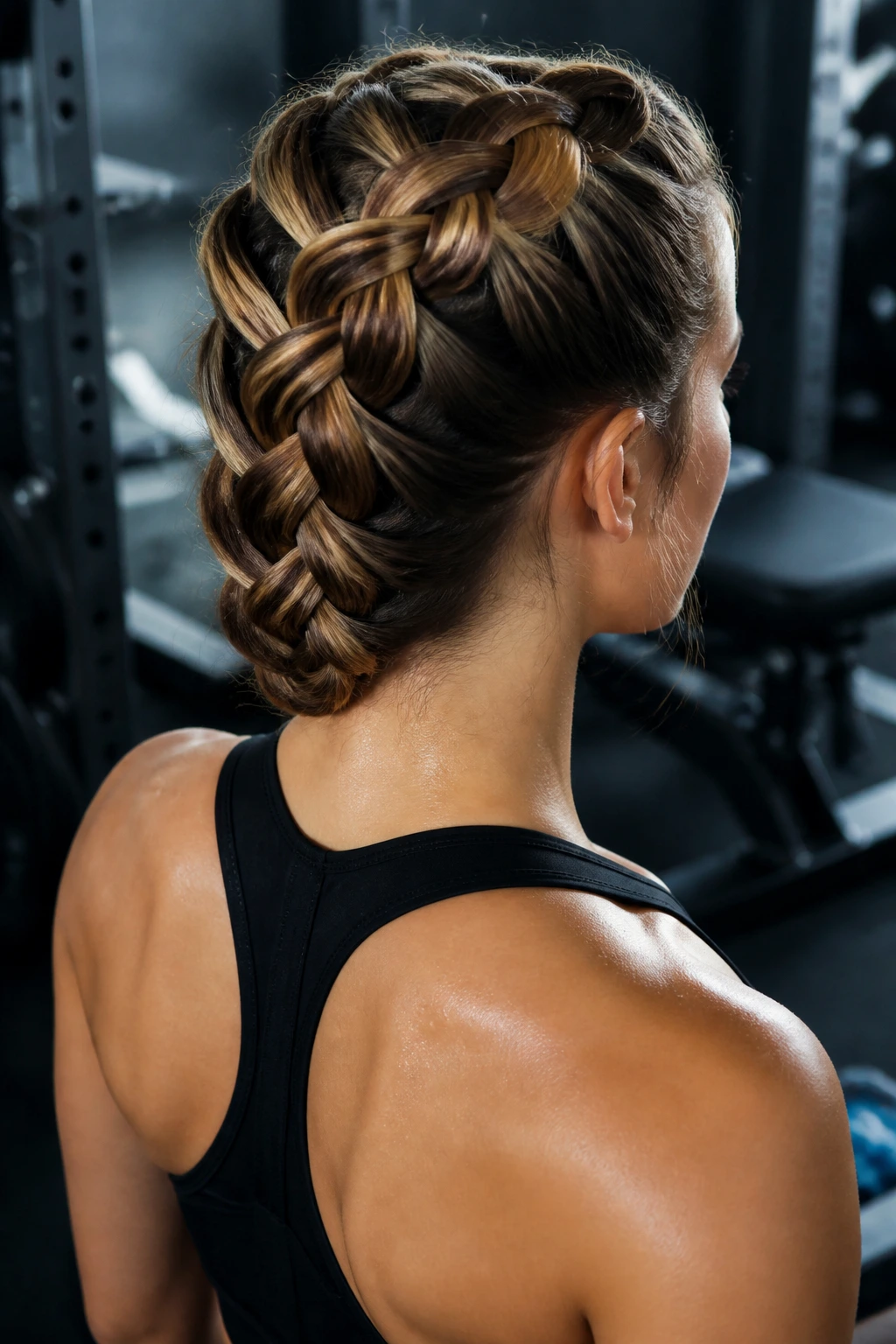
The infinity braid is a variation that uses a figure-eight pattern. It is wide, flat, and extremely secure. Because the hair wraps around the side strands in a circular motion, it creates a very sturdy braid that holds its shape even when you are sweating profusely.
Why Choose This Over French?
The infinity braid is generally wider than a French braid, which means it can accommodate more hair volume. If you have very thick hair, this style will do a better job of keeping everything consolidated in one place.
Practical Application
Because it is wide and flat, it sits very comfortably against the back of the head. It is a great choice for weightlifting, as it won’t push your head forward or interfere with your ability to press your head against a bench.
16. Double-Braid Low Buns
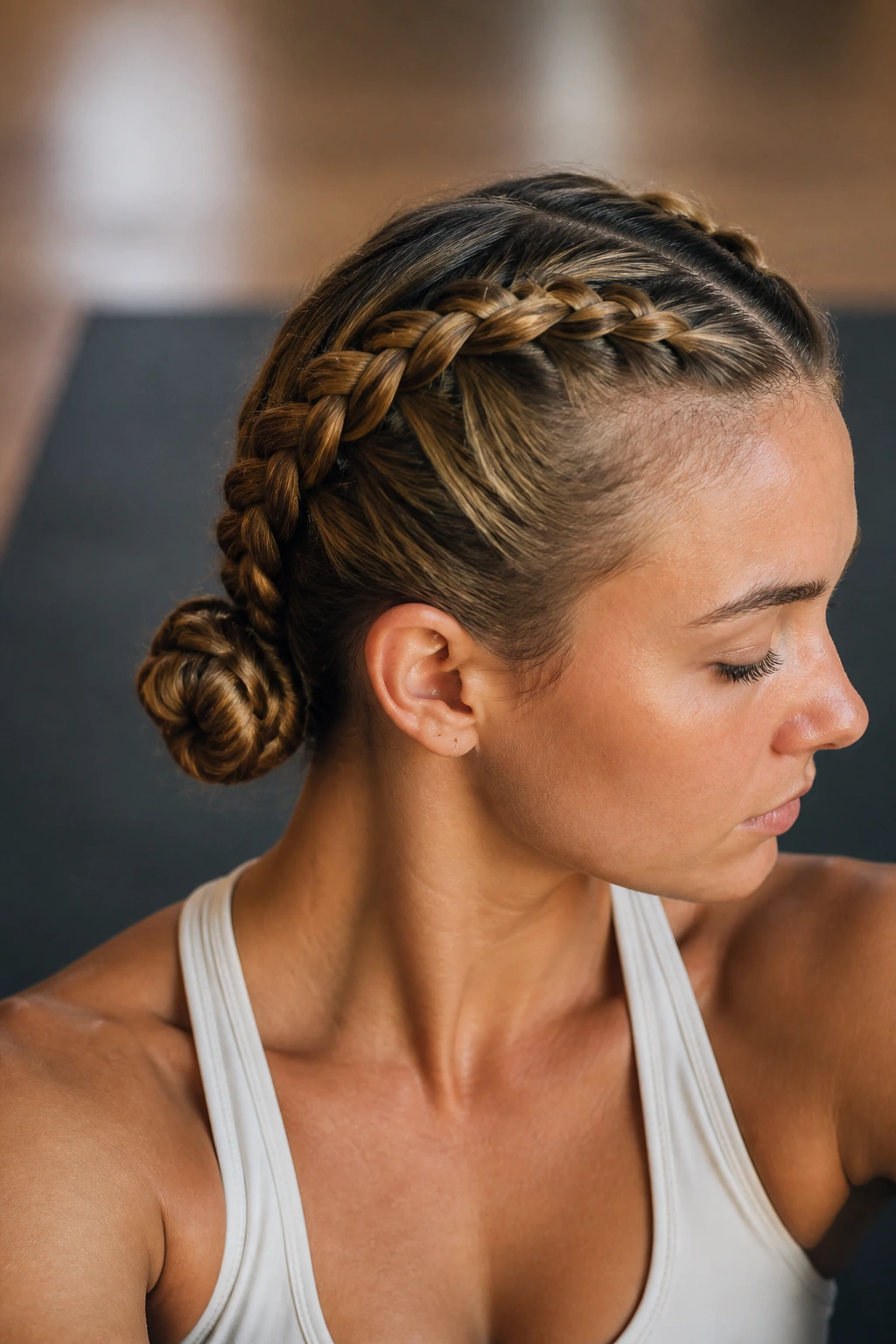
If you prefer a balanced look, separate your hair into two equal sections and braid each into a low French braid. Instead of letting them hang down, coil each braid into a small, tight bun at the nape of your neck.
The Benefit of Double Buns
Double buns are excellent for floor work. Because they are low and compact, they don’t get in the way when you are doing planks or push-ups. They also offer a very symmetrical feel that some people find helps with balance during yoga postures.
Tips for Stability
Use a slightly larger, thicker hair elastic for the buns. Because the weight of the braid is concentrated in the bun, a standard thin band might snap. A thicker, fabric-wrapped elastic will hold the weight comfortably for the duration of your session.
17. The Lace Braid
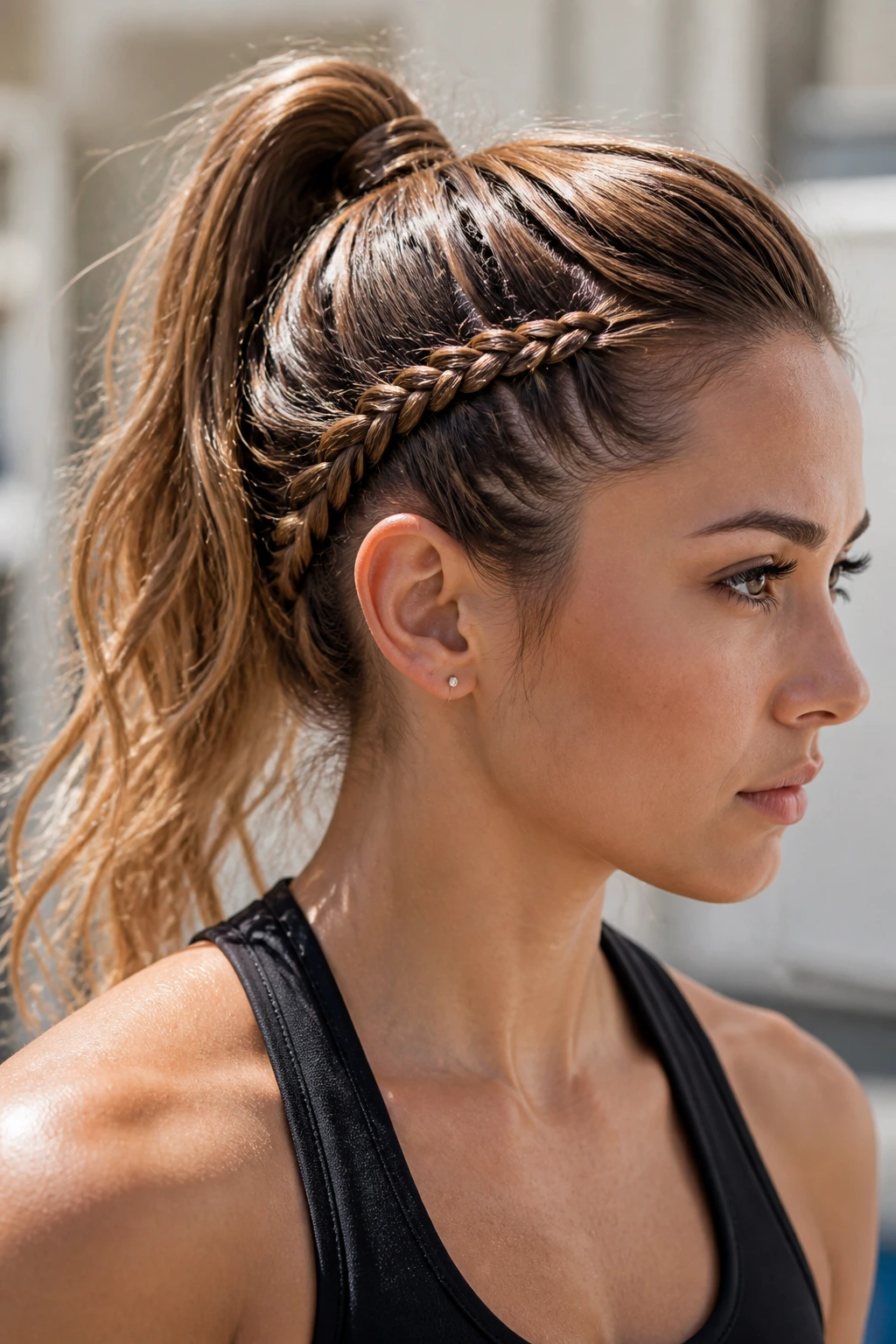
A lace braid is similar to a French braid, but you only add hair to one side of the braid. This creates a beautiful, delicate line that looks like a trail of lace. It is a fantastic way to keep bangs or short layers off your face while keeping the rest of your hair in a ponytail.
When to Use It
Use this when you want to focus on keeping the front sections controlled but don’t want to spend the time braiding the entire length of your hair. It is a quick, high-impact style that looks much more difficult than it actually is.
Versatility
This style pairs beautifully with a high ponytail or a messy bun, giving you a functional way to manage your hairline while maintaining the convenience of a quick updo.
18. Inside-Out Fishtail
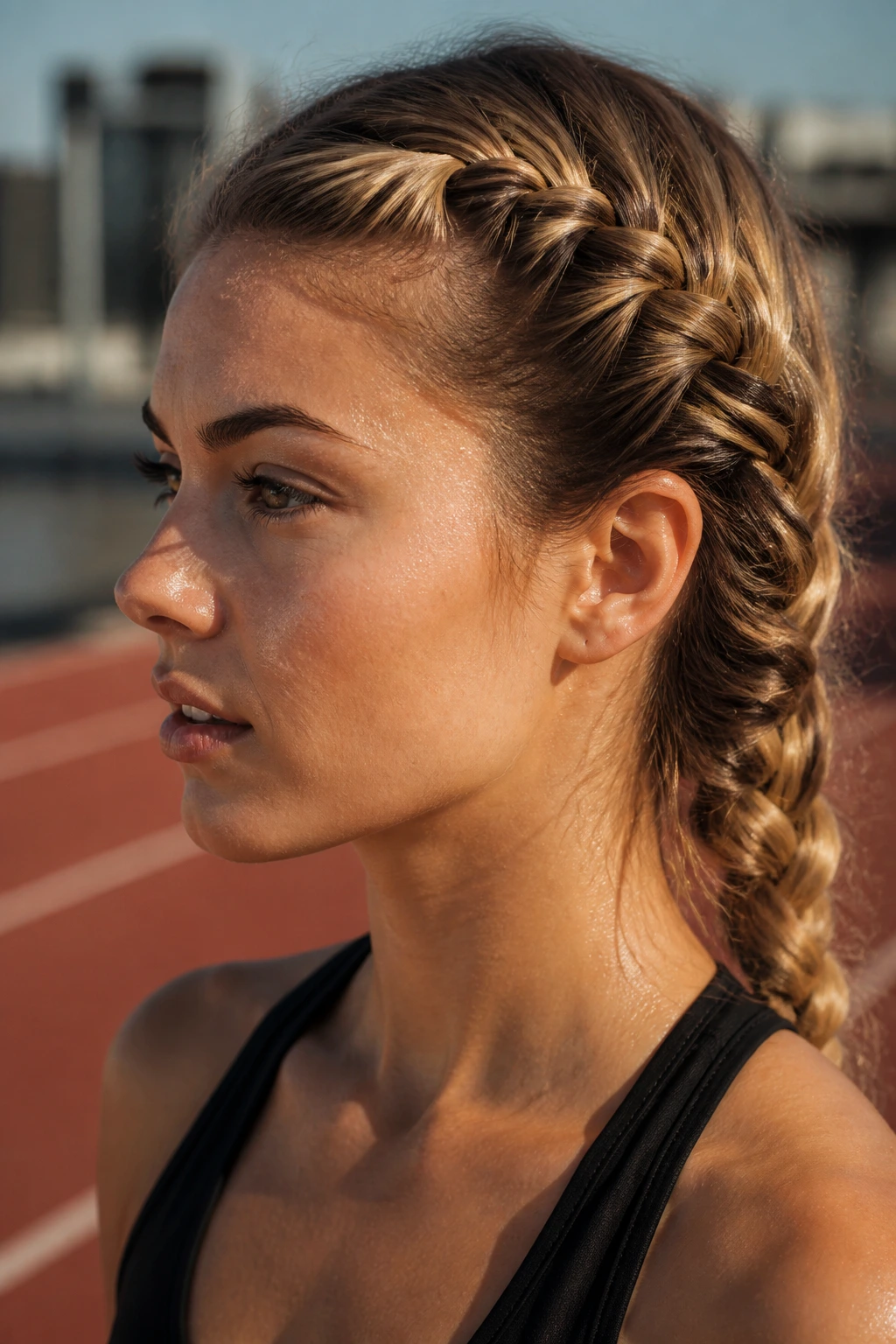
Most people braid fishtails “on top.” By braiding them “inside-out”—meaning you pull the hair under rather than over—you create a raised ridge. This ridge is stiffer and more durable than a standard fishtail, making it an excellent candidate for intense exercise.
Why it Lasts
The raised structure of an inside-out fishtail provides a firm frame. It holds up against wind, humidity, and rapid movement. If you are planning an outdoor workout, this is the style that will survive the elements.
How to Master It
The motion is exactly the same as a normal fishtail, but you must focus on pulling your strands under the center point. It feels strange for the first few minutes, but your muscle memory will take over quickly.
19. The Snake Braid
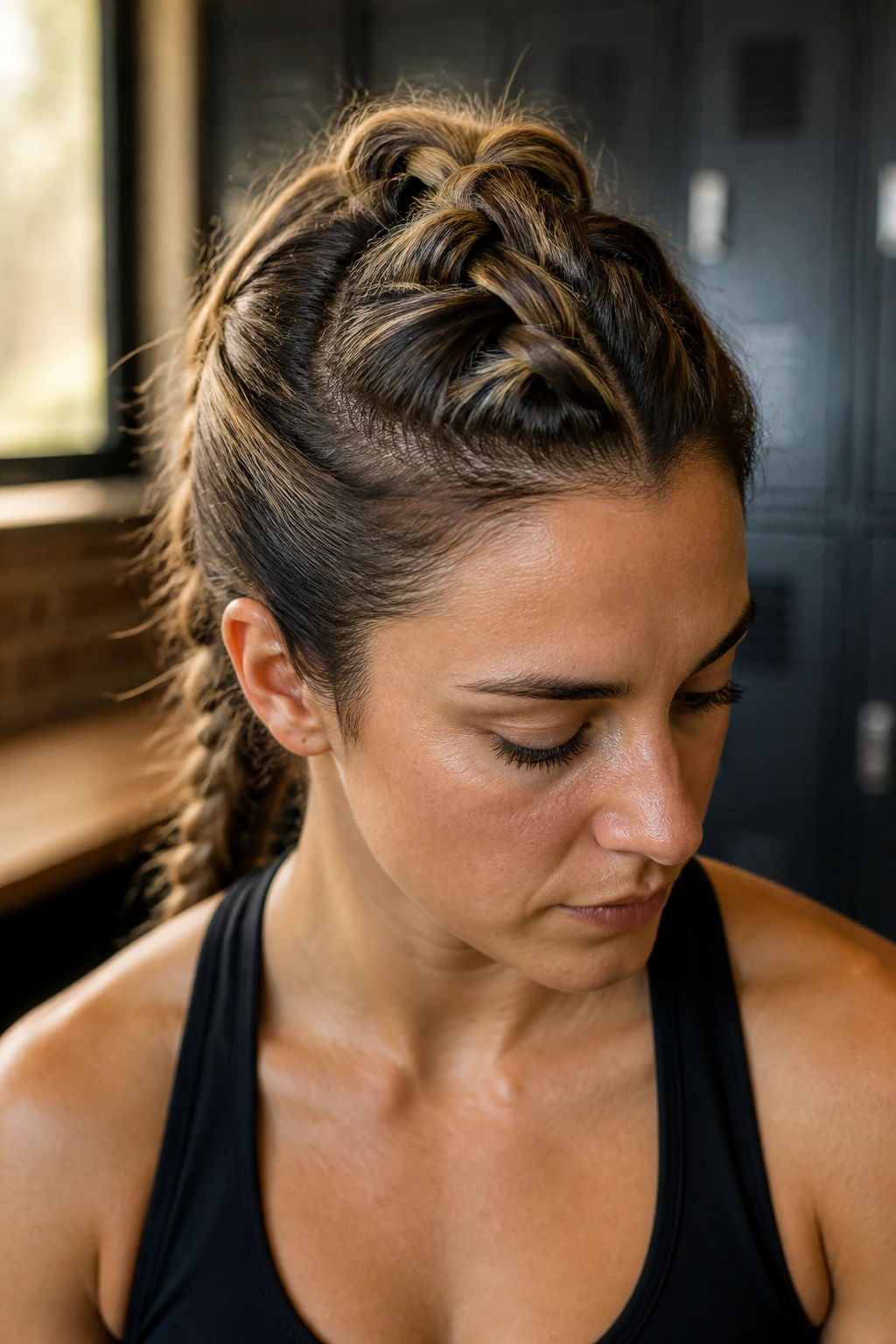
A snake braid is a clever technique where you braid a single strand of hair and then pull the other two strands out, causing the braid to “scrunch” up into a wavy, serpentine shape. It is a very tight style that effectively creates a locking mechanism.
The Security Factor
Because the braid is essentially “bunched” upon itself, it creates a high-friction environment that prevents any slippage. It is a great, unconventional style for someone looking for something that is both highly secure and visually interesting.
Styling Tip
Use a bit of hair oil on your hands before you scrunch the braid upward. This will prevent your strands from frizzing as you push them up the central strand.
20. Simple Side-Braid with Ribbon
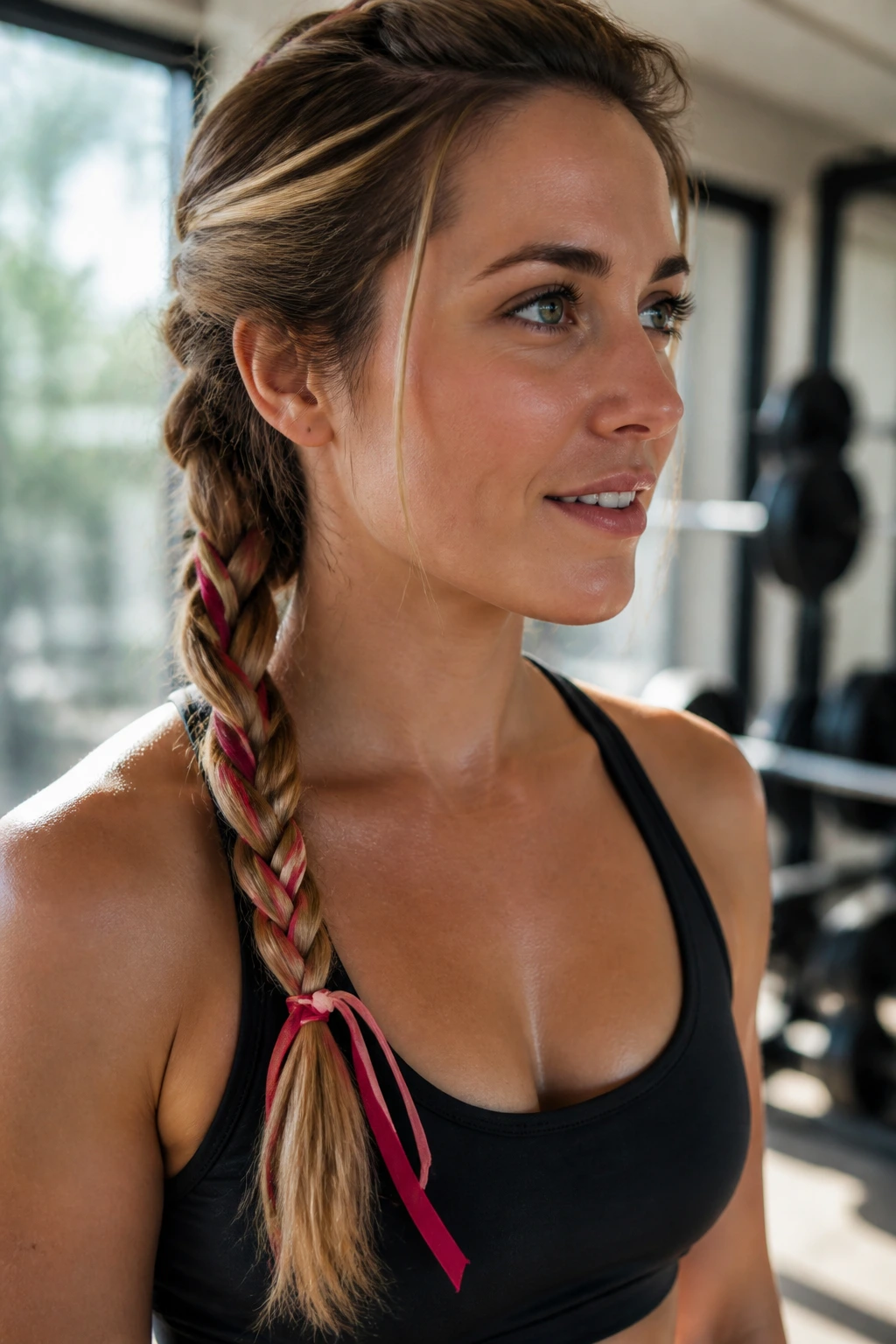
If you have fine hair that struggles to stay in braids, incorporate a thin, fabric ribbon into your braid. It acts as a structural anchor, adding bulk and grip to the braid so it stays tight even during sweaty sessions.
Why Ribbons Help
Fabric provides much more friction than hair, meaning your elastic will have something sturdy to grab onto. It also adds a pop of color to your workout gear, making it a great way to personalize your look.
How to Integrate
Tie the ribbon at the base of your ponytail, then treat the ribbon as one of your three strands. As you braid, the ribbon will be woven into the fabric of the style, creating an incredibly secure hold that won’t slide out, no matter how much you move.
Final Thoughts
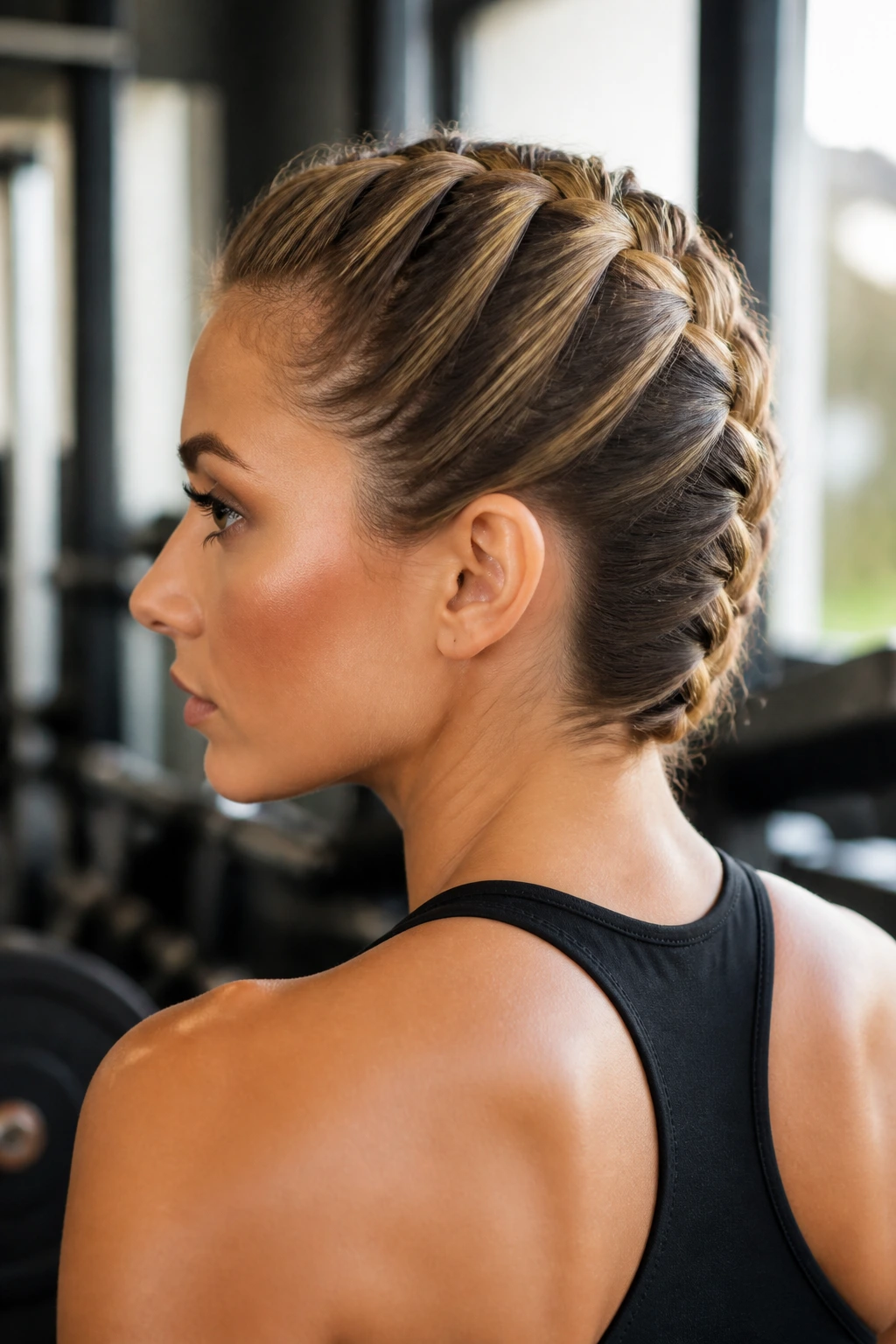
The most effective workout hairstyle is one that you can execute in under five minutes and that doesn’t require you to touch it once you start moving. Whether you prefer the sleek, tight hold of a French braid or the voluminous, anchored feel of a pull-through, the key is tension. Don’t be afraid to pull your sections tight near the scalp; that is where your foundation is built.
Remember that your hair health matters as much as your workout. If you notice breakage, consider using silk-lined hair ties or avoiding extremely tight, thin elastics that cut into your strands. Experiment with these twenty styles during your lower-intensity days to find which ones work best for your specific hair texture and length. Once you find your go-to braid, it will become an effortless part of your pre-workout ritual, leaving you free to focus entirely on your performance.