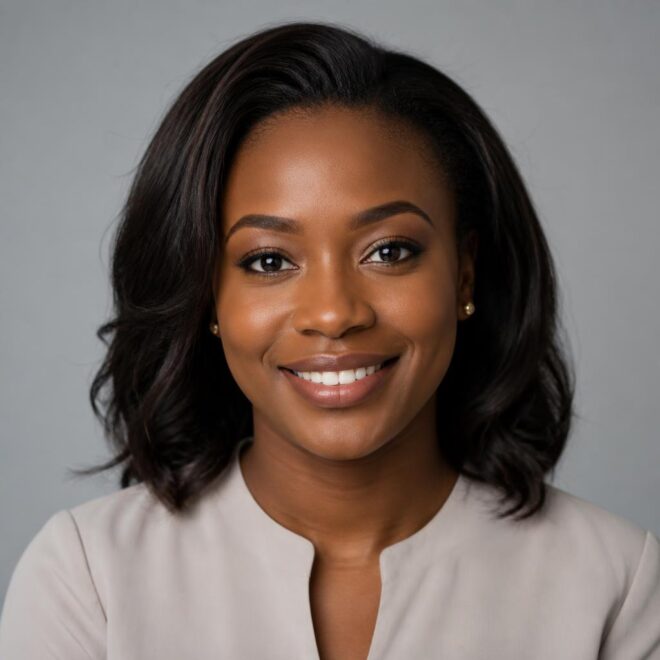


Braided hairstyles are more than just a functional way to manage hair; they are a cultural hallmark, a protective measure, and a canvas for intricate personal style. When we talk about straight back braids—often referred to as cornrows or feed-in braids—we are looking at a technique that has been refined over generations. For Latina hair, which often possesses a unique density, texture, and curl pattern, these braids provide a secure, low-tension foundation that keeps strands healthy while allowing for dramatic length and volume. Whether you are aiming for a sleek, minimalist aesthetic or something more ornate and embellished, the versatility of this style remains unmatched.
The Foundation: Understanding Latina Hair Texture
Before you even pick up a pack of synthetic hair or reach for a rat-tail comb, you have to consider the specific texture of your hair. Many Latina hair types are characterized by high density and varying curl patterns, ranging from loose waves to tight, coily curls. Because of this, the preparation phase is the most critical step in ensuring the longevity of your straight back braids. You are not just braiding; you are building a structure that needs to withstand tension and movement for weeks at a time.
Assessing Moisture Needs Before Braiding
- Deep Conditioning: At least three days before your appointment, use a mask rich in proteins and moisture.
- Detangling: Start from the ends and work your way up to the roots to minimize breakage during the braiding process.
- Scalp Health: If you struggle with a dry scalp, apply a light, non-comedogenic oil to the skin to prevent flaking once the braids are tight.
1. Classic Sleek Straight Backs
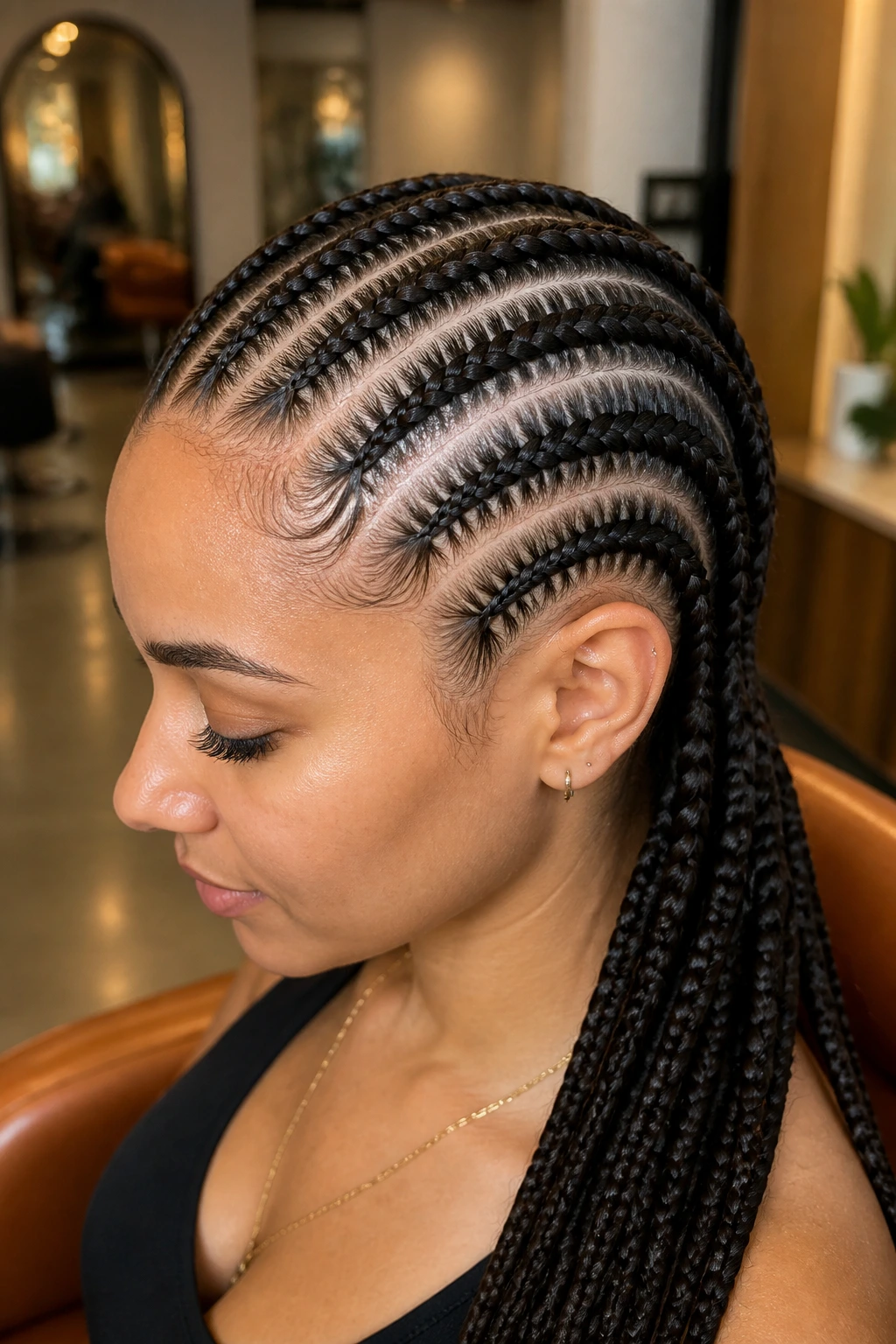
There is an undeniable power in simplicity. The classic straight back style involves creating neat, even parts that run from the hairline directly to the nape of the neck, maintaining a uniform width throughout. This look is the gold standard for versatility, as it pairs just as well with a casual tracksuit as it does with evening wear. Because the tension is distributed evenly across the head, this style is remarkably gentle on the hairline, provided your braider does not pull the edges too tightly.
2. Jumbo Feed-In Braids
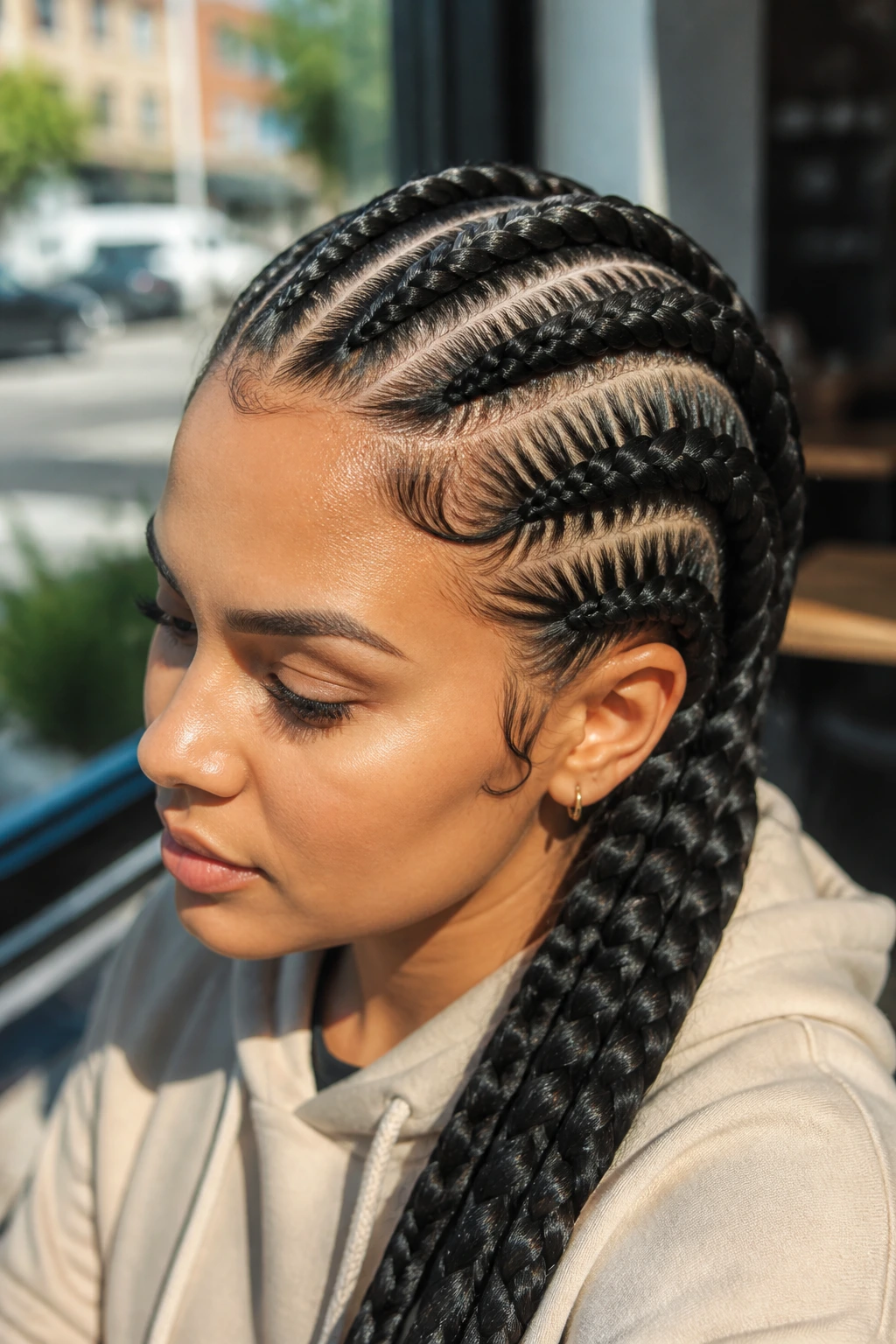
If you prefer a bold, high-impact aesthetic, jumbo braids are your best option. By incorporating more extension hair, the braids appear significantly thicker and create a voluminous look that frames the face beautifully. These usually require fewer parts, meaning less time in the chair and less overall manipulation of your natural hair. They are perfect for those who want a dramatic silhouette without the headache of hundreds of tiny, tedious parts.
3. Bohemian Goddess Braids
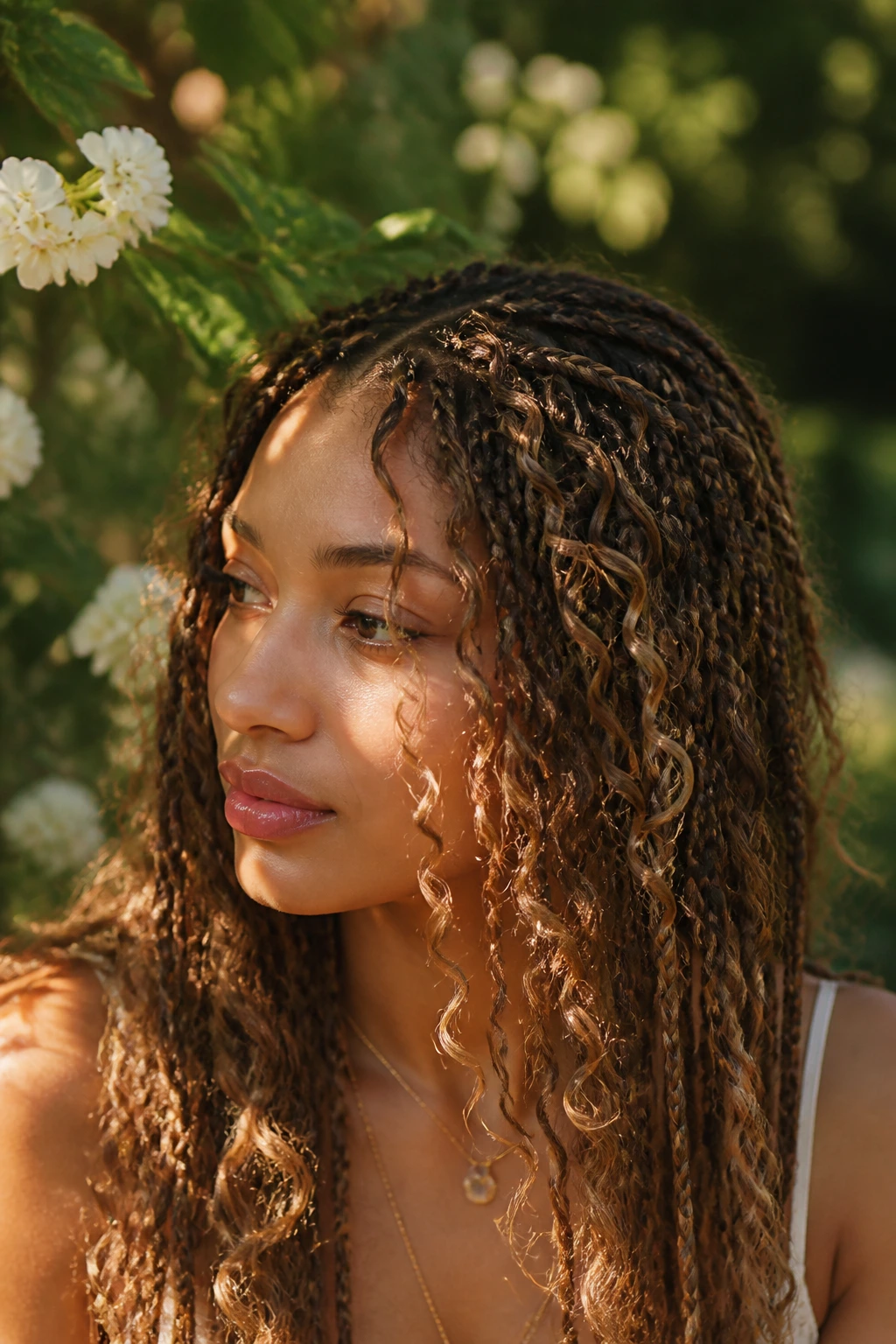
Bohemian styling introduces a soft, ethereal vibe by leaving strands of curly hair loose throughout the length of the braid. For Latina hair textures, this is a fantastic way to blend your natural curl pattern with the added extensions. The key here is using high-quality human hair or premium synthetic curls that won’t mat after a few days. You will find that these braids require a bit more maintenance—think nightly wrapping and detangling the loose ends—but the romantic result is worth the extra effort.
4. Double-Parted Geometric Lines
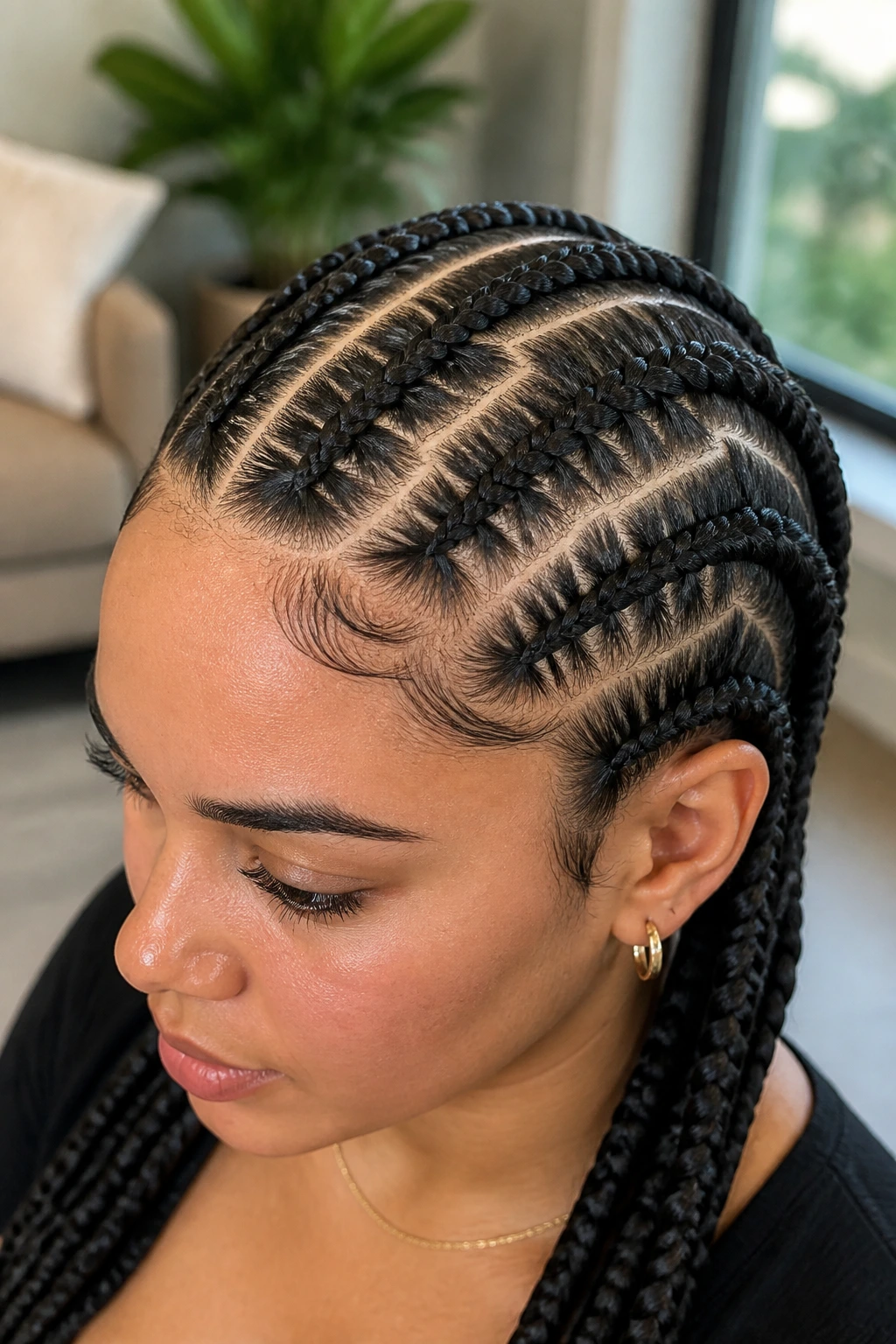
Break away from the traditional straight line by incorporating intricate zig-zag or diagonal patterns at the root. This is a common practice in creative braiding, where the braider uses the tail of a metal comb to carve sharp, architectural shapes before transitioning into the straight back motion. It turns a standard protective style into a work of art. These geometric sections are particularly effective at drawing attention to the face and showcasing precise craftsmanship.
5. Braids with Gold Cuff Embellishments
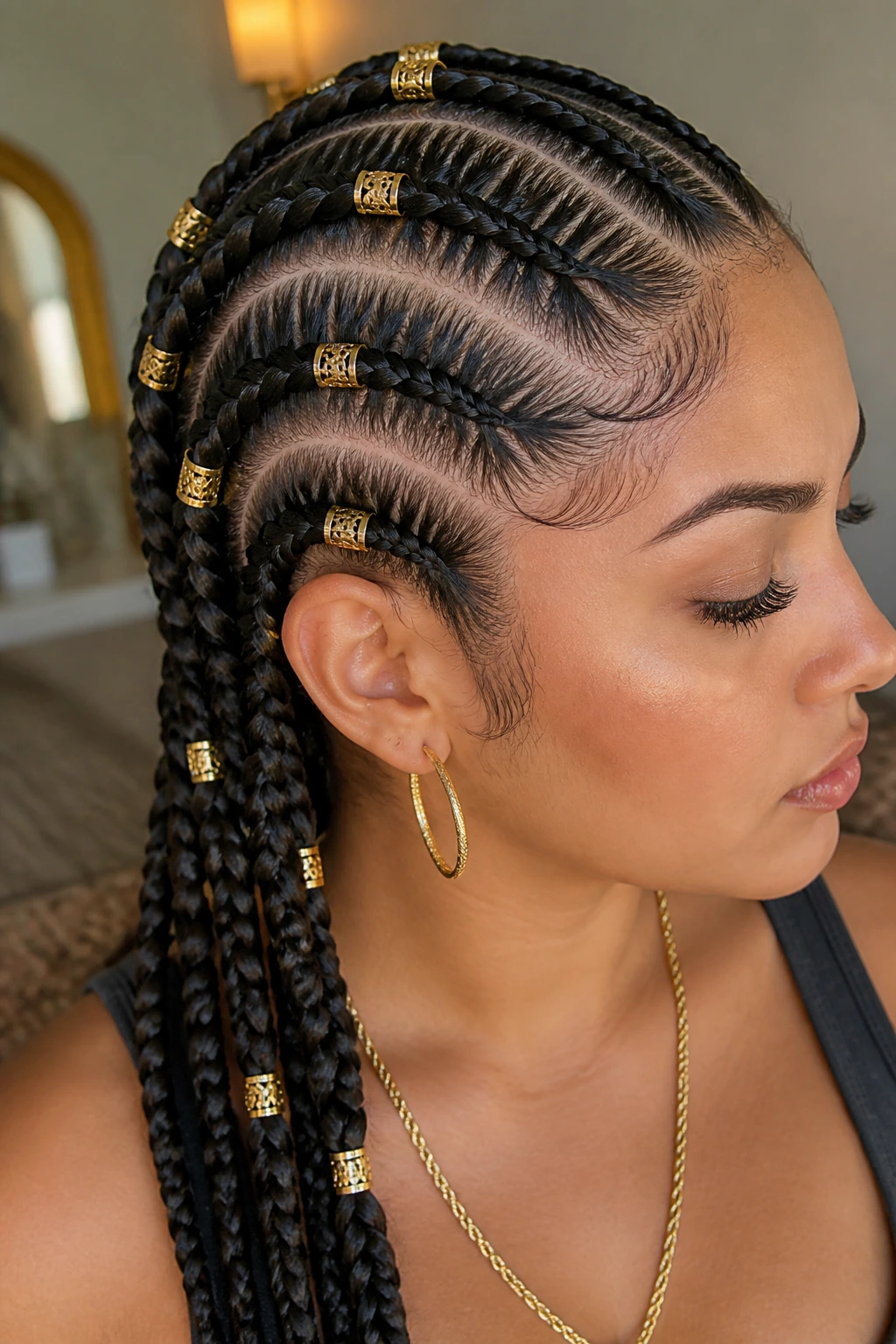
Accessories transform a hairstyle from a routine look into a statement piece. Gold cuffs, rings, and decorative shells placed along the length of your braids add a metallic sheen that contrasts beautifully with darker hair tones. You can place them randomly for a relaxed, bohemian look or line them up in a symmetrical pattern for a more polished effect. Just ensure that the cuffs you choose are smooth on the inside to prevent them from snagging your natural hair or the extension fibers.
6. Waist-Length Rapunzel Braids
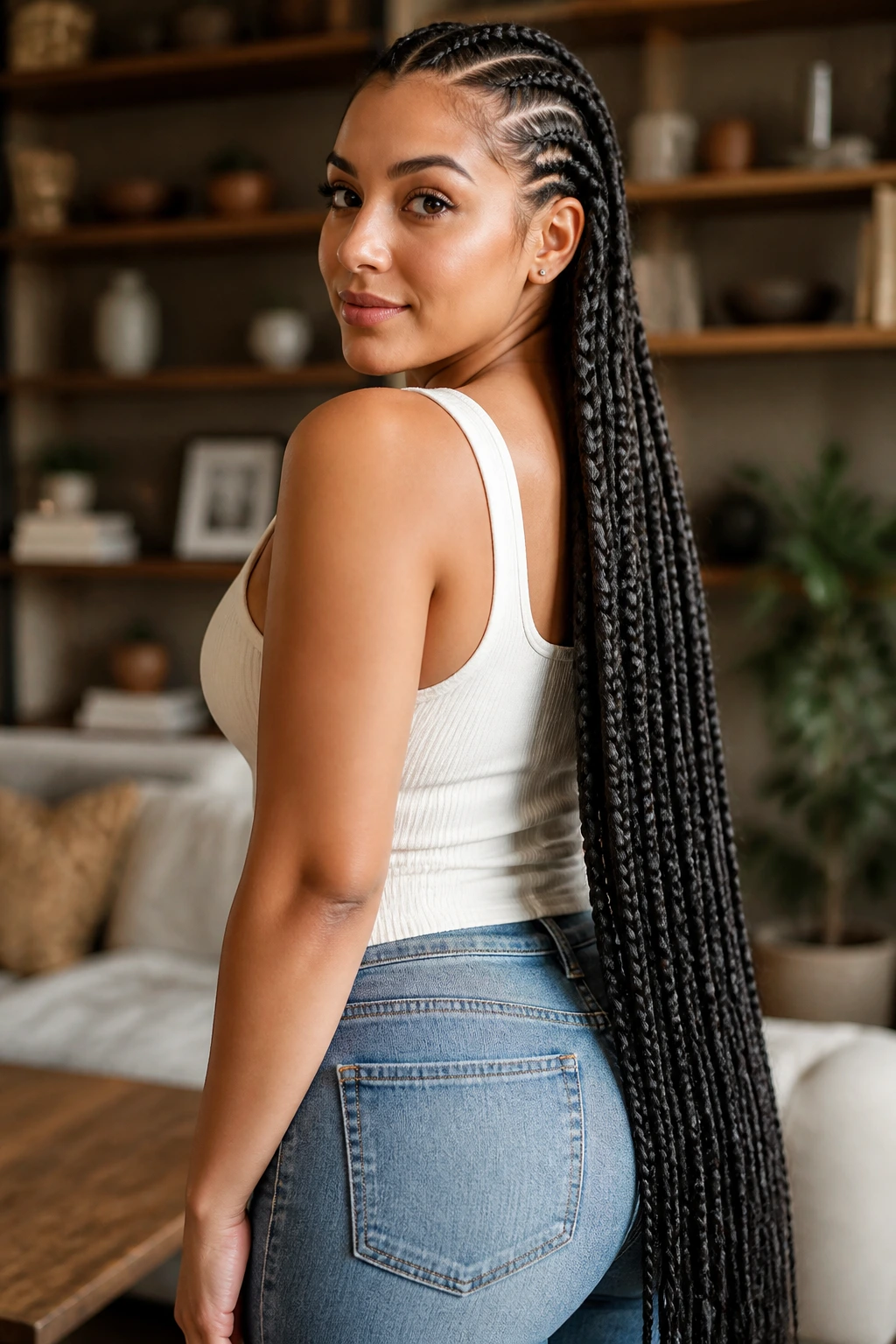
Length is a massive trend, and for good reason—it’s striking. Waist-length braids offer a dramatic flair that can be styled into high ponytails, buns, or left to cascade down your back. When opting for this length, the weight becomes a real consideration. You must communicate with your braider about using lightweight, pre-stretched synthetic hair to prevent the style from dragging on your scalp and causing traction alopecia over time.
7. The Natural-Look Undercut Style
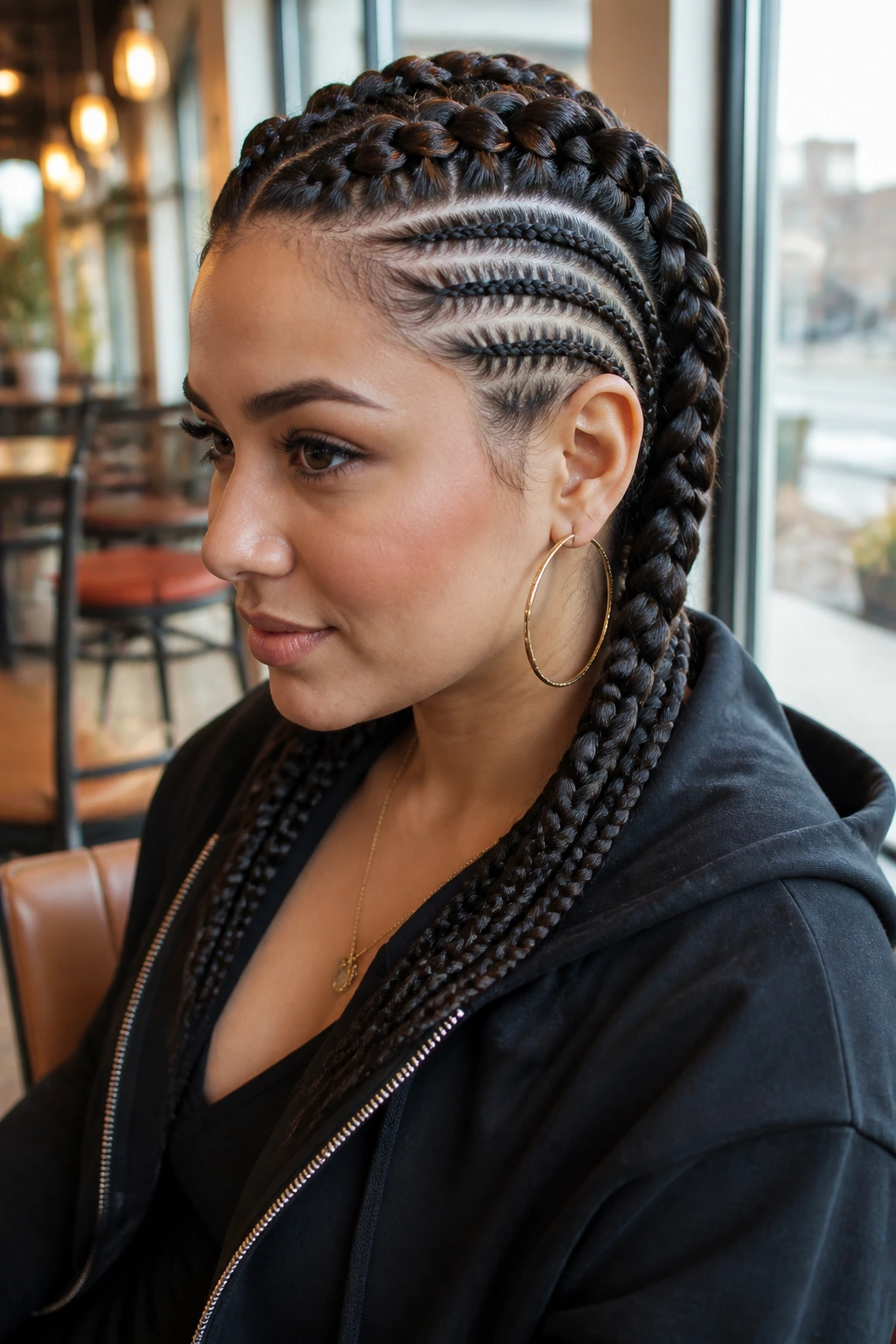
For those who want the look of a fade without actually shaving their head, this style uses small, intricate cornrows along the sides to mimic the appearance of a close-cropped undercut. The top remains a focal point with larger, straight back braids. This provides an edgy, modern contrast that feels both feminine and fierce. It is a fantastic option if you want a style that feels lighter on the head because less hair is used in the smaller side sections.
8. Ombré Color Transitions
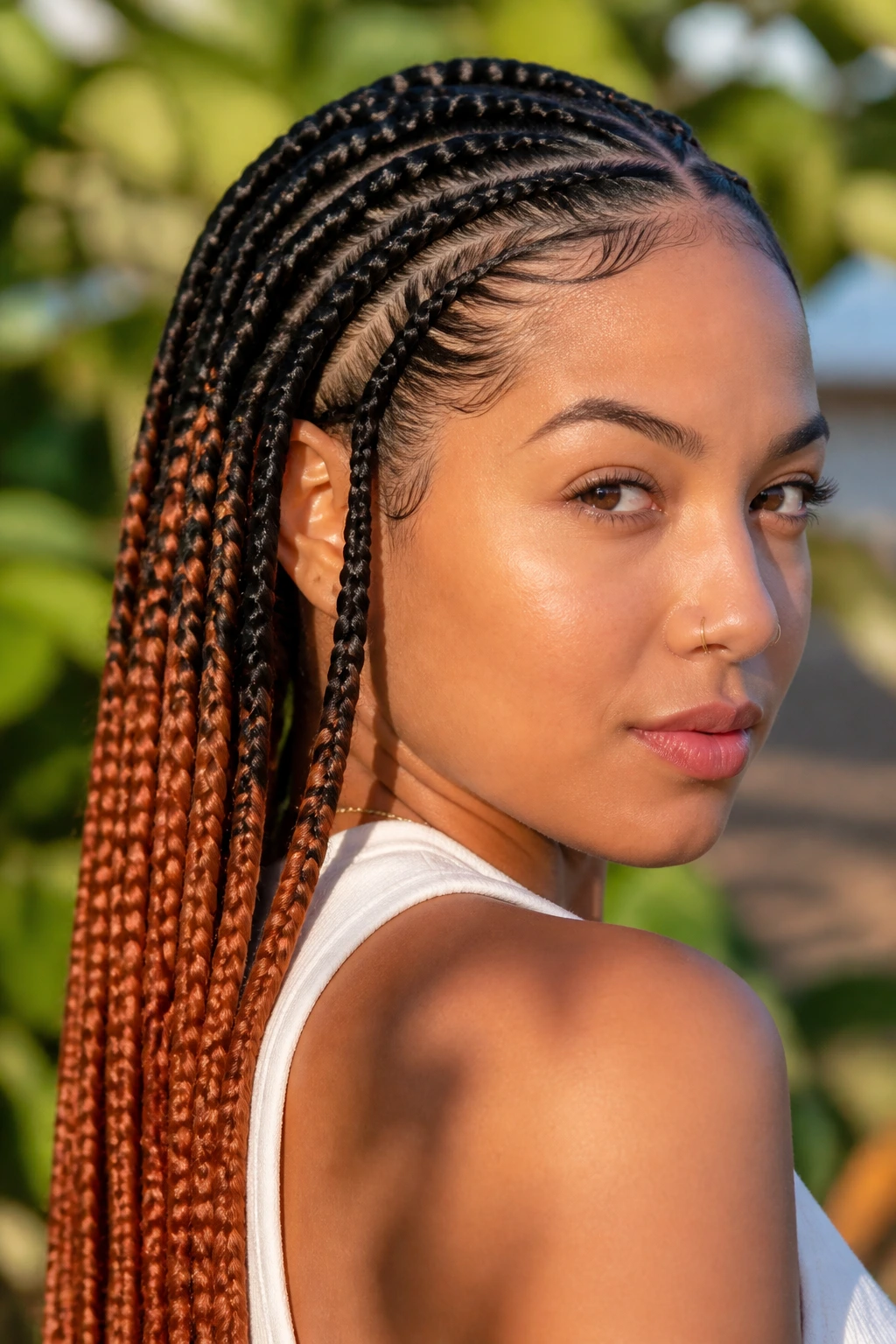
Why settle for one shade? Incorporating colored extensions—whether it’s a subtle honey-blonde fade or a bold crimson shift—adds depth and dimension to your braids. For Latina skin tones, warm-toned hair colors like copper, caramel, or rich chocolate browns often provide a stunning, glowing effect. If you are color-shy, start with a subtle blend near the ends to see how you like the look before committing to a dramatic, root-to-tip color change.
9. Triple-Row Criss-Cross Braids
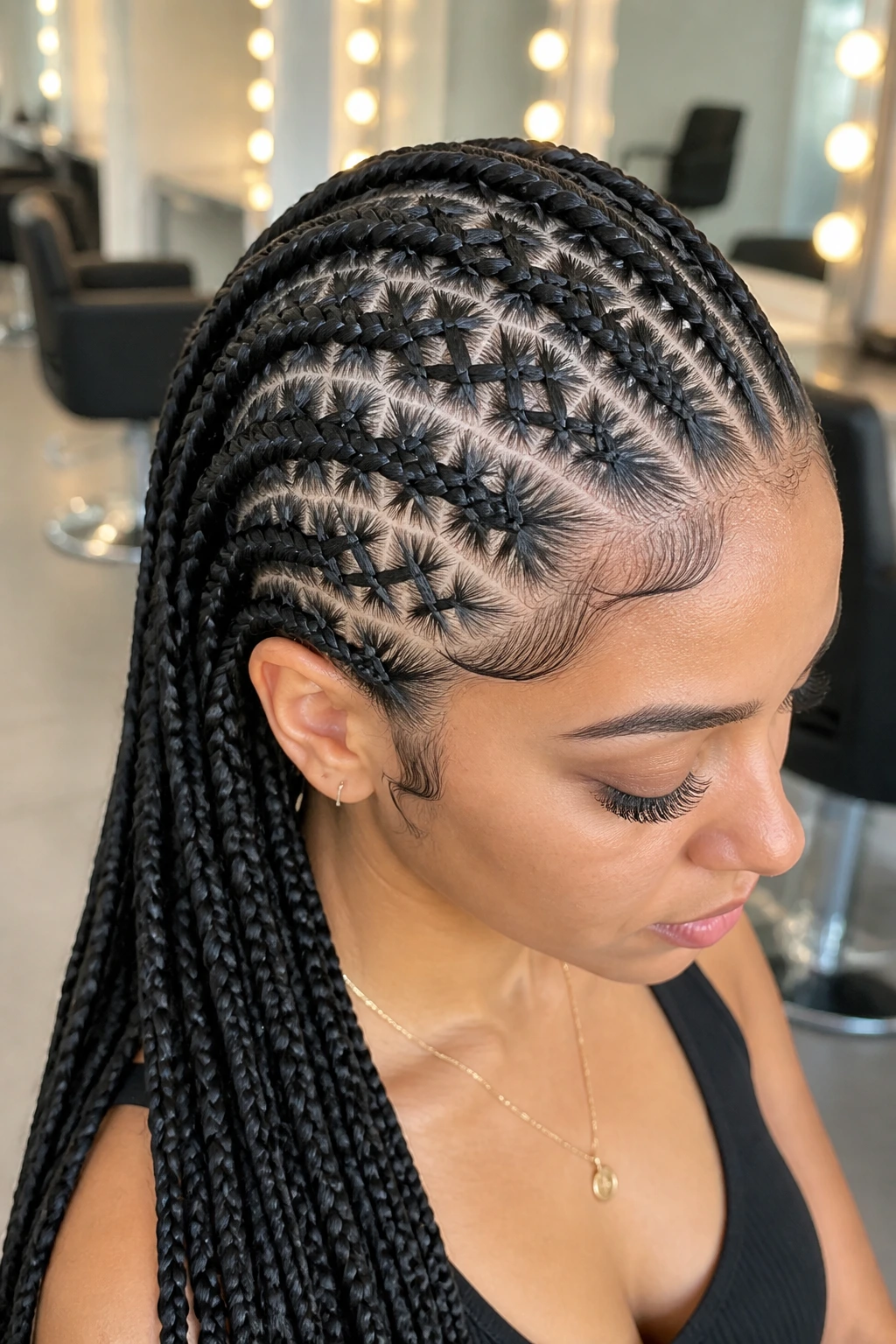
This style takes the front section of the hair and creates a diagonal criss-cross pattern before transitioning into standard straight backs. It’s an ideal way to add detail where people look most: at your forehead and temples. Because the front is so intricate, you will want to ensure you have a good edge control gel on hand to keep those baby hairs laid and the parts looking crisp as your hair begins to grow out.
10. The Minimalist Partless Look
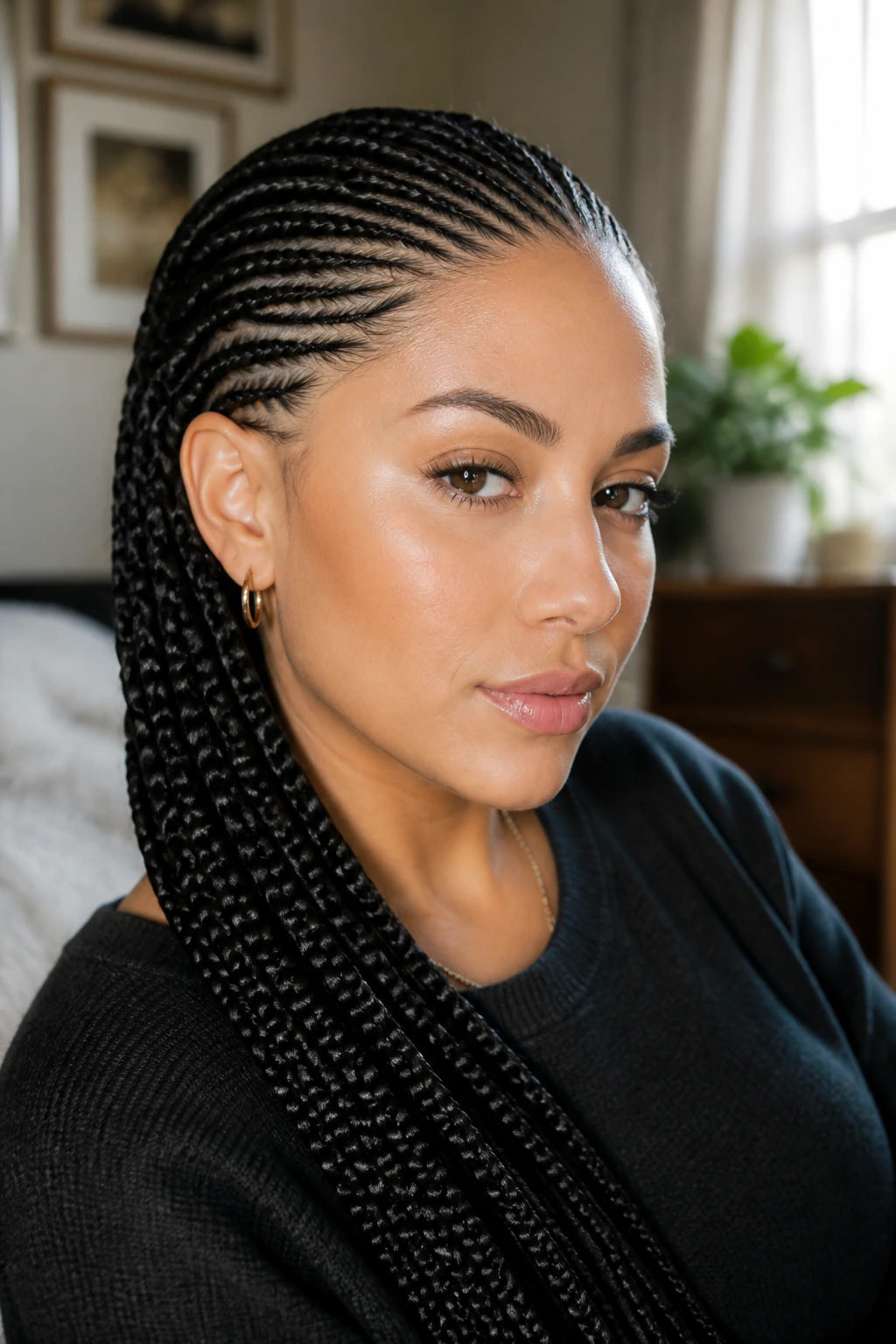
Some prefer the look of braids that appear to emerge seamlessly from the scalp without visible, harsh parts. This is achieved by using the feed-in method very delicately, adding tiny amounts of hair gradually so the braid builds in size as it travels back. It results in a very natural, “my hair but better” look. This is arguably the most sophisticated way to wear braids, as it prioritizes a smooth, flowing transition over sharp geometry.
11. Beaded End Finishes
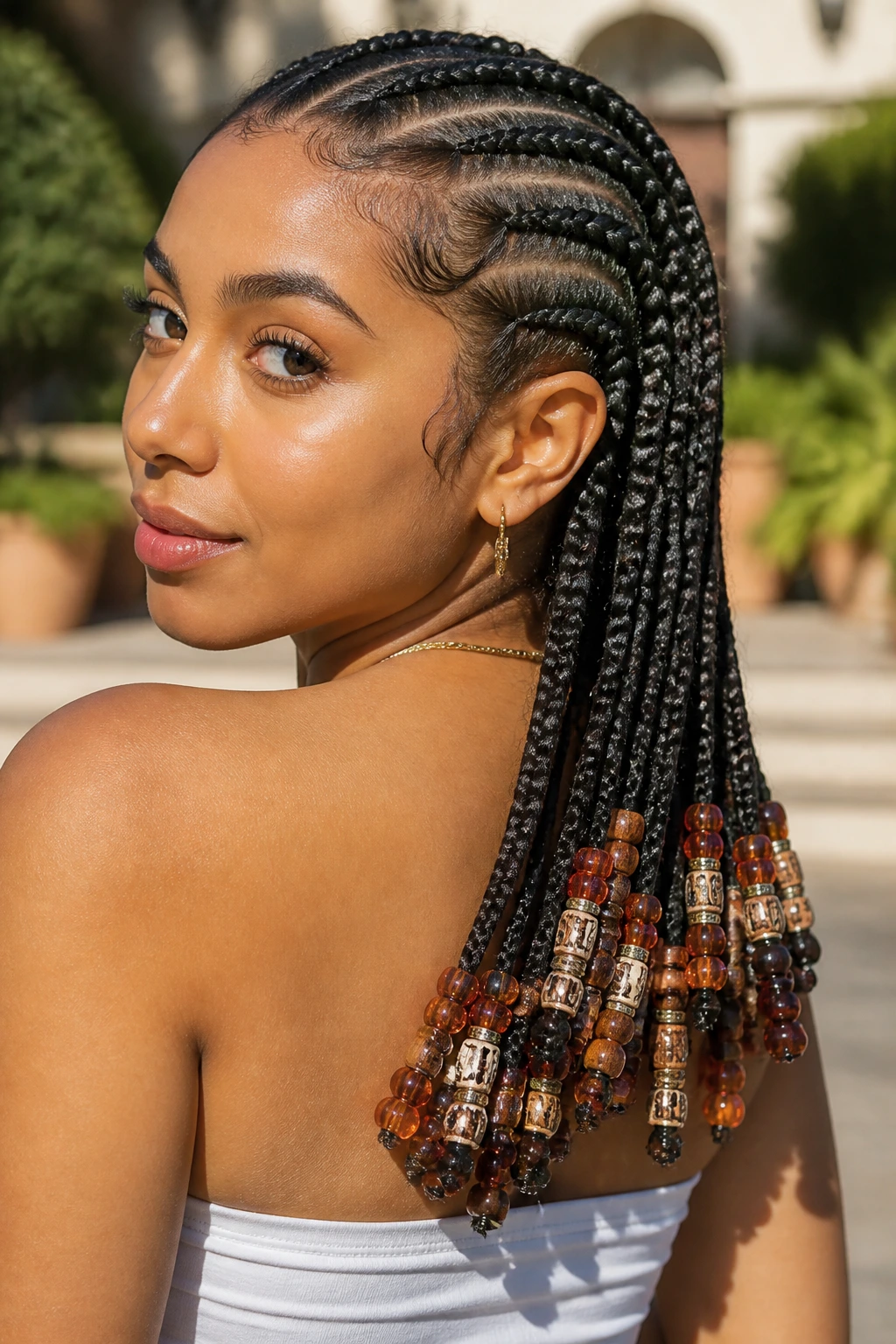
Beads aren’t just for children; they are a timeless decorative element that provides a bit of weight and movement to the ends of your braids. Use clear crystal beads, wooden tones, or bold, solid colors to express your personal style. The rhythmic clinking sound of beads when you turn your head is a sensory detail that many people grow to love. Ensure the beads are securely fastened with a rubber band so they don’t slide off during the night.
12. Half-Up, Half-Down Braided Pony
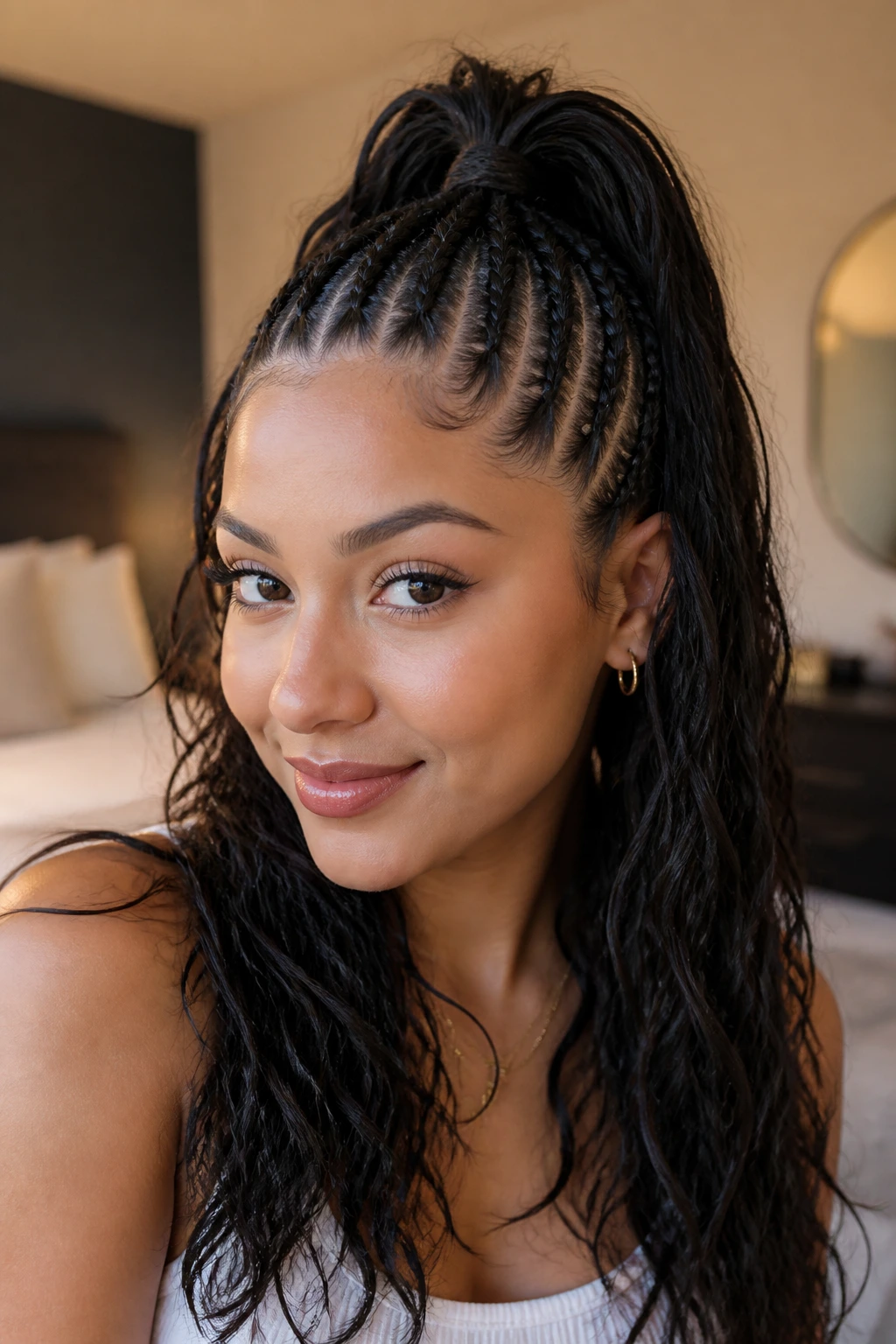
You don’t have to choose between a down style and an updo. By gathering the first four or five braids into a high ponytail while leaving the rest to hang loose, you get the best of both worlds. This is particularly practical if you lead an active lifestyle and need to keep hair out of your face during the day. It also creates a flattering lift that accentuates your cheekbones.
13. Double-Layer Braids
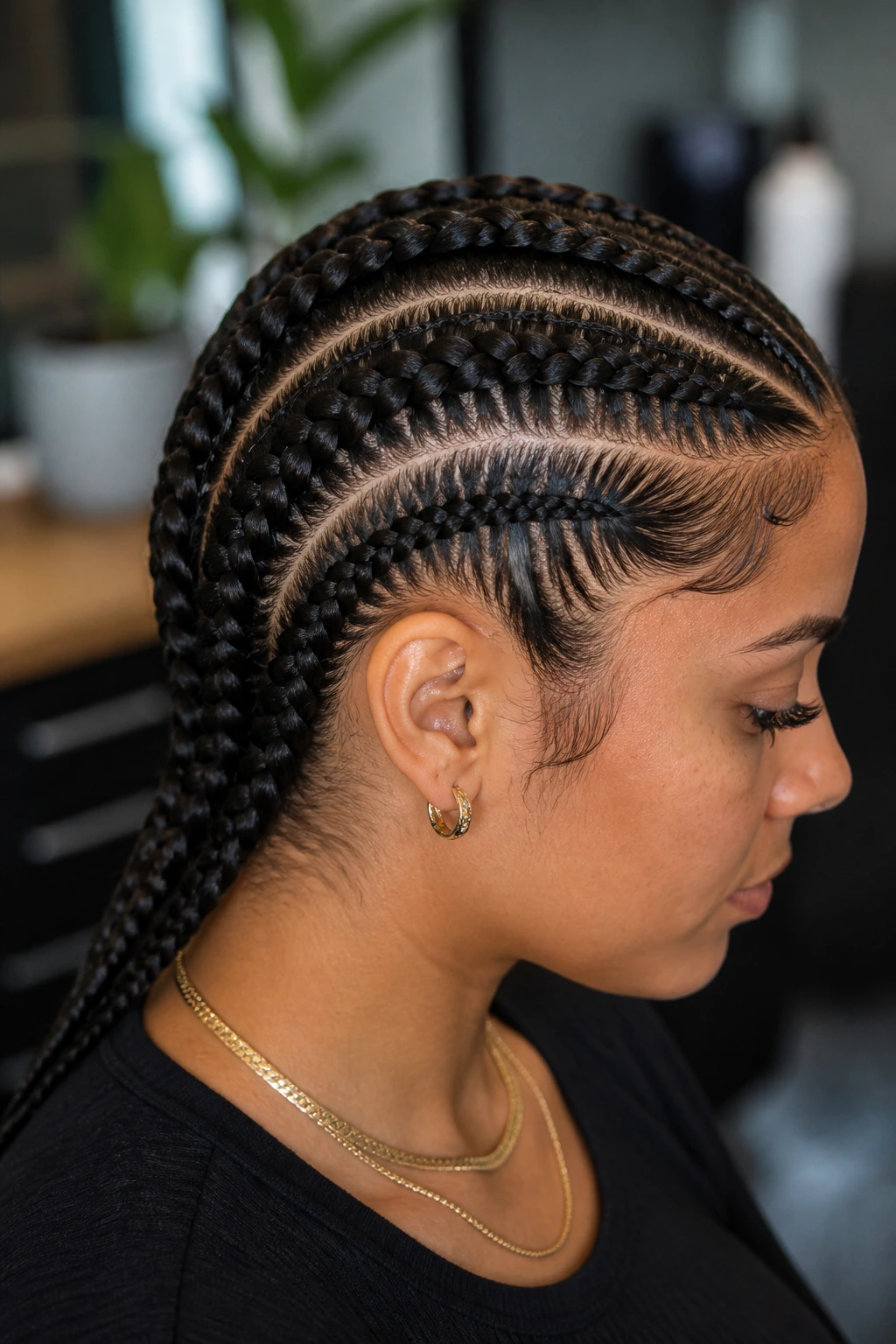
This is a more complex technique where smaller braids are laid between larger ones, creating a layered, textured effect. It is a visually dense style that looks incredible from every angle. Because this requires more parting and more hair, it generally takes longer in the chair. However, the result is a full-bodied, intricate hairstyle that feels very deliberate and high-end.
14. Heart-Part Details
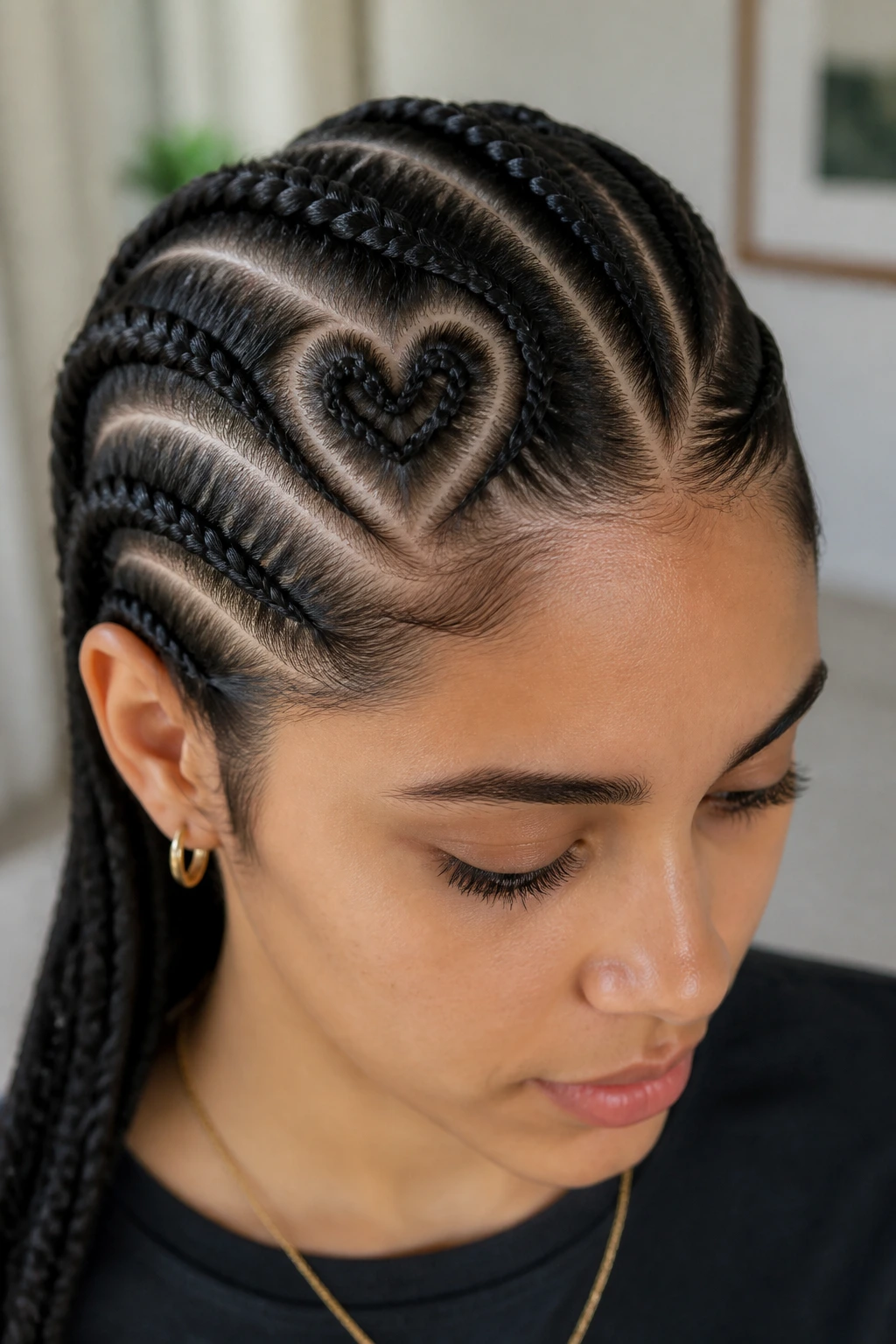
Nothing says “custom” like a subtle heart shape carved into the parting at the scalp. This works best in the front or side sections, providing a sweet detail that frames your face. It is a delicate touch that proves braids are a form of wearable art. If you choose this route, ask your braider to keep the heart relatively small so it doesn’t lose its shape as the hair grows out over the coming weeks.
15. The “Tapered” Braid Thickness
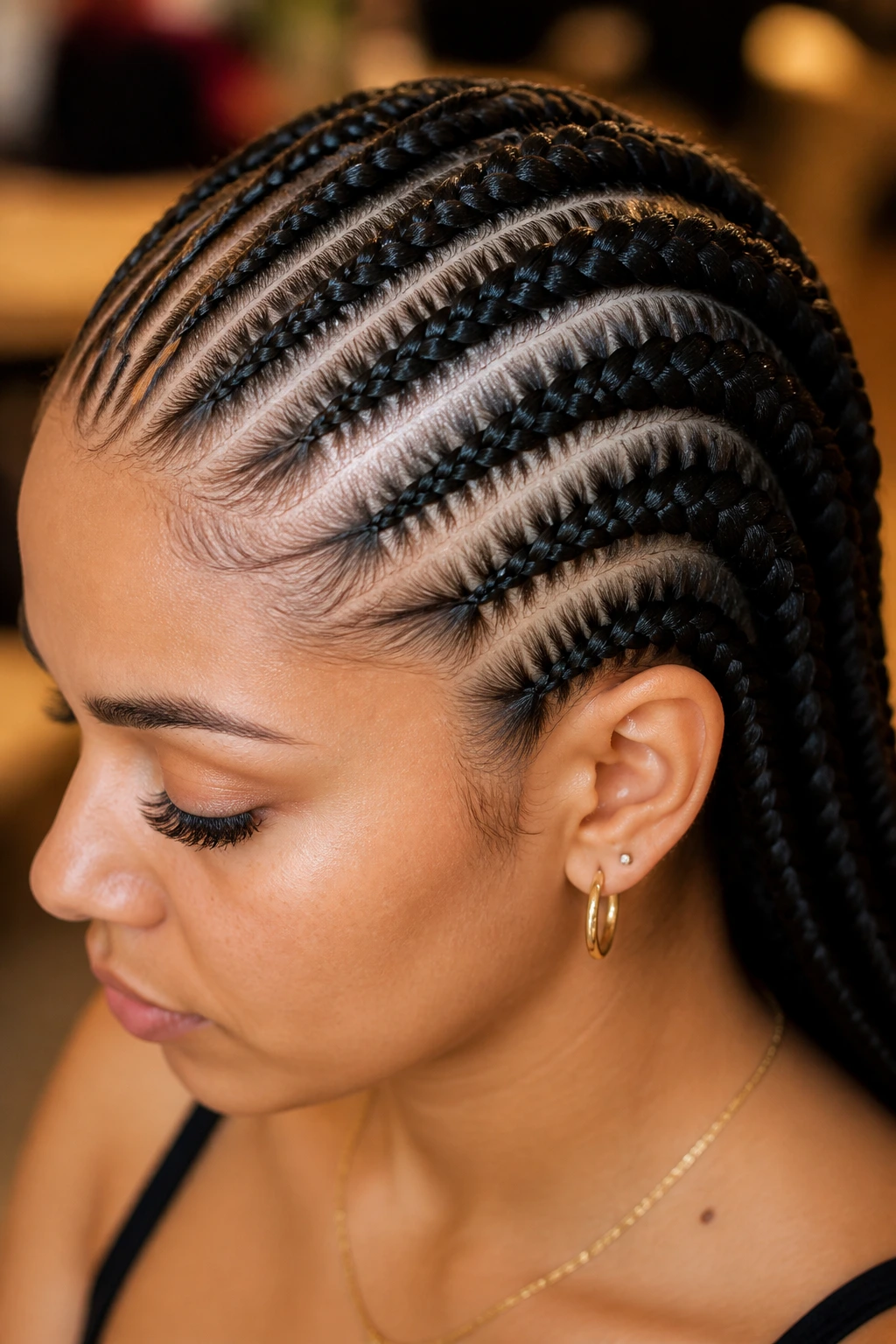
Instead of all braids being the same size, you can start with small, delicate braids at the front that gradually widen as they move toward the back. This provides a sleek look at the face where the hair is often thinner, while the larger braids in the back provide bulk and length. It is a strategic way to hide the fact that you might have finer hair at the temples, creating the illusion of uniform thickness throughout.
16. Pastel-Tinted Braids
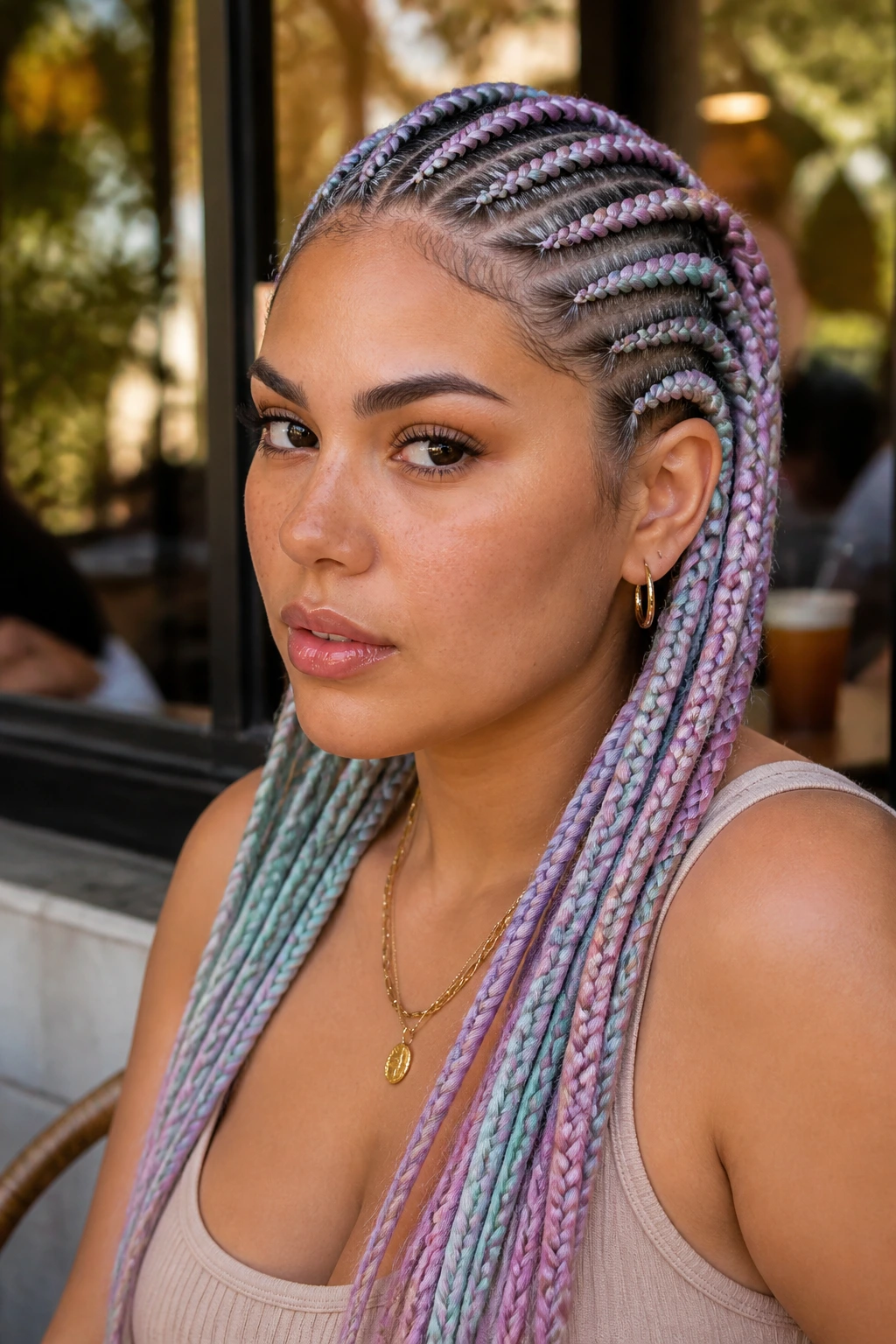
If you are feeling adventurous, pastel-colored synthetic hair is a vibrant way to stand out. Think soft lavender, mint, or dusty rose. Because Latina skin has a wide spectrum of undertones, certain pastels will look more harmonious than others. If you have cool undertones, lean toward blues and purples; if you have warm, golden undertones, go for pinks and apricots. Just know that these colors often show dirt more easily, so you will need to be diligent about head coverings at night.
17. The High-Volume Curly End
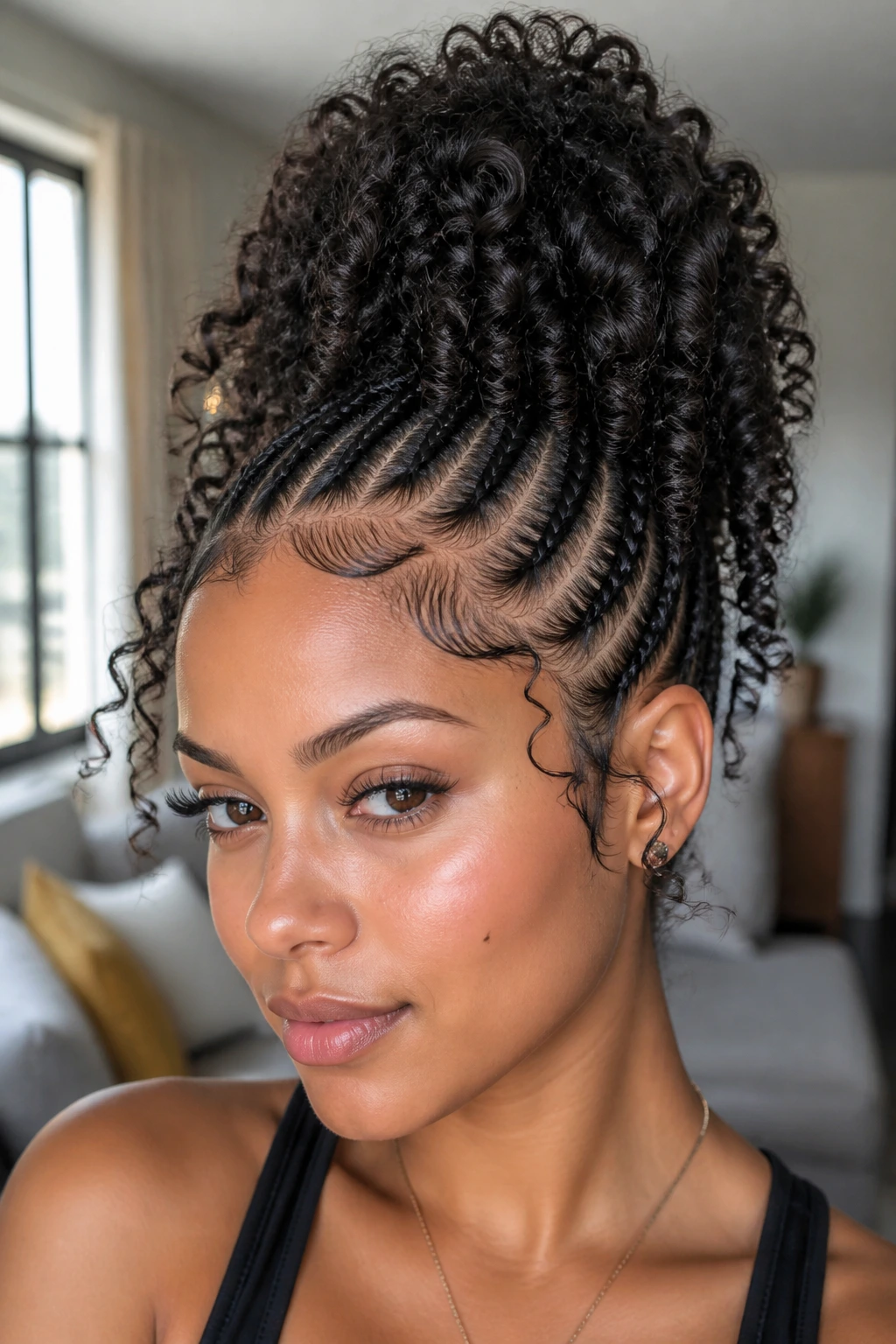
Instead of sealing the ends of your synthetic hair with hot water to make them straight, you can leave the last few inches loose and curled. This is often done by braiding halfway down and allowing the remaining extension hair to hang free in tight, bouncy ringlets. It mimics a braided-to-curly transition and looks fantastic when styled in a high bun. It adds a touch of softness to the rigidity of the cornrows.
18. Micro-Braided Fill-Ins
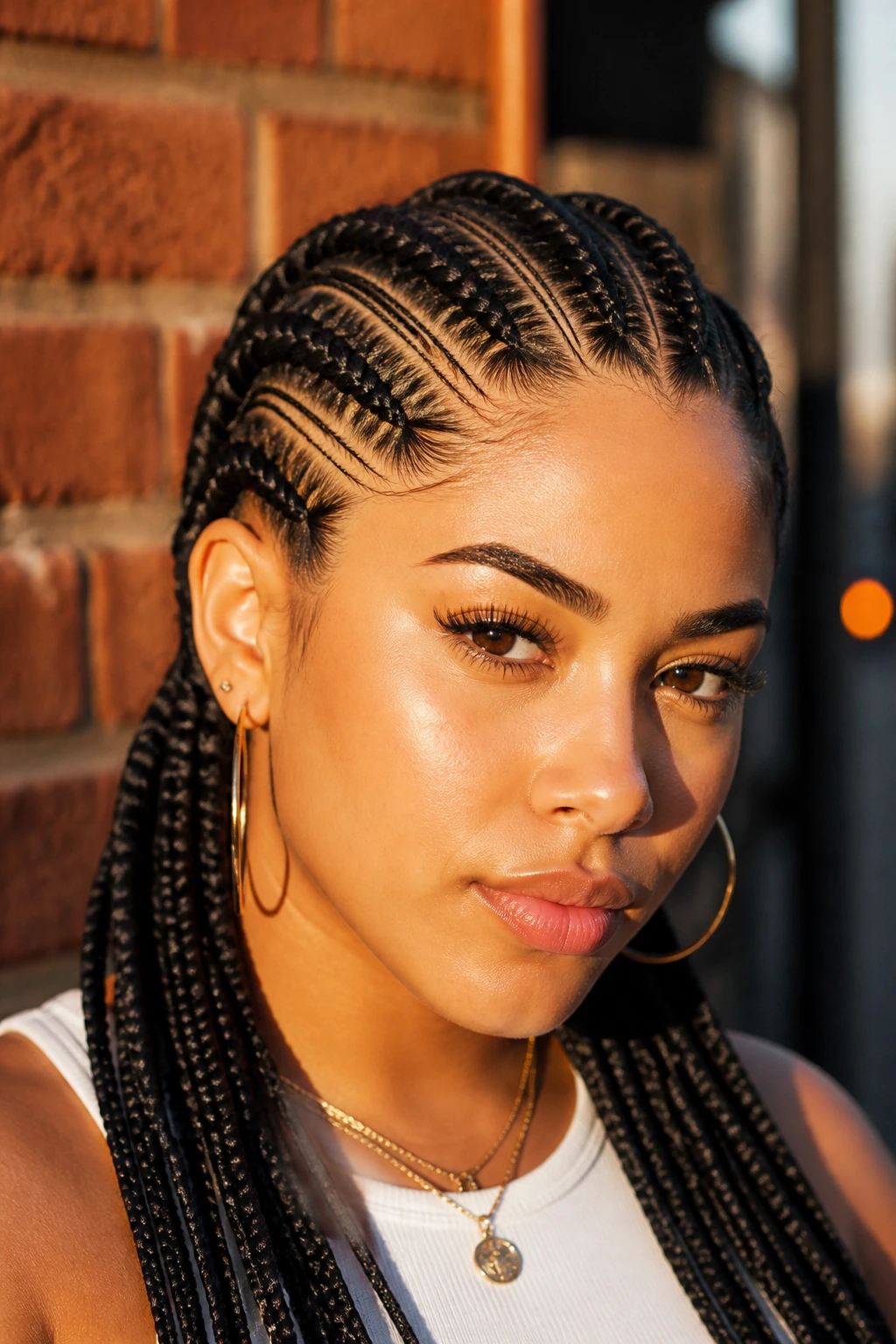
For those who want a very textured look, you can alternate between large, thick straight-back braids and tiny, micro-braids in between. This contrast in size creates a visually “busy” and detailed pattern that is very popular in street style. It requires a highly skilled braider to ensure the tension in the micro-braids matches that of the larger ones, as you don’t want the smaller sections to pull on your roots differently.
19. The “Swoop” Side-Part
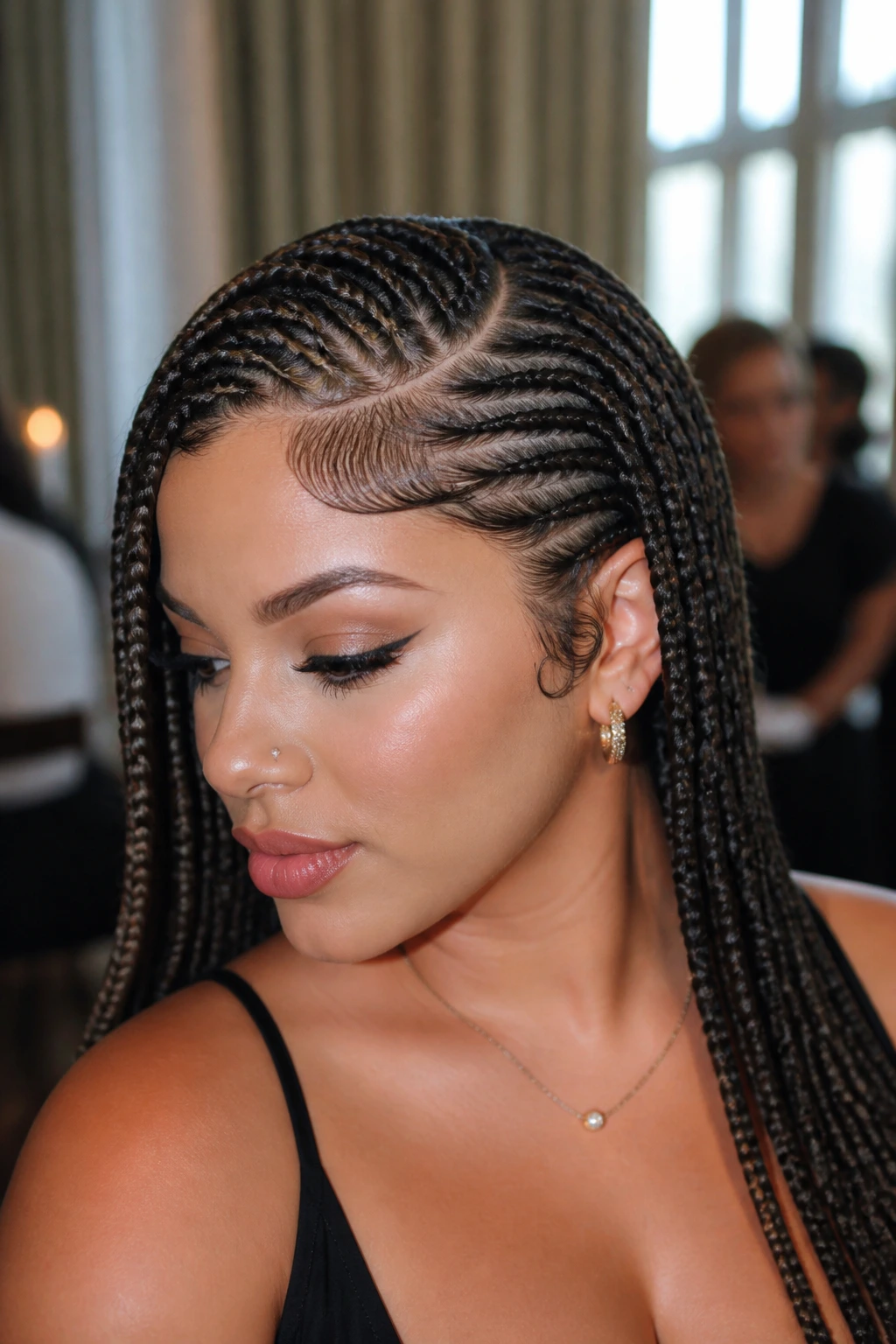
Instead of all braids going straight back, you can have the front section “swooped” to one side, creating a deep side-part aesthetic before the braids transition into a straight-back flow. This is a incredibly flattering style for almost any face shape, as it creates an asymmetrical line that balances out facial features. It feels a bit more formal than a standard straight-back look, making it a great choice for events.
20. Neon Accents
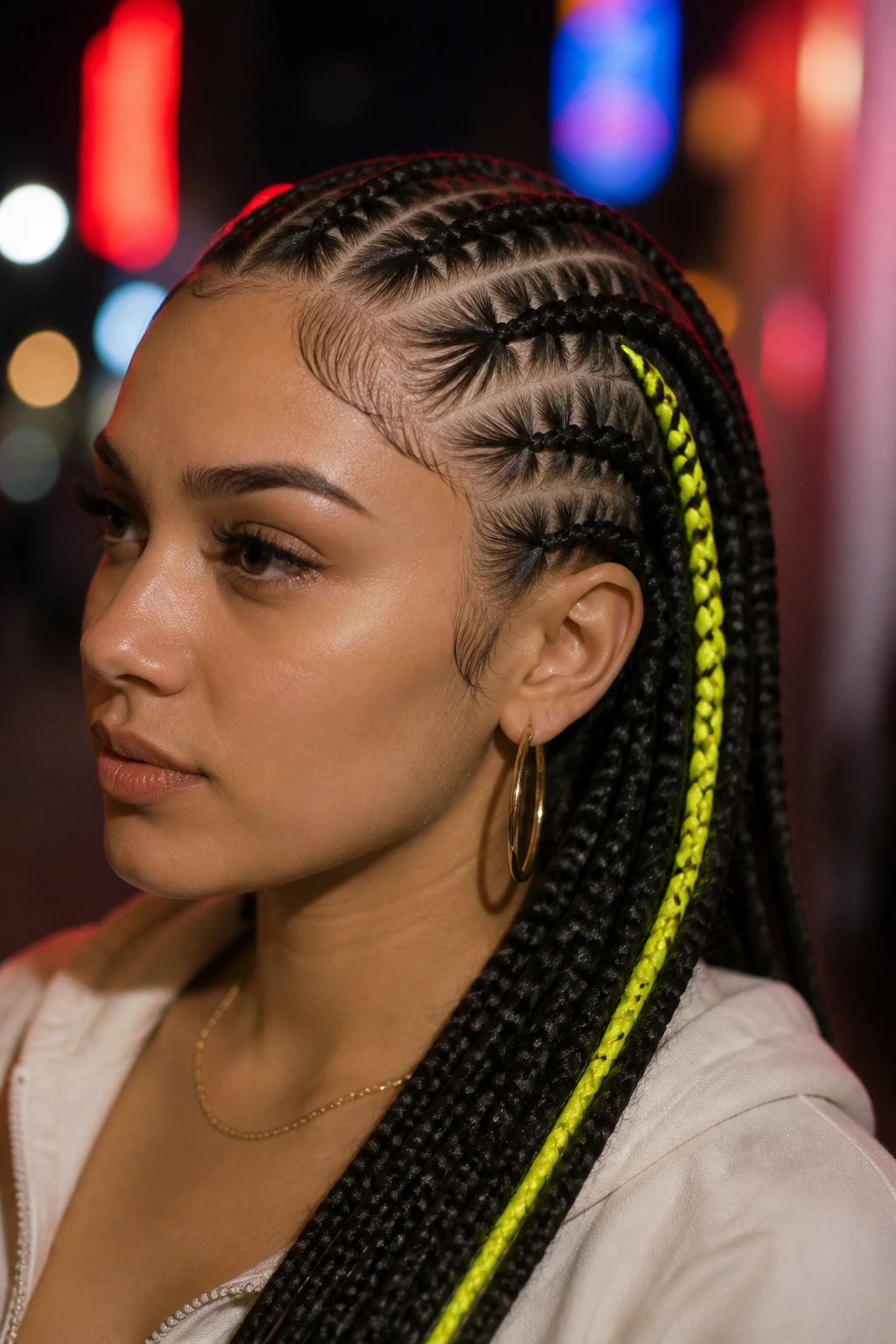
For those who prefer a high-energy look, incorporating a single bright neon braid—like electric yellow or hot pink—into an otherwise monochromatic style is a powerful design choice. It acts as an accent, much like a piece of jewelry. You only need one pack of colored hair to achieve this, making it a low-commitment way to experiment with color.
21. The “Criss-Cross” Feed-In
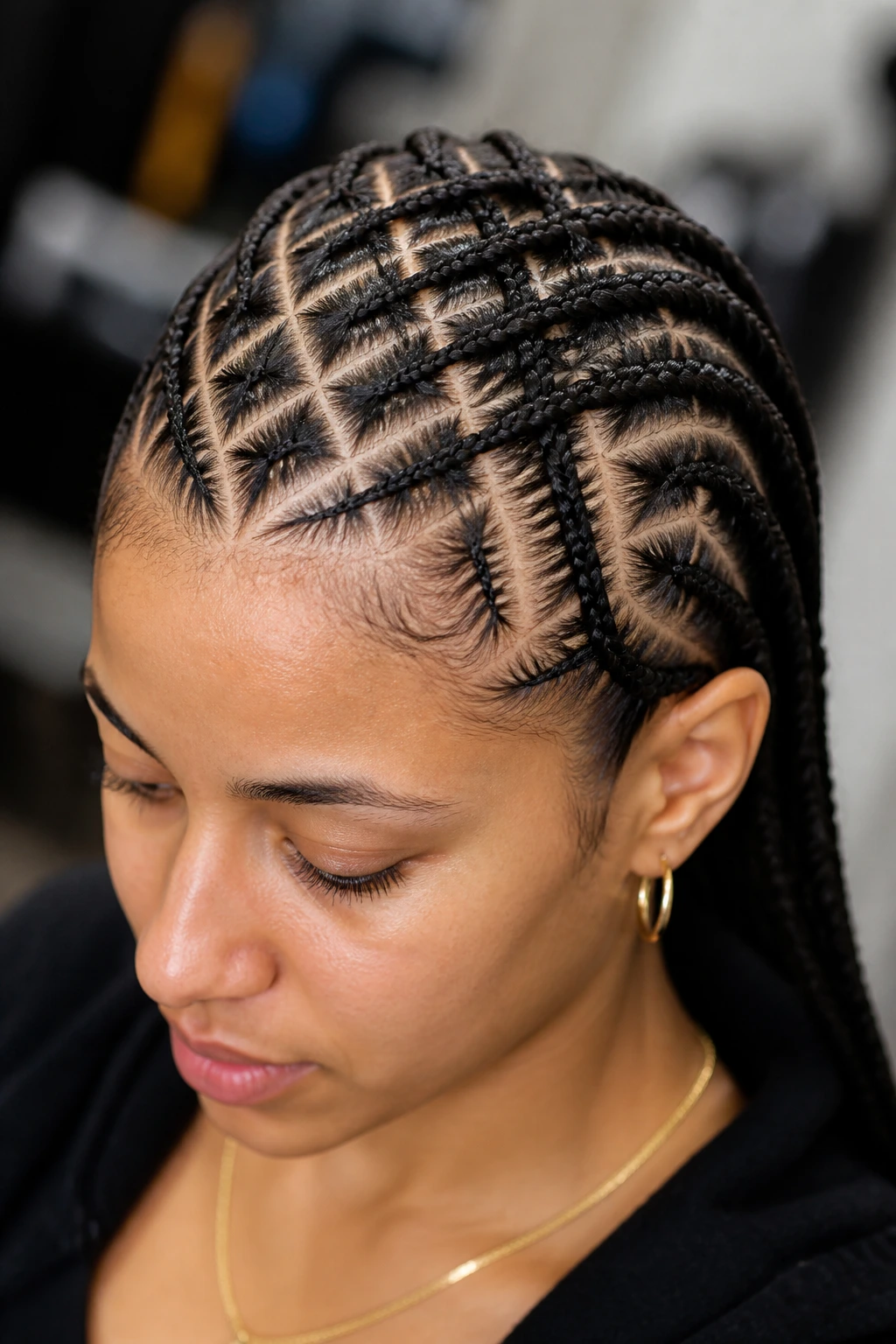
This involves braiding the hair diagonally toward the center, creating an overlapping effect that looks like a woven basket. It is a complex style that requires a very steady hand. The result is a highly decorative look that stands out in a crowd. Because it is so complex, avoid this style if you are in a rush—it truly takes time to get the tension and the pattern just right.
22. Silver-Gray Sleekness
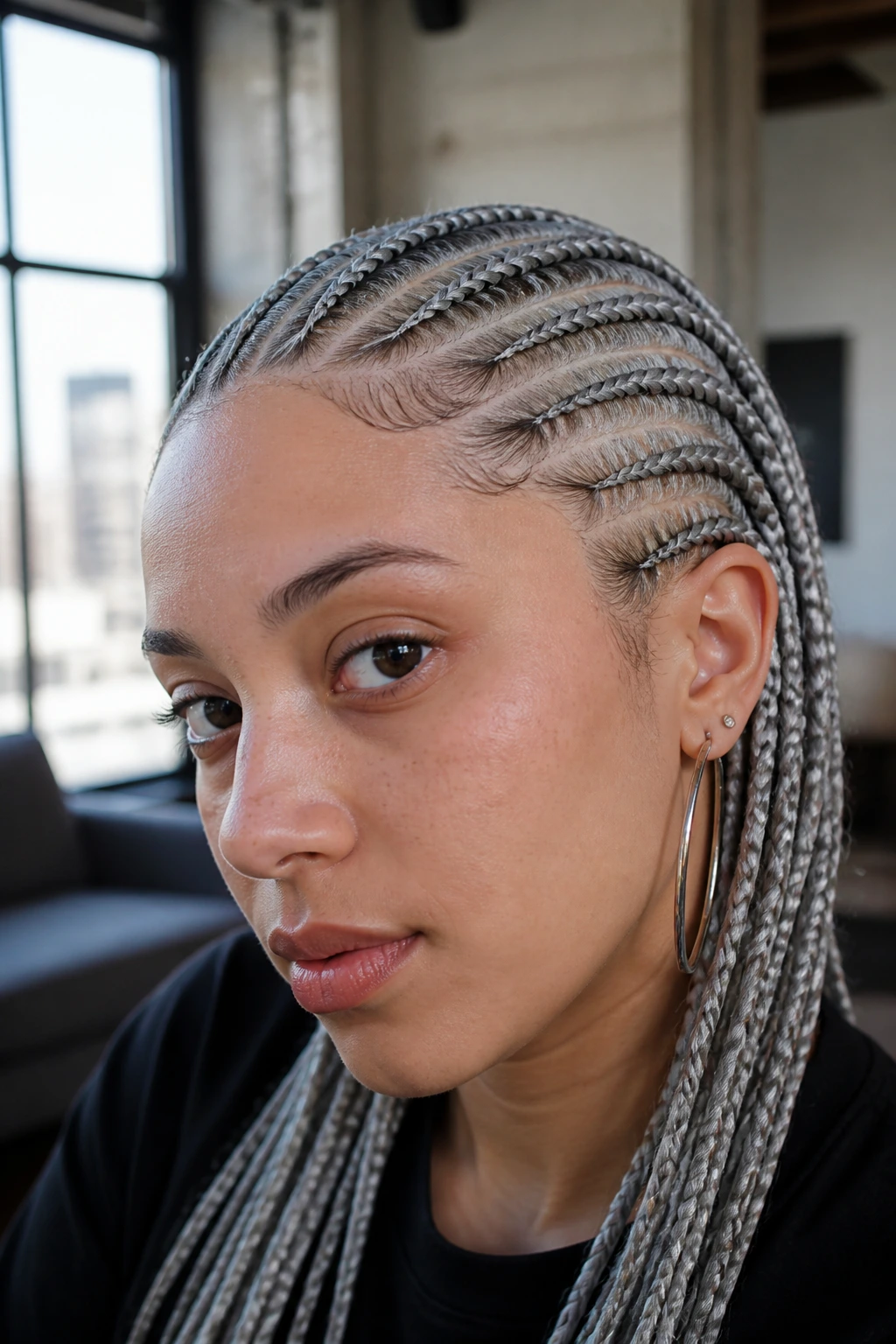
Silver and platinum braids are a striking, modern aesthetic that looks particularly sharp against deeper skin tones. This is a bold, “futuristic” style that works beautifully with minimal makeup and sharp accessories. Since silver hair is a high-contrast choice, you will want to make sure your parts are absolutely flawless; any messy section will be highly visible.
23. The Braided Halo
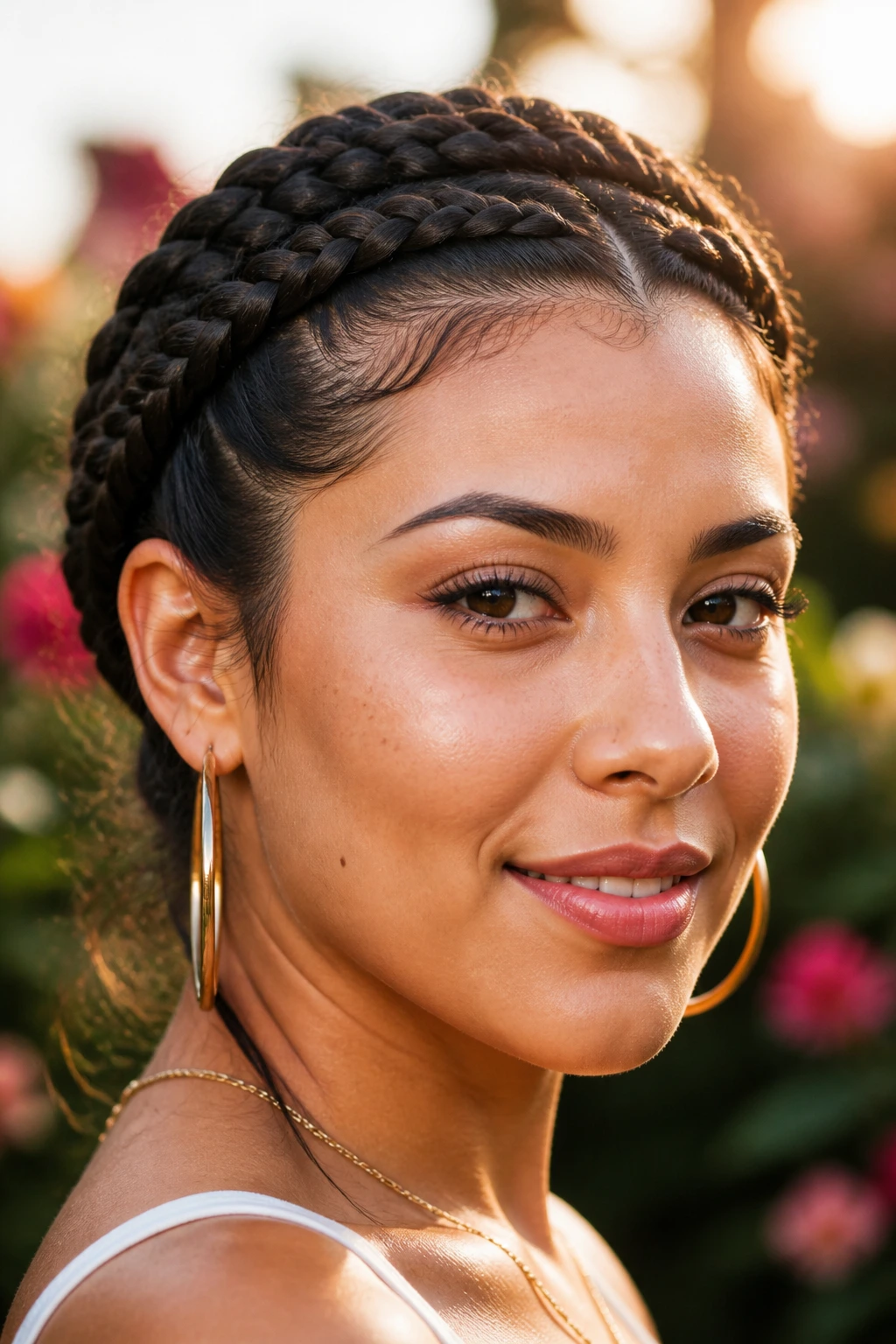
By taking the first two or three braids at the front and curving them along the hairline, you create a “halo” effect. This keeps the hair off your forehead while adding a sophisticated crown-like detail. It’s an elegant, regal look that softens the face and is very easy to maintain. It also keeps your edges protected, as the hair is being braided in a way that aligns with the natural growth pattern.
24. Interwoven String Details
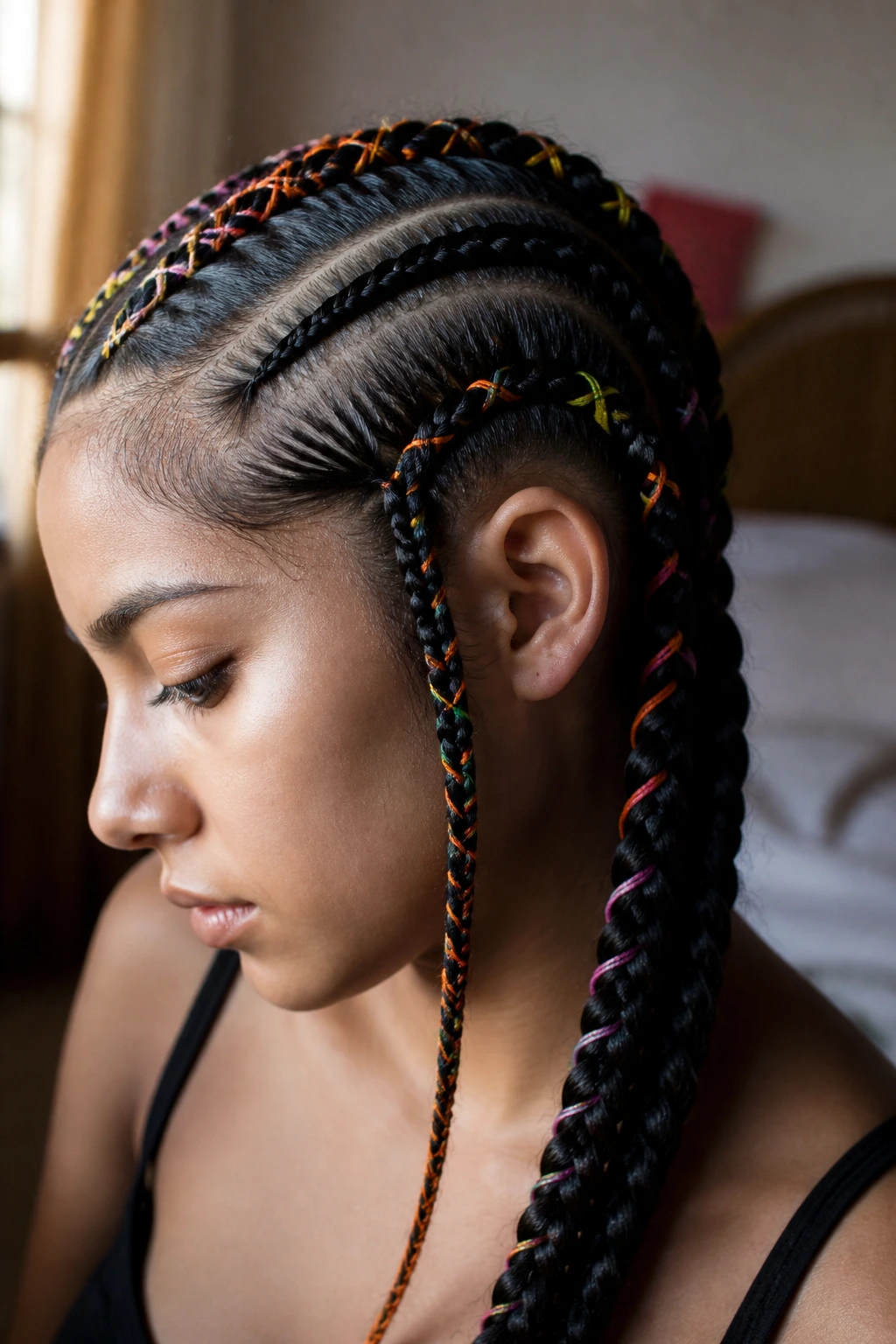
You can incorporate colorful embroidery thread or thin leather strips into the length of your braids. This adds a texture that synthetic hair alone cannot provide. You can wrap it around the braid in a spiral or weave it through the roots. This is a great way to personalize your style if you can’t find extensions in the exact color you want. It’s a very traditional, artisanal approach to braiding that feels very grounded.
25. The High-Contrast Roots
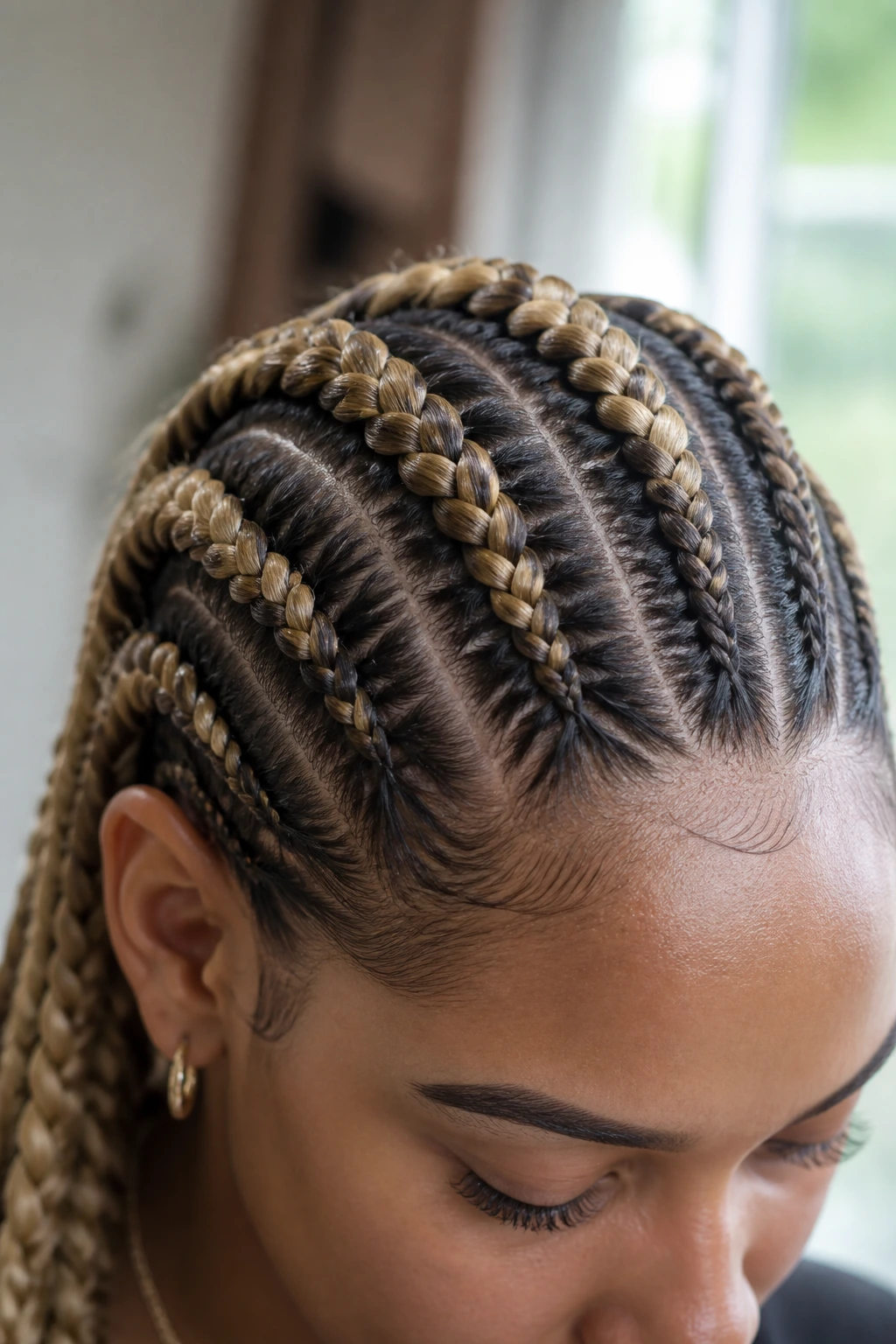
If you wear your natural hair color at the roots and transition into a completely different color a few inches down, you create a high-contrast look that is very popular. It gives the illusion of a grown-out color job, which is currently a very trendy aesthetic. The key is ensuring that the blend from your natural hair to the extension hair is seamless so you don’t see a harsh line of demarcation.
26. Curly-Cuffed Ends
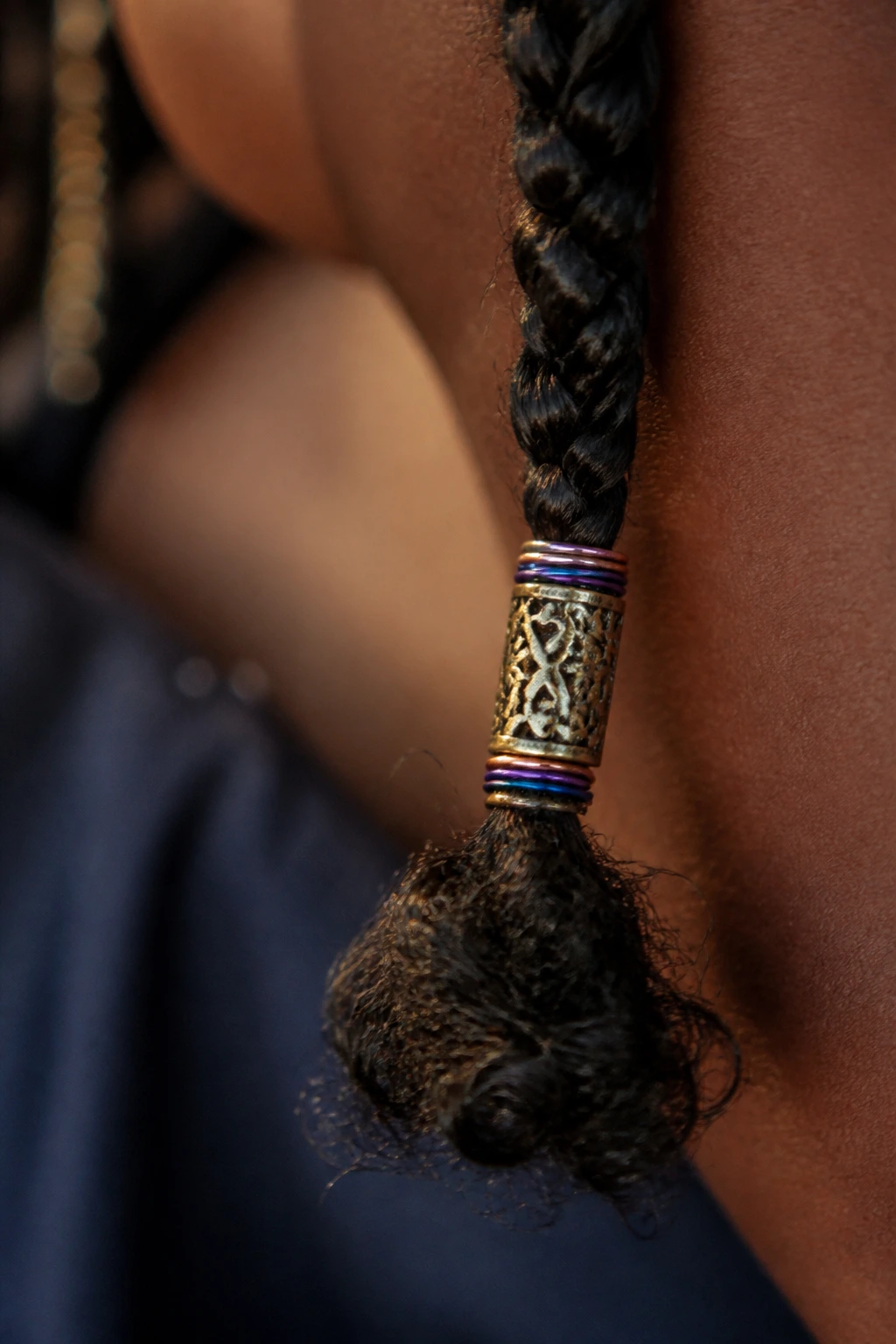
Combine two trends by putting a large, ornate metal cuff at the very end of your braids, right where the loose curls begin. The cuff provides a point of transition and makes the hairstyle look expensive and well-finished. If you have the patience, you can even wrap a bit of colorful wire around the cuff for an extra layer of detail.
27. The Side-Swept Braid Tail
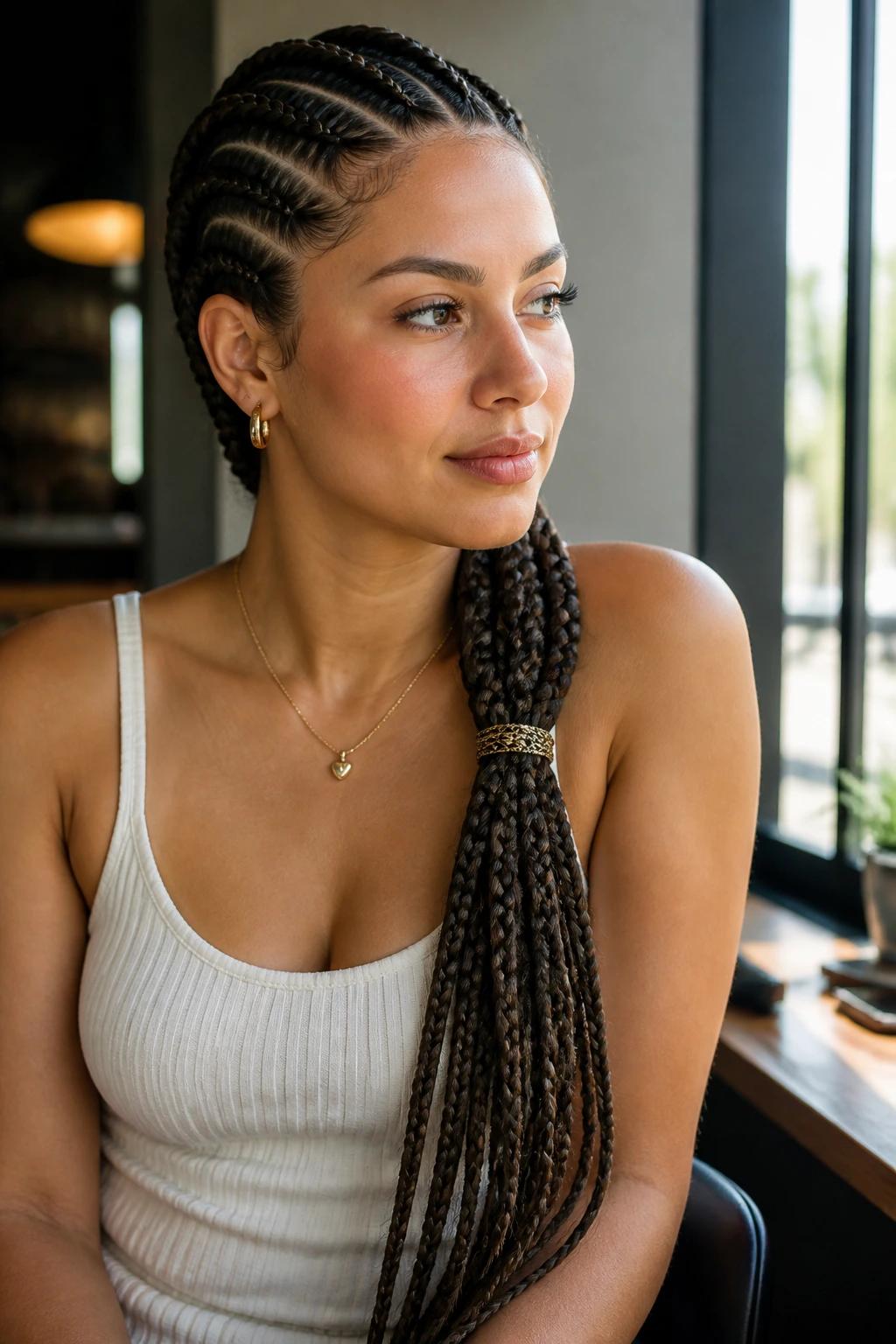
Instead of having all your braids hang straight down your back, you can style the entire group of braids to drape over one shoulder. This is a classic, effortless look that you can maintain by using a decorative hair tie to keep them shifted to one side. It’s a great style for photos, as it brings the length of the hair into your field of vision, showcasing the quality of the braids.
28. The Natural-Part Crown
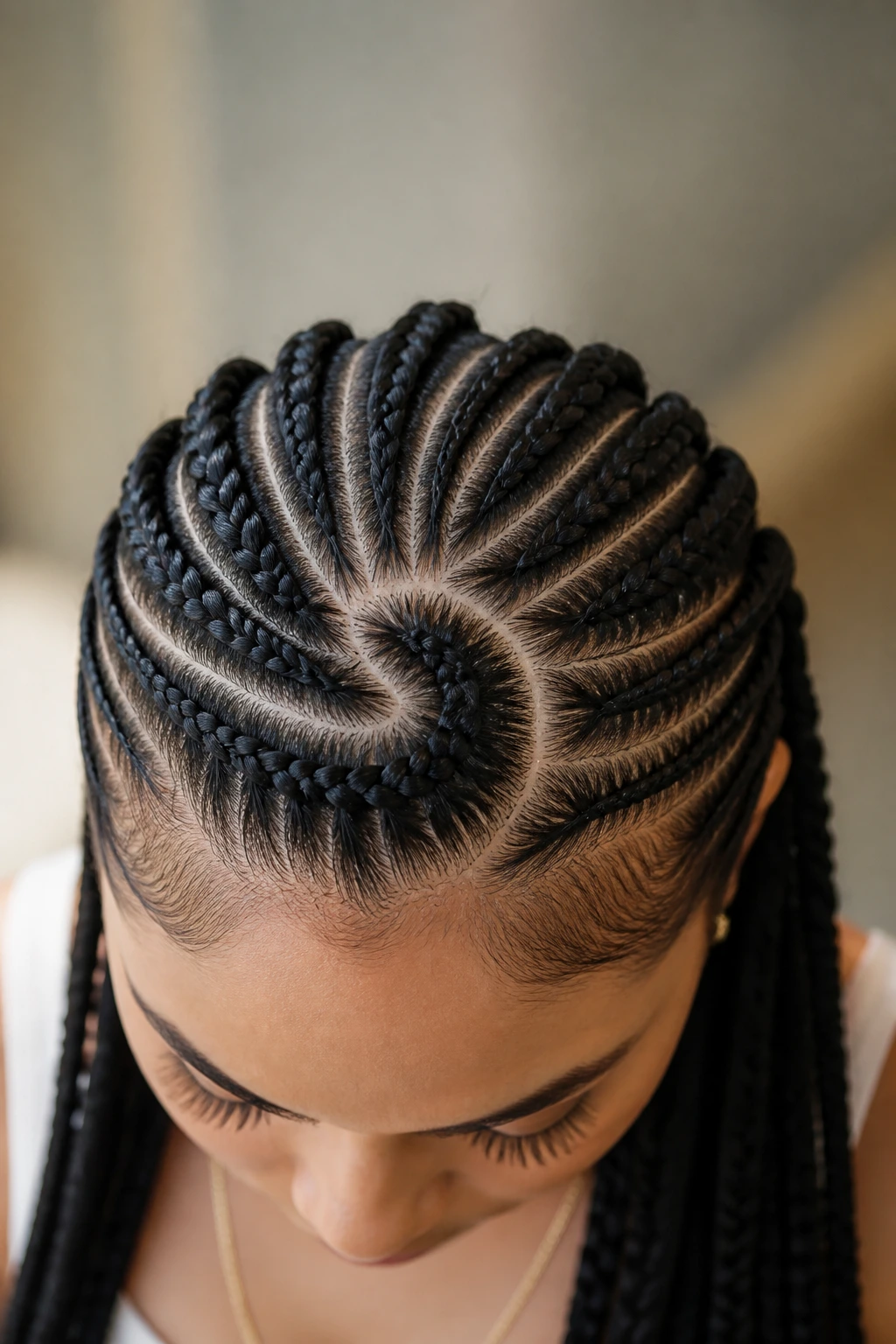
Similar to the halo style, but instead of focusing on the hairline, this involves parting the front section into a circular, crown-like formation before the braids move toward the back. It creates a beautiful center point. This style is quite intricate and works well for special occasions where you want your hair to look like a centerpiece rather than just a protective style.
Maintenance and Longevity
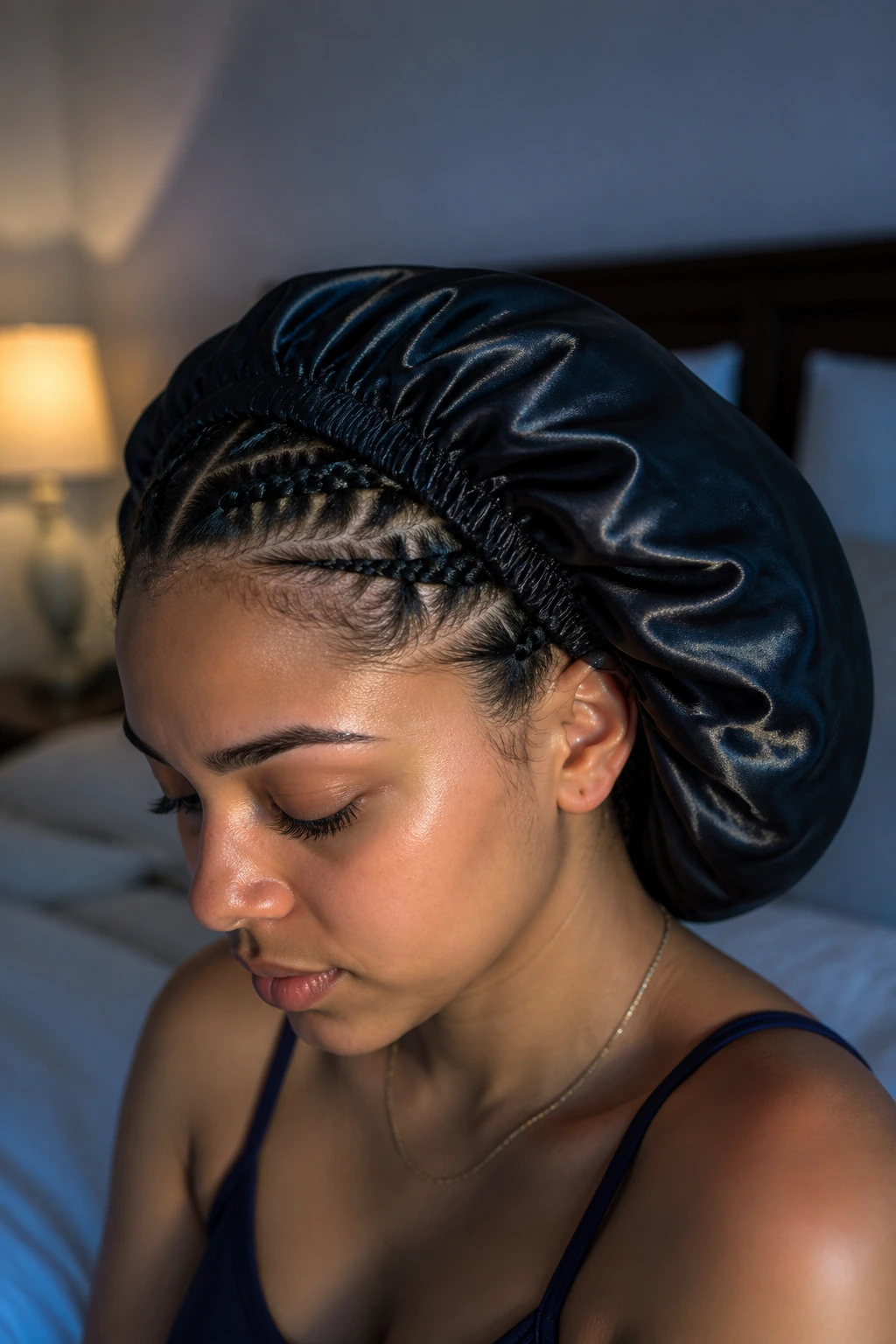
The secret to making your braids last—and ensuring your natural hair thrives underneath—is all about nightly care. Never go to sleep without wrapping your hair. A silk or satin bonnet or a high-quality scarf is non-negotiable. This prevents friction, which causes frizz and weakens the braids. Also, consider the weight of your hair; if your style is extremely long or heavy, do not leave it in a high bun for more than a few hours at a time, as this can pull on your edges.
When it comes to washing, use a foaming braid cleanser. You don’t need to submerge your head in a full sink of water. Simply focus the cleanser on the parts and your scalp, massage gently, and rinse. Drying is the most important part—sit under a hooded dryer or use a blow dryer on a cool setting to ensure the roots are completely dry. Leaving the roots damp is a fast track to scalp irritation and potential mildew, so take your time during this step.
Final Thoughts
Choosing the right straight back style for your Latina hair is a process of balancing your personal aesthetic with the needs of your hair texture. Whether you go for the sleek, minimalist look or the highly detailed, bohemian-style braids, remember that the foundation—your scalp health and hair strength—is what allows the style to shine.
Take your time during the consultation with your braider. If they aren’t willing to discuss tension levels or the weight of the synthetic hair, they might not be the right person to handle your hair. Braids should feel secure, but they should never cause pain. If you feel tightness or notice redness after the appointment, do not hesitate to loosen those sections. Ultimately, the best braids are the ones that make you feel like your most confident, authentic self while keeping your natural hair protected and healthy.